Everything you need to know before you squeeze that violet bottle onto your head.
You go blonde. You leave the salon feeling like a cool-toned goddess. Three weeks later you catch yourself in a car mirror, and your hair has gone the color of a school bus seat. Warm. Yellow. A little bit sad. That drift from icy to brassy is the exact problem purple shampoo was built to fix, and once you understand the color science behind it, you stop treating your blonde like a losing battle.
This guide walks through what the product does, why the bottle is bright violet, how to use it without staining your hair lilac, and what to expect from your first before and after. No hype, no fluff, just the stuff a good colorist would tell you if you cornered them at the shampoo bowl.
So What Does Purple Shampoo Do?
Ask ten blondes what purple shampoo does, and half will tell you it “makes your hair less yellow,” which is right but skips the interesting part. It is a toning cleanser. It washes your hair like any shampoo, and while it sits there, it deposits a small amount of violet pigment onto each strand. That pigment cancels out the warm yellow tones that creep into lightened hair over time.
Here is the part people miss. It does not lighten your hair, and it does not bleach anything. The violet pigment sits on the surface and corrects the tone you already have. Skip a few washes and the effect fades, which is why colorists treat it as maintenance between salon visits rather than a one-time fix.
Think of it as a filter for your color. Your base shade stays the same. The warmth on top gets muted so your blonde reads cooler, brighter, and closer to what you paid for on color day.
The Color Wheel Trick Behind the Bottle
The reason the bottle looks like grape soda comes down to one rule you learned in art class and forgot. On the color wheel, purple sits across from yellow. Opposite colors neutralize each other. Put a dab of violet on a yellow tone, and the two colors will each other out, leaving a cleaner, cooler result.
Makeup artists lean on the same rule every day. Green concealer covers a red blemish. Peach concealer knocks out the blue-gray of a dark under-eye circle. It runs the same play on your hair, using violet pigment to correct yellow brass. The chemistry is not exotic, just color theory doing what color theory promises.
That single rule explains almost everything about the product: why it is purple, why it works on yellow-toned blondes, and why it does close to nothing for warm brown hair that has gone orange instead of yellow. Orange has a different opposite on the wheel, which brings us to the blue-versus-purple question a bit later.
Why Blonde Turns Brassy in the First Place
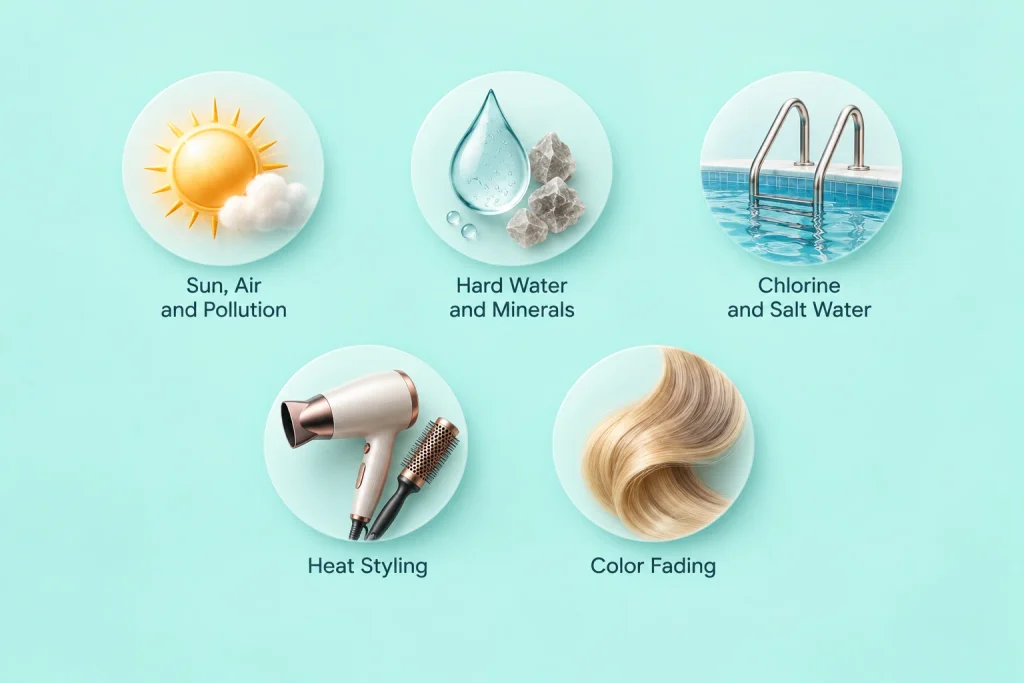
Brassiness is not a sign you did something wrong. It is chemistry catching up with your color. A few culprits do most of the damage:
- Oxidation. Air, sunlight, and pollution break down the cool pigments in dyed hair. The warm tones underneath surface first, which is why your ends go yellow before anything else.
- Hard water and minerals. Iron and other minerals in tap water cling to lightened strands and pull the color warm and dull.
- Chlorine and salt water. A summer of pools and beaches strips cool tones fast. Blondes pay the highest price here.
- Heat styling. Regular blow-drying and flat-ironing speeds up the fade and nudges hair toward brass.
- Color fading. Lightened hair loses its cool pigments before its warm ones. As the toner from your last appointment washes out, yellow moves back in.
Understanding the cause matters because it tells you how hard your regular shampoo has to work. A swimmer with platinum hair fights more brass than someone with lived-in honey balayage, and the two should not use the product on the same schedule.
Who Needs Purple Shampoo?
The short version: anyone whose hair goes yellow. That covers more people than you might think.ol
- Blondes of every kind. Natural, dyed, all-over, or babylights, if your color leans yellow between salon trips, this is your product.
- Platinum and icy blondes. The lighter the hair, the louder the brass shows. Platinum benefits the most and overtones the fastest, so use a light hand.
- Silver and gray hair. Going gray on purpose looks stunning until the strands turn dingy yellow. Violet pigment keeps silver looking crisp instead of nicotine-stained.
- Highlights and balayage. Even brunettes with lightened pieces use it to keep those face-framing streaks bright.
- Pastel and “unicorn” shades. Soft pastels sit on a pre-lightened base, so keeping that base cool helps the fun color read true.
If your whole head is dark brown with no lightened pieces, the violet pigment has little to grab onto. Your brass, if you get any, tends to be orange, and orange needs a different fix.
Blue vs Purple Shampoo: Which One Is Yours?
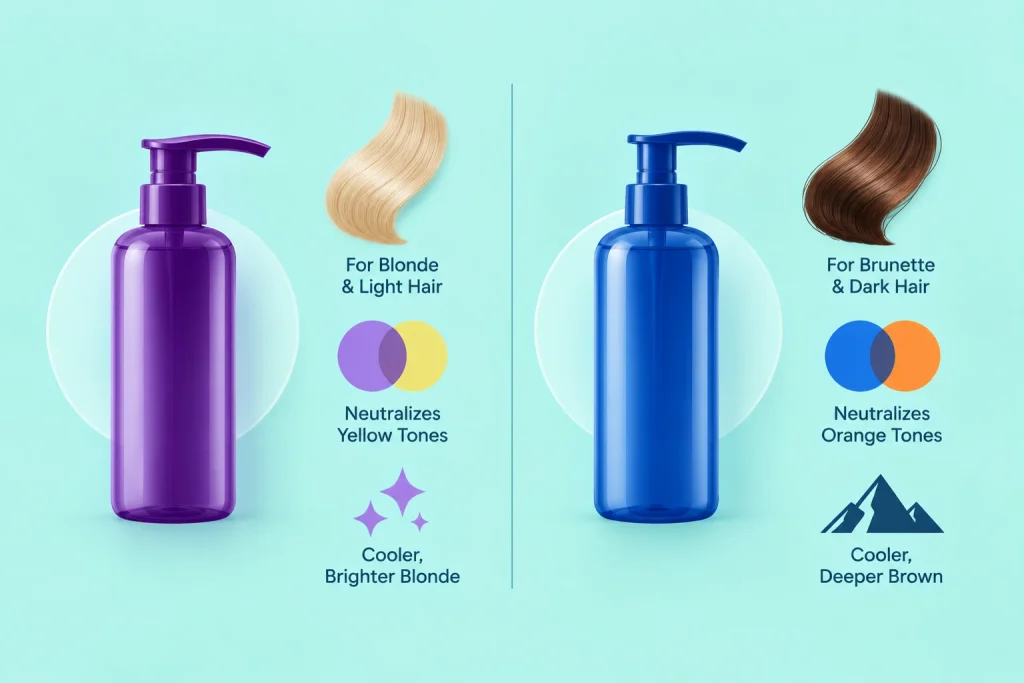
This is where a lot of people buy the wrong bottle. The blue vs purple shampoo question comes down to what color your brass turns, and that depends on how dark your hair is.
Lighter hair goes yellow when it fades. Darker hair goes orange or copper. Since purple cancels yellow and blue cancels orange, your shade decides your pigment. Reach for the wrong one and you waste money watching your brass stick around.
| Feature | Purple Shampoo | Blue Shampoo |
| Neutralizes | Yellow tones | Orange and copper tones |
| Best For | Blonde, platinum, silver, gray, highlights | Brunette, dark blonde, balayage on brown hair |
| Color Wheel Logic | Purple sits opposite yellow | Blue sits opposite orange |
| Result | Cooler, brighter blonde | Cooler, deeper brown |
A quick gut check: look at your hair in daylight. If the unwanted warmth reads yellow, grab purple. If it reads orange or coppery, grab blue. Some brunettes with blonde highlights end up owning both, using purple on the lightened pieces and blue on the rest. When people argue this online, this is the detail that settles it every time.
How to Use Purple Shampoo Without Turning Your Hair Lilac
Learning how to use purple shampoo takes about one wash to get right and one bad wash to learn the hard way. The pigment is strong. Respect it and you get bright, cool blonde. Ignore it and you get a faint lavender cast that takes a clarifying wash to undo.
Here is the routine colorists recommend.
Step by Step
- Rinse well first. Wet hair opens the cuticle so pigment absorbs in an even layer. Some pros apply it to towel-dried hair for a more concentrated deposit, so test both and see what your hair prefers.
- Use a coin-sized amount. More product does not equal more toning. The time you leave it on controls the result, not the volume you slather on.
- Work it through the mid-lengths and ends. That is where brass shows most. Comb it through so every strand gets coated for an even finish.
- Watch the clock. Set a timer and check your color every minute or two. This is the single move that saves you from over-toning.
- Rinse and condition. A toning shampoo can leave hair a touch dry, so follow with a hydrating conditioner or a weekly mask.
How Long to Leave It On
Timing depends on your shade and how porous your hair is. Rough guide:
- Platinum, silver, or very light hair: one to three minutes. These bases grab pigment fast.
- Golden or medium blonde: three to five minutes for a gentle refresh.
- Stubborn, hard-to-shift brass: up to ten or fifteen minutes, checking as you go.
If you leave it in the past ten minutes and still see brass, a shampoo alone will not save you. Book a toner at the salon instead. This product maintains cool color. It does not perform miracles.
How Often
Once or twice a week covers most people. If you wash daily, slot it in every second or third wash and use your regular shampoo the rest of the time. Wash less often? Once a week keeps brass at bay. Overdo it and your blonde can turn dull, ashy, or a bit violet, which is the opposite of the fresh look you want. One more tip from colorists: pause the violet shampoo for a week before a color appointment so your stylist sees your true base.
Purple Shampoo Before and After: What to Expect
The purple shampoo before and after photos flooding your feed are real, but they set a high bar. Someone with pre-lightened, porous platinum hair can go from egg-yolk yellow to cool silver in a single ten-minute session, and the difference looks dramatic.
Your own purple shampoo before and after depends on where you start. Set honest expectations:
- Light, brassy blonde: the biggest visible change. Yellow drops out, and the blonde looks fresh from the salon.
- Golden or honey blonde: a softer shift. Brass calms down, though your warmth will not vanish since your base carries some to begin with.
- Highlights on brown hair: the lightened pieces brighten while the darker base stays put.
One wash gives you a noticeable lift in coolness. The lasting result comes from consistency, a light touch each week rather than a marathon session that leaves you scrubbing out lavender. The most convincing transformation is the one you maintain, not the one you shock your hair into.
Is Redken Purple Shampoo Good?
Redken shows up again and again in “best of” lists, and the reputation holds. Redken’s purple shampoos, including the Color Extend Blondage line, use concentrated violet pigment developed alongside professional salon toners, so the color-correcting power tends to land stronger than budget formulas. Redken colorists build these products to sit next to their in-salon toning services, which is why the shampoo and matching conditioner tone in tandem.
Is it worth the salon-tier price? For platinum, silver, or high-maintenance blondes who fight heavy brass, yes. The pigment is potent and the results hold well between washes. For someone with mild warmth and low-key golden hair, a gentler drugstore option may do the job for a fraction of the cost. Match the strength of the product to the stubbornness of your brass and you will not overpay or under-tone.
Do You Need Purple Shampoo and Conditioner Both?
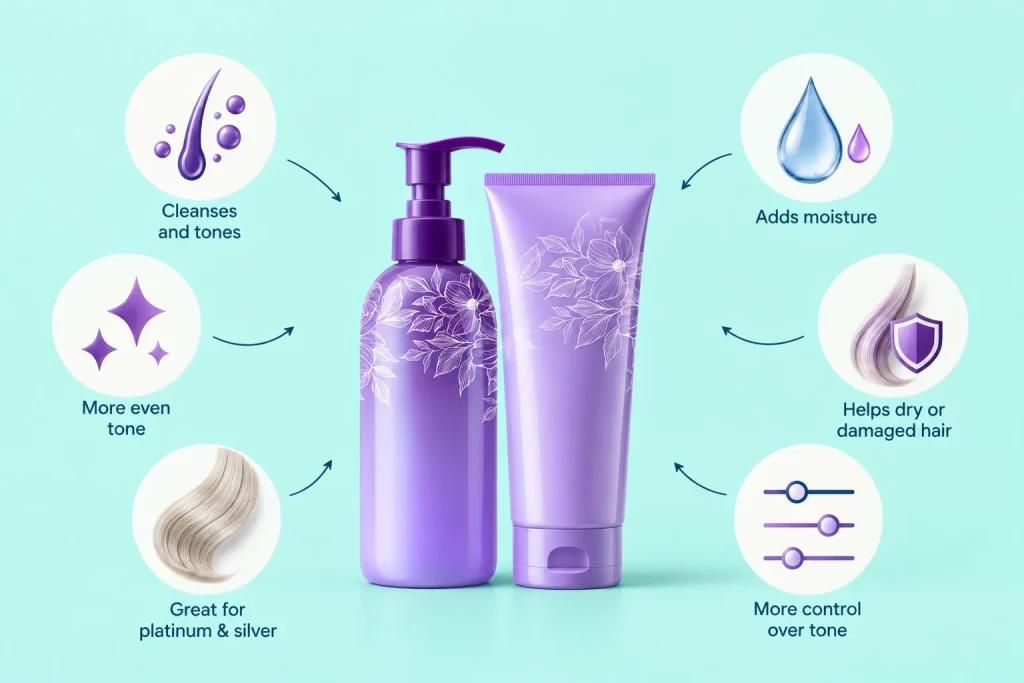
You do not need both, though there is a reason brands sell them as a pair. The shampoo cleanses and tones in the few minutes it sits on your hair. A matching purple conditioner adds a second, gentler layer of pigment while restoring the moisture the shampoo can strip.
Pairing them gives you a more intense, even cool tone and softer hair, which suits platinum and silver best. If your hair runs dry or is over-processed, the conditioner earns its place. If you want lighter toning and less violet deposit, use it alone and follow with your regular hydrating conditioner instead. Either path works. The combo gives you more control and more moisture.
Purple Shampoo Price Range: What You’ll Pay
Prices swing from pocket change to salon splurge, and the good news is you do not have to spend big to get real results.
| Tier | Typical Price | What You Get |
| Budget / Drugstore | $6 to $12 | Solid toning, less nourishment. Great starter bottle. |
| Mid-range | $12 to $20 | Toning plus repair and moisture ingredients. |
| Salon / Professional | $20 to $35+ | Concentrated pigment, bond-building, protection, longer wear. |
Drugstore hitters like L’Oréal Paris EverPure and John Frieda Violet Crush land under $10 and punch above their weight. Step up to Olaplex No.4P or Redken Blondage in the mid-to-high range, and you pay more for stronger pigment and added hair repair. A bigger bottle lowers your cost per wash if you use it weekly, so factor size into the price, not just the sticker.
Mistakes That Wreck Your Results
A few missteps turn a hero product into a headache. Sidestep these and your blonde stays bright.
- Using it every single day. Pigment builds up, your color goes dull or violet, and your hair dries out. Once or twice a week is the sweet spot.
- Leaving it on too long. Set a timer. Very light hair can tint lavender in minutes.
- Skipping conditioner. Toning shampoos lean drying. Follow with moisture every time.
- Buying the wrong pigment. Orange brass needs blue, not purple. Check your warmth before you buy.
- Expecting it to lighten. It tones, it does not lift. If you want lighter hair, that is a salon job.
Help, My Hair Turned Purple. Now what?
It happens to the best of us. You got distracted, left the lather in for twenty minutes, and now your ends carry a lilac tint. Do not panic, and do not reach for the violet bottle again. Your fix is a clarifying shampoo, which strips excess pigment and pulls the tone back toward neutral. Wash once or twice with it, and the lavender fades.
If a single clarifying wash does not cut it, pair a clarifying treatment with a hydrating mask. That combo does double duty: it lifts the extra pigment and puts back the moisture two back-to-back washes tend to strip. For a stubborn cast on very light hair, book a warm-toned gloss at the salon, which rebalances the color in one visit.
The lesson for next time is boring but dependable. Use less product, set a timer, and check your color every minute. Over-toning comes from time on the hair, not the amount in your palm. Treat the pigment like seasoning rather than a main course, and you keep the cool blonde without the grape-soda surprise.
The Bottom Line
Purple shampoo is the cheapest, easiest way to keep blonde, silver, or highlighted hair looking like it just left the chair. It works on a rule as old as your first box of crayons: violet cancels yellow. Master the timing, match the pigment to your brass, and condition afterward, and you stretch the life of every salon visit while dodging that dreaded school-bus yellow.
Start with a once-a-week wash, watch how your hair responds, and adjust from there. Your blonde stays cool, your color budget stretches further, and you never have to fear a car mirror again.
Frequently Asked Questions (FAQs)
Q. What does purple shampoo do?
Ans. Purple shampoo cleanses your hair while depositing violet pigment that cancels out yellow brass. It tones your color cooler and brighter without lightening or dyeing your base shade. The effect is temporary, so you top it up on a weekly rhythm.
Q. How often should I use purple shampoo?
Ans. Once or twice a week suits most blondes. Wash daily, and you can use it every second or third wash; wash less often, and once a week is plenty. Using it too often can leave your hair dull, ashy, or a bit purple, so start slow and adjust.
Q. Is Redken purple shampoo good?
Ans. Yes. Redken’s violet formulas use salon-grade pigment that tones hard and holds well, which makes them a favourite for platinum, silver, and very brassy blondes. Milder or golden blondes may find a cheaper drugstore option does enough for less.
Q. Do I need purple shampoo and conditioner both?
Ans. Not required, but the pair gives you a more even cool tone and adds back moisture the shampoo can strip. Use both for intense toning and softness, or use the shampoo alone with your regular conditioner for a lighter touch.
Q. What is the price range for purple shampoo?
Ans. Drugstore bottles run about $6 to $12, mid-range formulas sit around $12 to $20, and salon-grade options cost $20 to $35 or more. Higher prices buy stronger pigment, repair ingredients, and longer-lasting results.