You have just finished shaving. Your legs feel nice for about five minutes, then you look at your reflection in the mirror, and there it is: tiny dark dots on your shins, like someone dusted your legs with pepper. Welcome to the club nobody signs up for: strawberry skin.
If you’ve been Googling “strawberry skin” at 11pm wondering if something is wrong with you, take a breath. It’s not just you, and it’s not an indication that you are doing something wrong with your body. Strawberry skin is one of the most common skin concerns for people who shave and it has almost nothing to do with hygiene and everything to do with basic skin biology.
In this guide, we are going to break down exactly what strawberry skin is, how it shows up on your legs specifically, whether it’s something you should actually worry about and, most importantly, what actually works to get rid of it. No fluff, no miracle-cream nonsense. Just what dermatologists and years of trial-and-error actually recommend.
What Is Strawberry Skin, Exactly?
Strawberry skin is the informal (and actually pretty accurate) name for skin that looks like the surface of a strawberry, small, dark dots scattered across an area of skin, usually the lower legs. The “seeds” you’re seeing are actually a combination of a few different things happening at once: clogged your own hair follicles, trapped melanin, ingrown hairs, or hair that has been shaved so close it looks like a dark dot just beneath the skin’s surface.
It’s not a disease. It’s not an infection (usually). It’s not a sign that your skin is unhealthy. It’s a cosmetic pattern that happens when hair follicles and pores respond to repeated shaving, dryness or minor irritation over time.
The reason it’s so common on legs specifically is a simple one: legs get shaved constantly, often with old razors, dry skin, and no real preparation at all. That is the perfect fit to develop this look.
Why Does Strawberry Skin Show Up on Legs Specifically?
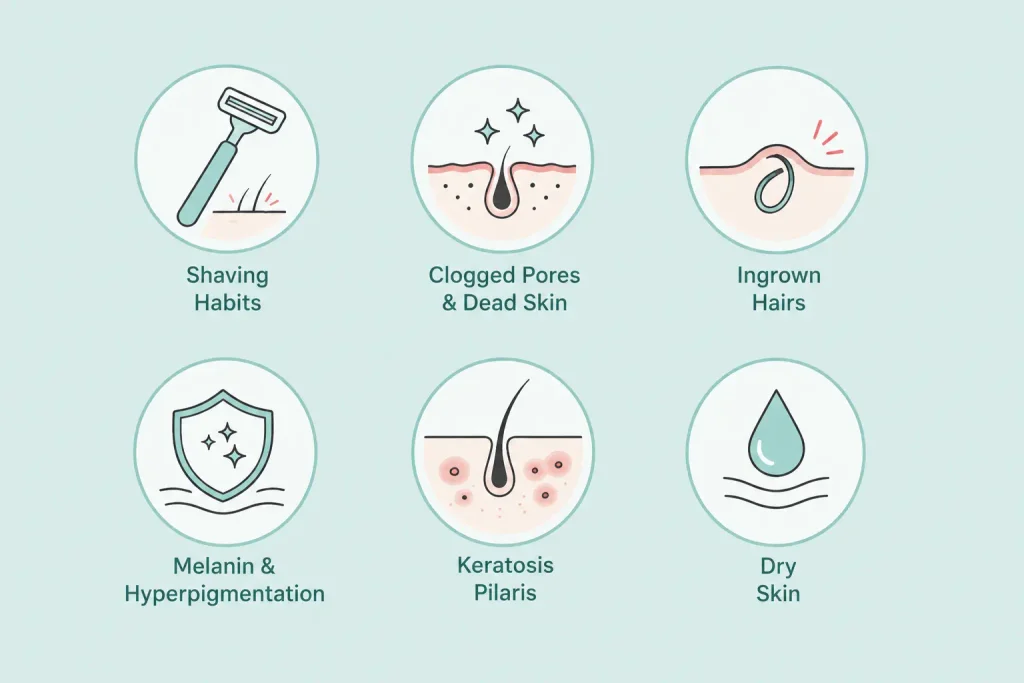
Here is where it gets tough because strawberry skin is not something that is caused by one thing specifically, it’s usually a whole lot of things interacting with each other.
1. Shaving Habits (The Biggest Culprit)
Dry shaving, shaving too fast, using a dull blade, or shaving against the grain all increase your chances of developing this look. When a razor cuts hair unevenly or too close to the skin, the hair follicle may appear as a dark speck even though nothing is technically wrong.
2. Clogged Pores and Dead Skin Buildup
Legs are likely to be exfoliated less than faces. Dead skin cells build up around hair follicles, trap oil and debris and create those little dark or discolored spots that look a lot like little seeds.
3. Ingrown Hairs
When hair curls back into the skin instead of growing outward, it creates a small, dark bump, sometimes inflamed, sometimes not. On a larger scale across the legs, dozens of these can create classic strawberry-like texture.
4. Melanin and Hyperpigmentation
For people with naturally darker melanin, hair follicles can appear more pronounced simply because of pigment concentration around the follicle opening. This isn’t a mistake, it’s biology and it affects how visible the “seeds” appear against the skin tone.
5. Keratosis Pilaris (Sometimes Mistaken for Strawberry Skin)
This one trips a lot of people up. Keratosis pilaris (KP) causes small, rough bumps— often on the thighs and upper arms, that can look like strawberry skin but are actually a separate and genetically-associated skin condition involving keratin buildup. If your “strawberry skin” looks rough and bumpy, not flat with visible dots, KP may be the real cause and it needs a different treatment.
6. Dry Skin
Dehydrated skin makes pores and follicles more visible and more prone to irritation. It also makes ingrown hairs more likely, as dry, flaky skin can trap hairs beneath the surface.
Is Strawberry Skin Dangerous?
Short answer: no.
Strawberry skin is a cosmetic concern, not a medical one. You are not at risk for anything serious, it is not contagious and it is not a symptom of an underlying illness in most cases.
However, there are some instances to watch out for:
- If the dots are painful, swollen or filled with pus, you may be suffering from folliculitis (an infection of the hair follicles), which sometimes needs topical or oral treatment from a dermatologist.
- If the texture is rough, itchy, and doesn’t improve with standard treatment, it is keratosis pilaris and not classic strawberry skin.
- If you see sudden changes, unusual color or spreading patches, you will have to get to see a doctor just to rule out anything out.
For most people, though, this is merely an appearance thing, it is annoying, sure, but not something your body is trying to tell you about.
How to Get Rid of Strawberry Skin: What Actually Works
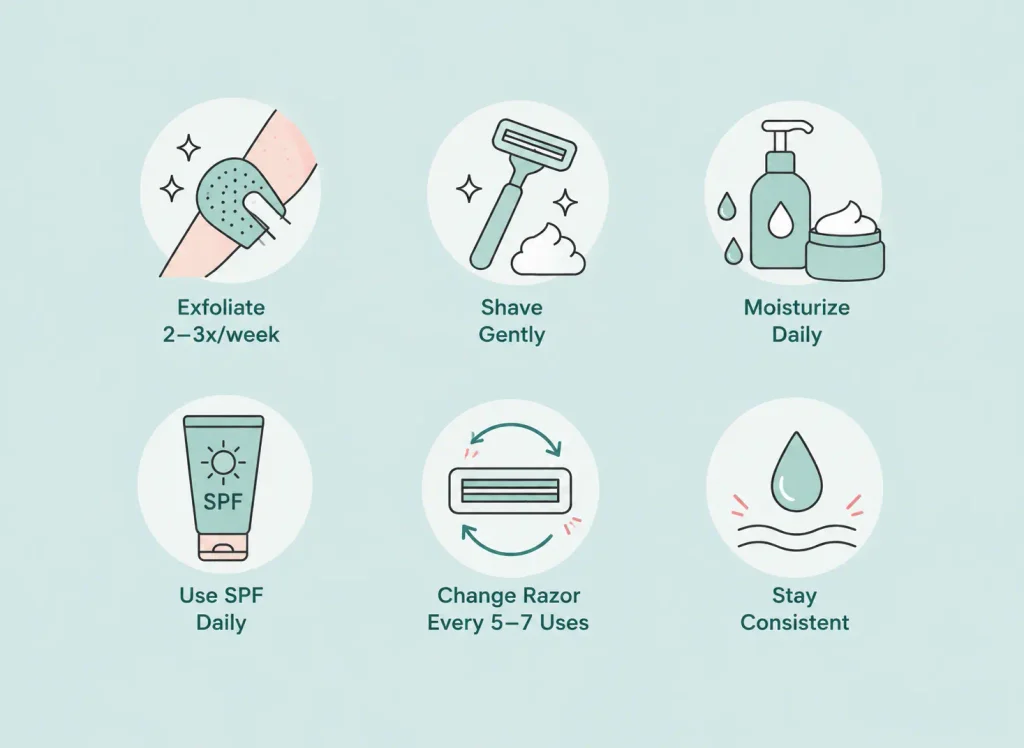
This is the part you’re really here for. Here is a practical, dermatologist-backed approach to treating strawberry skin on legs, not a 10-step routine that costs $200, but one that actually works and products that are effective.
Step 1: Exfoliate Before You Shave (Not Just After)
Most people exfoliate their face weekly and completely ignore their legs. That’s a mistake. Gently exfoliating your legs two to three times a week, with a soft washcloth, a gentle scrub, or a chemical exfoliant like glycolic or lactic acid, brings the dead skin away from follicles and traps hair.
Tip: Do this with circular motions in the shower, on damp skin, using circular motions. Skip anything with large, jagged particles (i.e., crushed walnut shells) as they can lead to micro-tears.
Step 2: Switch Up Your Shaving Routine
Since shaving is the number one trigger, this is where the real transformation happens.
- Shave with the grain first, not against it.
- Use a sharp, clean razor, dull blades cause more tugging and irritation and that’s what makes strawberry skin look worse.
- Shave after a warm shower when hair is softened and pores are open, not as soon as you take a shower.
- Use a good shaving cream or oil and never dry shave.
- Rinse your razor after every couple of strokes to avoid clogging.
Step 3: Moisturize Like It’s Non-Negotiable
Dry skin makes every symptom of strawberry skin worse, the dots more visible, the ingrown hairs more common, the texture rougher. A daily moisturizer with ingredients like shea butter, ceramides or hyaluronic acid helps keep the skin barrier strong and follicles calm.
Step 4: Try a Chemical Exfoliant for Deeper Treatment
For more stubborn cases, over-the-counter products that contain salicylic acid, glycolic acid or urea can make a major difference in a few weeks. These ingredients dissolve the buildup around hair follicles and help prevent ingrown hairs from forming in the first place.
And start slowly, 2 to 3 times a week, since overdoing chemical exfoliants can irritate the skin and make things look worse before they look better.
Step 5: Consider Alternative Hair Removal Methods
If shaving keeps triggering the same cycle no matter what you do, it might be worth experimenting with:
- Epilation: pulls hair from the root so regrowth is finer and less likely to curl back into skin.
- Waxing or sugaring: similar benefit, but irritation of sensitive skin is possible.
- Laser hair reduction: a longer-term investment, but once hair growth slows down significantly many people see remarkable improvement in strawberry skin.
Step 6: Be Patient With a Strawberry Skin Patch
If you are dealing with one particular strawberry skin patch, say, around the ankles or a stubborn area on the shin, treat it a little less aggressively than the rest of your legs. Localized patches tend to mean that specific spots get shaved more aggressively or exfoliated less. Focus extra moisture and gentle exfoliation there instead of scrubbing harder, which usually backfires.
Strawberry Skin Treatment: Realistic Timeline
Most people stop a routine after a week because they don’t immediately find results, and then they think nothing works. Here is a more honest timeline:
| Timeframe | What to Expect |
| 1–2 weeks | Slightly smoother texture, fewer new ingrown hairs |
| 3–4 weeks | Noticeably reduced dark dots, softer skin overall |
| 6–8 weeks | Significant visible improvement with consistent routine |
| 3+ months | Best results, especially if combined with epilation or laser reduction |
Consistency matters far more than intensity here. A gentle routine done daily beats an aggressive one done occasionally.
When to See a Dermatologist
Most strawberry skin cases respond well to at-home care but it’s worth booking an appointment if:
- The symptoms don’t improve after 2–3 months of consistent care.
- You notice signs of infection (redness, warmth, pain, pus).
- You suspect keratosis pilaris and want a prescription-strength treatment.
- Your appearance is affecting your confidence and you seek professional-grade treatment like chemical peels or laser treatment.
A dermatologist can also rule out folliculitis, which sometimes mimics strawberry skin but needs antibiotic or antifungal treatment rather than just exfoliation.
The Real Talk Section: You’re Not Alone in This
Here’s something you just need to state very clearly: strawberry skin is very common and it shows up on people of every skin tone, every age, and every lifestyle. It’s not a hygiene failure. It’s not something only “other people” see when they look at smooth-legged influencers on the internet. Most of those photos are filtered, angled or lit in a way that hides texture completely.
Real skin has texture. Real legs have visible pores, the occasional ingrown hair, and yes even sometimes a strawberry-like pattern after shaving. Treating it is perfectly reasonable if it bothers you; it is not a flaw that has to be fixed to be normal.
Common Myths About Strawberry Skin (That You Should Stop Believing)
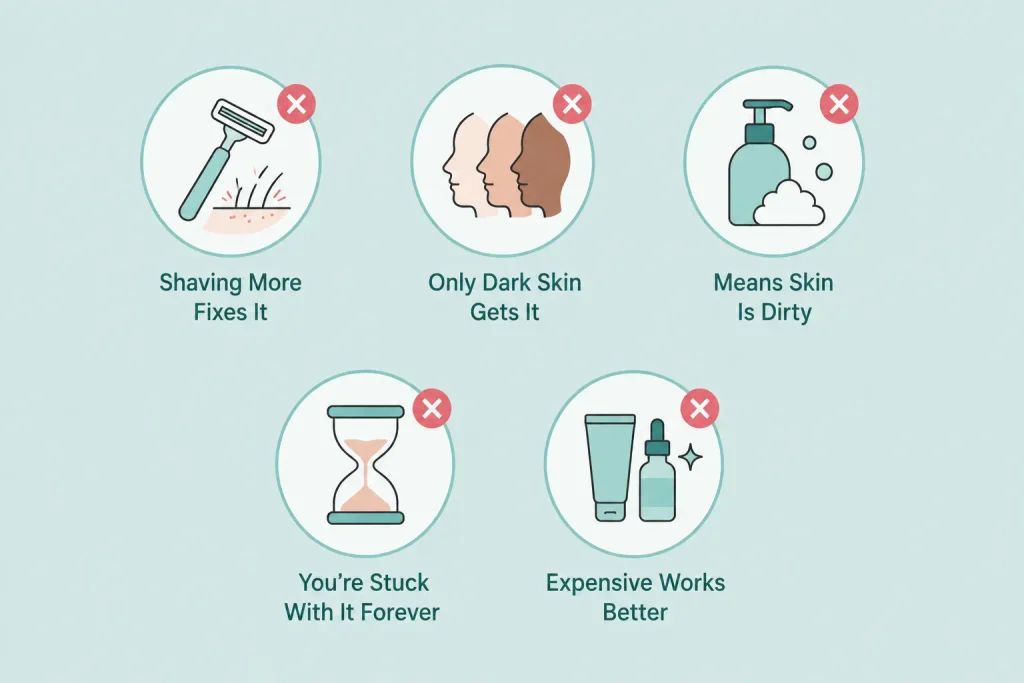
Before we conclude the treatment side of things, let’s dispel a few myths that are propagated everywhere on comment sections and skincare forums so as to make strawberry skin worse.
Myth #1: Shaving more often is going to “wear down” the follicles and fix it. This is backwards. Shaving more often generally increases irritation, dryness, and the chances of ingrown hairs, the very things that cause strawberry skin in the first place. More shaving is not the same as better shaving.
Myth #2: Only people with darker skin tones get strawberry skin. Melanin can make the dots more visible against the skin, but strawberry skin happens across every skin tone. Lighter skin can absolutely develop the same pattern; it’s just sometimes less visible in photos.
Myth #3: It means your skin is dirty. No amount of extra washing will fix strawberry skin, because it isn’t about cleanliness. It’s about follicle texture, dead skin buildup, and hair growth patterns, none of which are solved by soap alone.
Myth #4: You get stuck with it forever. Not true. Genetics and hair thickness affect whether or not someone is prone to this pattern, but the appearance is good in return to regular care. And it can be a temporary thing but not permanent.
Myth #5: Expensive products work better than drugstore ones. Price has very little to do with effectiveness here. What matters is the ingredient list, salicylic acid, glycolic acid, urea, and lactic acid all work whether they’re in a $8 bottle or an $80 one.
The Ingredients Worth Actually Looking For
If you don’t want to be overwhelmed with 50 different bottles that promise smooth legs on the skincare aisle, here is a quick cheat sheet that you can look at to tell me what we should look for and why it works.
- Salicylic acid: A beta-hydroxy acid that enters the pore and breaks down the debris that clogs hair follicles. Good for oilier skin types.
- Glycolic acid: Alpha-hydroxy acid that leaves dead skin cells behind as it goes on to reveal a smoother surface.
- Lactic acid: gentler than glycolic acid, so it’s a good choice for sensitive or easily-irritated skin.
- Urea: A humectant and non-intense exfoliant at the same time; it softens rough, bumpy texture and is also the source of moisture.
- Niacinamide: Doesn’t exfoliate but provides an answer to redness and inflammation and is useful for keeping the skin barrier strong when your skin is reactive to acids.
- Shea Butter and Ceramides: Not exfoliants, but essential for moisture keeping in place after skin protection.
One exfoliating and barrier repair moisturizer, and that combination is followed by a few weeks before adding anything else.
Lifestyle Factors That Quietly Affect Strawberry Skin
Skincare products get the most of the love, but a few of the most popular but some of the day-to-day habits play a bigger role than many people expect.
Hot showers. Long, scalding showers strip natural oils from the skin, leaving it drier and more prone to irritation. Lukewarm water is gentler on the skin barrier.
Tight clothing. skinny jeans and tight leggings rub the legs daily and can be irritating to already irritated follicles. It doesn’t mean you’re getting rid of your favorite pants, but if a stubborn patch keeps appearing in the same spot your clothing rubs against, you would do better.
Hydration and diet. Chronic dehydration shows up in skin texture over time. In conjunction with water intake, a diet of enough healthy fats (like omega-3) helps the skin barrier from the inside out.
Stress. High levels of stress can trigger inflammation all over the body, including in the skin, so that existing irritation becomes more stubborn to treat.
Sun exposure. UV exposure may lead to hyperpigmentation around hair follicles and dark dots are more prominent. We have daily SPF on legs (no, really) to help prevent this over time, especially during summer months.
None of these factors alone “cause” strawberry skin but when taken together, they can be the difference between a routine that works and one that seems to stall out.
Building a Weekly Routine You’ll Actually Stick To
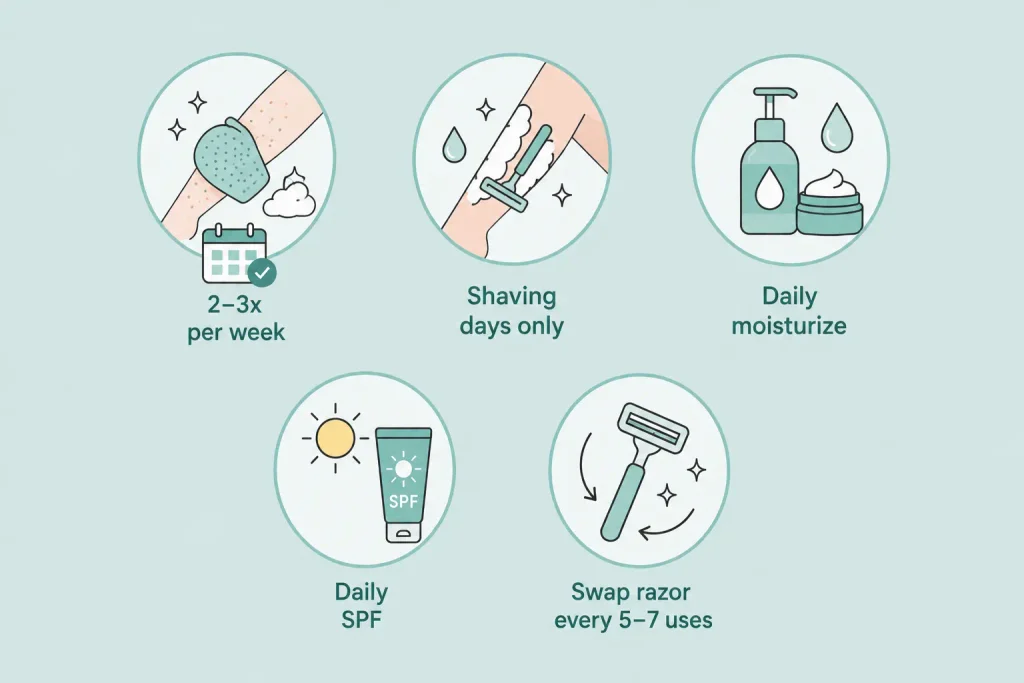
Routines fail most often not because the products are wrong but because they are too complex to maintain. Here’s a simple weekly structure to cover everything above without going to work as a second job.
- 2–3x per week: Gentle exfoliation (chemical or physical) in the shower.
- Shaving days only: Warm water, proper shaving cream, sharp razor, shave with the grain.
- Daily: Moisturizer immediately after showering, while skin is still slightly damp.
- Daily (daytime): SPF if legs will be exposed to the sun.
- Ongoing: Swap razors every 5–7 uses, or sooner if you notice tugging.
Consistency, not intensity, is what actually moves the needle. Doing a gentle version of this every week beats an aggressive scrub-and-shave session once a month.
What Results Actually Look Like
It’s worth setting realistic expectations here, because “get rid of strawberry skin” doesn’t always mean the dots disappear completely overnight, for some people, particularly those with coarser or darker hair, some follicle visibility is simply part of their natural skin texture, the same way pores are visible on facial skin.
What consistent care realistically brings about is a huge reduction in dark dots, a more smooth overall texture, fewer ingrown hairs and softer skin. For a lot of people this is more than enough to feel confident showing bare legs again, whether that’s shorts, a swimsuit, barefoot at home without even thinking twice.
Final Thoughts
Strawberry skin is not dangerous, it isn’t rare, and it’s not something you’d lose sleep over either. It is a natural skin response to shaving and everyday friction, and with the right combination of exfoliation, moisture and smarter shaving habits it is actually manageable. Give your routine a few weeks of consistency before judging the results, and remember that smooth, dot-free legs in a filtered photo are not the standard your skin needs to live up to.
Your legs, seeds and all, are doing what the skin is supposed to do.
Disclaimer: The information contained in this article is for general information purposes only and is not to be interpreted as professional medical advice, diagnosis or treatment. And different skin reacts differently to each individual’s skin. If your symptoms are persistent, painful, worsening, or you don’t know if you’re dealing with strawberry skin, keratosis pilaris, folliculitis, or something else entirely, consult a licensed dermatologist. A dermatologist can assess your skin for you and give you a good diagnosis and a treatment plan designed for your skin as per your needs.
Frequently Asked Questions
Q. What causes strawberry skin on legs?
Ans. It is caused by shaving habits, clogged hair follicles, dead skin buildup, and ingrown hairs. Dry skin and incorrect shaving technique can make it much worse.
Q. Is strawberry skin the same as keratosis pilaris?
Ans. Not exactly. Strawberry skin is usually referred to as dark dots visible from hair follicles and keratosis pilaris are small rough bumps from keratin buildup. Both can look similar, but respond to slightly different treatments.
Q. How long does it take to get rid of strawberry skin?
Ans. And most people see a substantial improvement after four to eight weeks of consistent routine, exfoliating, moisturizing and learning shaving techniques.
Q. Does shaving cause strawberry skin, or does it just make it more visible?
Ans. Both. Shaving doesn’t form the underlying follicles, but poor shaving habits (dry shaving, dull blades, shaving against the grain) make dark dots and ingrown hairs much more likely and visible.
Q. Can strawberry skin go away permanently?
Ans. For most people, yes, with consistent care. Long-term hair reduction methods like laser treatment tend to provide the most lasting improvement since they reduce the hair growth that triggers the appearance in the first place.