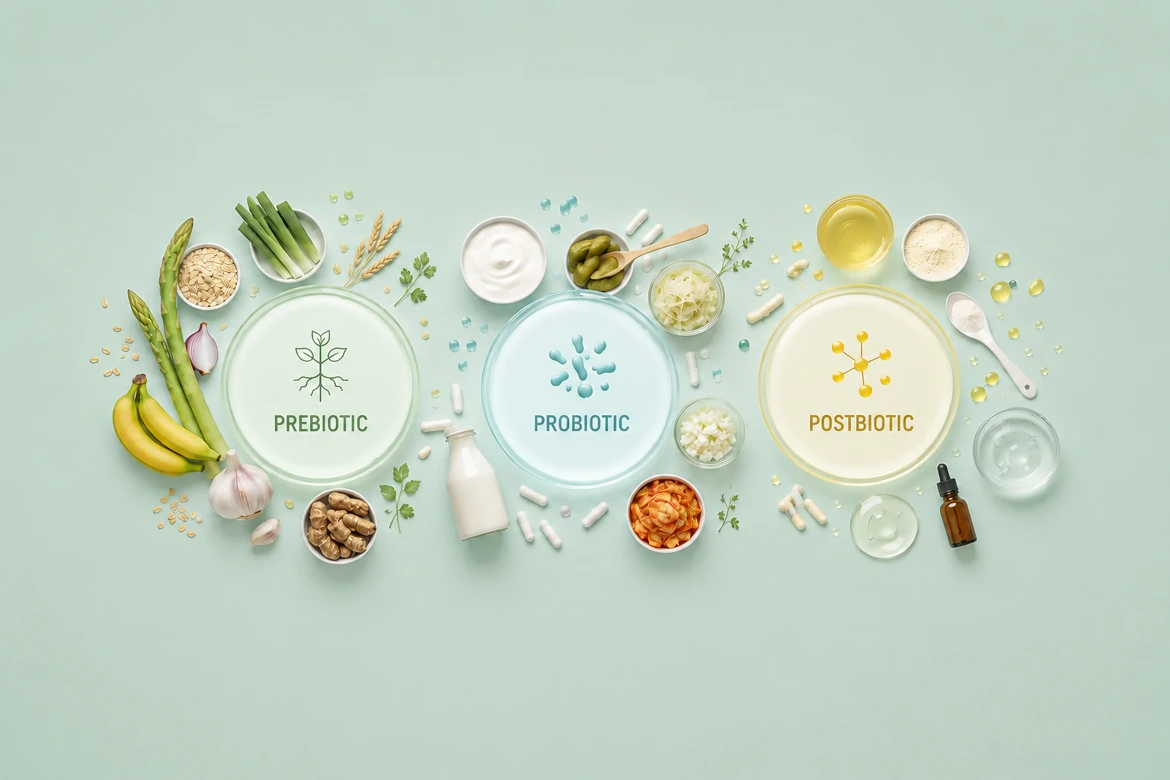
Walk down any supplement aisle, and you’ll see the same three words plastered across bottles, gummies, and yogurt cartons: prebiotic, probiotic, and postbiotic. They sound related, and they are, but they do very different jobs inside your gut.
If you’ve ever stood in a store aisle wondering whether you need a probiotic capsule, a prebiotic fiber supplement, or one of the newer postbiotic products, you’re not alone. Gut health has become one of the most talked-about areas of wellness, and the marketing language hasn’t always kept up with the science. Labels often use these three terms interchangeably, which only adds to the confusion around the prebiotic vs probiotic vs postbiotic conversation.
This guide breaks each term down in plain language, explains how they interact inside your digestive system, and helps you figure out which foods or supplements are actually worth your money. By the end, you’ll understand not just the definitions but the biology behind why your gut needs all three working together, and you’ll have a clear answer to what is a prebiotic vs probiotic vs postbiotic, without the marketing spin.
Why Gut Health Terminology Suddenly Matters
A decade ago, most people had never heard the word “probiotic” outside of a yogurt commercial. Today, the global probiotics market alone is worth billions of dollars, and prebiotic and postbiotic products are catching up fast.
Part of this shift comes from a growing body of research linking the gut microbiome, the trillions of bacteria, fungi, and other microbes living in your digestive tract, to far more than just digestion. Scientists have connected gut bacteria to immune function, mood regulation, skin health, and even how efficiently your body processes nutrients.
As that research has grown, so has the vocabulary needed to describe it. Understanding the prebiotic vs probiotic vs postbiotic distinction isn’t just trivia; it directly affects which products will actually help you and which ones are essentially expensive marketing.
What Is a Prebiotic vs Probiotic? The Basic Definitions
Before comparing them side by side, it helps to understand what each term actually means and where it comes from. The prebiotic vs probiotic difference is really the foundation for understanding all three terms, so it’s worth starting here.
What Is a Probiotic?
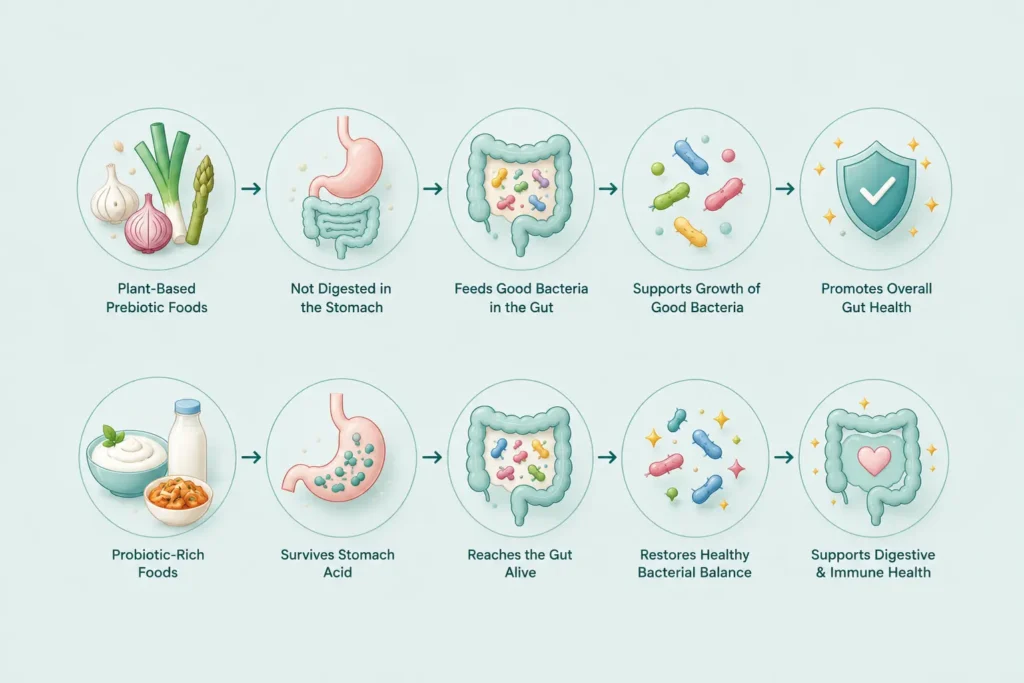
Probiotics are live microorganisms, mostly bacteria and sometimes yeast, that provide a measurable health benefit when consumed in adequate amounts. Think of them as reinforcements you’re sending into your gut to join the existing microbial community.
A widely cited scientific review on probiotics, prebiotics, and postbiotics in health and disease notes that the most accepted definition comes from the Food and Agriculture Organization (FAO) and World Health Organization (WHO), which defines a probiotic as a living organism that provides a specific, tested health benefit when delivered in a sufficient dose. This is an important detail, because not every product labeled “probiotic” actually meets this bar.
Common probiotic strains include:
- Lactobacillus acidophilus
- Lactobacillus rhamnosus
- Bifidobacterium bifidum
- Bifidobacterium longum
- Saccharomyces boulardii (a beneficial yeast, not a bacterium)
You’ll find probiotics naturally in fermented foods like yogurt, kefir, sauerkraut, kimchi, tempeh, and miso, as well as in capsule, powder, liquid, and gummy supplements. The specific strain matters more than most people realize; different strains are studied for different benefits, from easing bloating to supporting immune response.
What Is a Prebiotic?
Prebiotics are not living organisms at all. They’re specialized plant fibers and compounds that your body can’t digest on its own, but that the beneficial bacteria already living in your gut can ferment and use as fuel. In simple terms, prebiotics are food for your probiotics.
This is the core of the prebiotic vs probiotic difference: one is a living organism you introduce into your gut, and the other is a nutrient source that helps organisms already there thrive.
Common prebiotic sources include:
- Inulin (found in chicory root, garlic, and onions)
- Fructooligosaccharides (FOS)
- Galactooligosaccharides (GOS)
- Resistant starch (found in cooked-and-cooled potatoes, rice, and green bananas)
- Beta-glucans (found in oats and barley)
- Pectin (found in apples and citrus fruit)
Prebiotic fiber passes through the small intestine largely intact because human digestive enzymes can’t break it down. Once it reaches the colon, resident bacteria ferment it, producing beneficial compounds as a byproduct, which brings us to the third term.
What Is a Postbiotic?
“Postbiotics” is the newest term of the three, technically defined as the byproducts left behind after probiotic bacteria digest and ferment prebiotic fiber. These include short-chain fatty acids (like butyrate, propionate, and acetate), certain enzymes, cell wall fragments, and other metabolic compounds.
Unlike probiotics, postbiotics don’t need to be alive to work, which is actually one of their biggest practical advantages, since they’re more stable, don’t require refrigeration, and aren’t destroyed by stomach acid the way some live bacteria can be.
Some postbiotic supplements are made by fermenting bacteria in a lab and then removing the living cells, leaving behind only the beneficial compounds those cells produced. Others occur naturally in fermented foods, where some of the beneficial activity has already happened before you even eat the food.
Common examples of postbiotic compounds include:
- Short-chain fatty acids (SCFAs), especially butyrate
- Bacteriocins, which help regulate the balance of gut bacteria
- Exopolysaccharides
- Cell-free supernatants used in some skincare and supplement formulations
Prebiotic vs Probiotic vs Postbiotic: Side-by-Side Comparison
| Feature | Prebiotic | Probiotic | Postbiotic |
|---|---|---|---|
| What it is | Non-digestible fiber or plant compound | Live beneficial bacteria or yeast | Byproduct of bacterial fermentation |
| Function | Feeds existing gut bacteria | Adds new beneficial microbes to the gut | Delivers direct health effects on cells and tissues |
| Needs to be alive? | Not applicable | Yes | No |
| Shelf stability | Very stable at room temperature | Sensitive to heat, moisture, and time | Highly stable, no refrigeration required |
| Common sources | Garlic, onion, bananas, oats, chicory root | Yogurt, kefir, kimchi, sauerkraut | Fermented foods, cell-free supplements |
| Digestive survival | Reaches colon intact by design | Some strains die off in stomach acid | Already stable; no survival concern |
| Best for | Feeding a healthy microbiome long-term | Restoring or diversifying bacterial populations | Targeted, fast-acting gut and immune support |
| Typical form | Powder, fiber supplements, whole foods | Capsule, gummy, fermented food, drink | Capsule, powder, or included in fermented food |
| Research stage | Well established | Well established | Rapidly growing but newer |
This prebiotic vs probiotic vs postbiotic comparison makes the practical distinction clearer than any single definition can: one feeds, one populates, one delivers.
How Prebiotics and Probiotics Work Together
Here’s where it gets interesting: prebiotics and probiotics aren’t competitors; they’re partners in the same biological process.
Probiotics are like seeds you plant in a garden. Prebiotics are the fertilizer that helps those seeds actually take root and multiply. Without prebiotic fiber, probiotic bacteria struggle to establish themselves in the gut, and much of their potential benefit is lost before it ever has a chance to work.
This relationship happens naturally in a healthy gut. Even if you never take a supplement, the bacteria in your colon are constantly fermenting fiber from your diet, producing beneficial compounds as a result. Supplementing with prebiotics or probiotics is essentially a way of giving that natural process an extra push, especially if your diet is low in fiber or your gut bacteria have been disrupted by illness, antibiotics, or stress.
When a product intentionally combines both ingredients, it’s called a synbiotic. This combination is often more effective than either ingredient alone, because you’re not just adding good bacteria; you’re giving them something to eat as soon as they arrive, which improves the odds that they’ll survive and establish themselves.
The Role of the Gut-Brain Axis
One reason this topic has exploded in popularity is the discovery of the gut-brain axis, the communication network linking your digestive system and your central nervous system. Gut bacteria produce neurotransmitter precursors and other signaling molecules that appear to influence mood, stress response, and even sleep quality.
While research in this area is still developing, it’s one of the reasons prebiotic and probiotic products have expanded beyond simple digestive health claims into broader wellness marketing. It’s worth staying cautious here; a healthy gut can support overall well-being, but it isn’t a cure-all, and claims that sound too sweeping are usually oversimplified.
Probiotic vs Postbiotic: Why This Comparison Matters
The probiotic vs postbiotic distinction is becoming more relevant as research grows and more postbiotic products reach the market. Here’s why some people are switching to, or adding, postbiotics alongside their existing probiotic routine.
- Postbiotics don’t need to survive digestion. Since they’re already inactive compounds rather than living cells, stomach acid doesn’t destroy their benefit the way it can with some live probiotic strains.
- They’re more shelf-stable. No refrigeration is required, and there’s less concern about bacteria dying off before the expiration date, a common issue with lower-quality probiotic products.
- They may be better tolerated by certain groups. People who are immunocompromised, critically ill, or otherwise advised to avoid live bacteria sometimes do better with postbiotics, since there’s no risk of the bacteria themselves causing an infection.
- Effects can be more predictable. Because postbiotics are already-formed compounds rather than living organisms that need to multiply and adapt to a new environment, their effects can be somewhat more consistent from dose to dose.
That said, in the probiotic vs postbiotic comparison, neither one is a straightforward replacement for the other, they simply serve different purposes. Probiotics work to diversify and repopulate your microbiome over time, contributing living members to an ongoing ecosystem. Postbiotics deliver more immediate, targeted effects, such as supporting gut barrier function, helping regulate inflammation, and providing energy to the cells lining your colon.
Many gut health experts now recommend thinking of all three, prebiotics, probiotics, and postbiotics, as complementary tools rather than substitutes for one another.
Prebiotic vs Probiotic Foods: What to Eat
You don’t need a supplement cabinet to get these benefits. Real food remains one of the most reliable and cost-effective ways to support your gut, and for most healthy people, a varied diet does more for the microbiome than any single supplement. Sorting out prebiotic vs probiotic foods is actually simpler than sorting out supplements, since whole foods rarely blur the line the way marketing labels do.
Best Prebiotic Fruits and Foods
Prebiotic fiber is found throughout the plant kingdom, but some sources are notably rich in it.
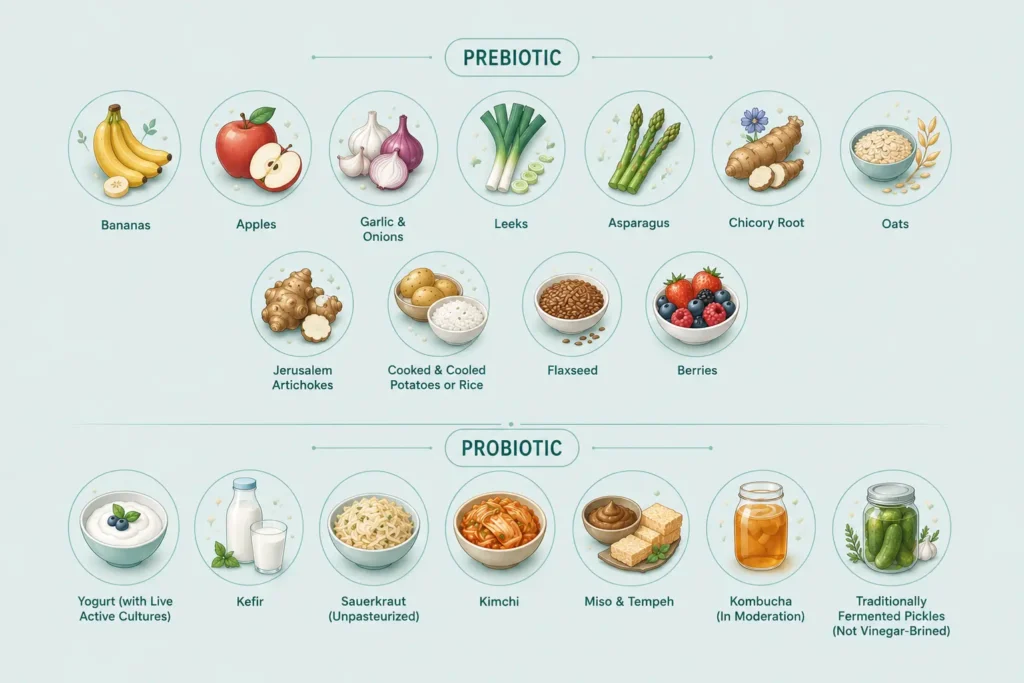
- Bananas, especially slightly underripe ones with more resistant starch
- Apples, thanks to their pectin content
- Garlic and onions, both high in inulin
- Leeks
- Asparagus
- Chicory root, one of the most concentrated natural sources of inulin
- Oats, rich in beta-glucan
- Jerusalem artichokes
- Cooked and cooled potatoes or rice, which develop resistant starch as they cool
- Flaxseed
Prebiotic fruits in particular are a convenient way to add fiber without much preparation. A banana, an apple with the skin on, or a handful of berries can all contribute meaningfully to your daily prebiotic intake. If you’re building meals around fiber generally, our guide to high-fiber breakfast ideas is a natural pairing with this list.
Best Probiotic Foods
Fermented foods are the most reliable dietary source of live probiotic bacteria, provided they haven’t been pasteurized after fermentation, which would kill the beneficial microbes.
- Plain yogurt with live active cultures listed on the label
- Kefir, which typically contains more strains than yogurt
- Sauerkraut, specifically the unpasteurized, refrigerated kind
- Kimchi
- Miso and tempeh
- Kombucha, in moderation due to its sugar content
- Traditionally fermented pickles (not the vinegar-brined kind)
Building a Gut-Friendly Plate
A gut-friendly plate often combines prebiotic and probiotic foods naturally, without needing to think about it as a formal strategy. Some easy combinations include:
- Oatmeal topped with sliced banana and a spoonful of ground flaxseed
- A yogurt bowl with berries and a sprinkle of chia seeds
- A stir-fry featuring garlic, onions, and leeks
- A side of sauerkraut or kimchi alongside a meal built around whole grains and vegetables
Over time, small, consistent choices like these tend to matter more for gut health than any single “superfood” or supplement. If you’re mapping out meals with this in mind, our heart-healthy diet foods guide overlaps nicely with a fiber-forward, gut-friendly plate.
Choosing a Prebiotic Fiber Supplement or Probiotic Gummy
Supplements have made it easier to get consistent doses of both prebiotics and probiotics, but not all products on the shelf are created equal. Understanding what to look for can save you money and help you avoid products that sound good on the label but don’t actually deliver.
What to Look for in a Prebiotic Fiber Supplement
- Look for inulin, FOS, GOS, or acacia fiber listed specifically on the ingredient panel, not just a vague “prebiotic blend.”
- Start with a small dose and increase gradually; too much fiber too quickly is one of the most common causes of bloating, gas, and stomach discomfort
- Pair any fiber supplement with adequate water intake, since fiber needs fluid to move through the digestive system comfortably
- Check whether the product is a standalone prebiotic dietary fiber supplement or part of a combination formula, since dosing needs differ
What to Look for in Probiotic Gummies or Capsules
- Check the CFU (colony-forming units) count, but understand that a higher number isn’t automatically better; strain-specific research matters more than raw quantity
- Look for specific, named strains (like Lactobacillus rhamnosus GG) rather than a vague “proprietary probiotic blend.”
- Check storage instructions carefully; some strains require refrigeration to remain effective, while others are shelf-stable by design
- Be aware that gummies often contain added sugar to mask the taste of live cultures, which is worth checking if you’re managing sugar intake
- Look for third-party testing or certification where available, since probiotic supplements aren’t as tightly regulated as pharmaceuticals
Prebiotic and Probiotic Gummies: A Convenient Middle Ground
Combination gummies that include both prebiotic fiber and probiotic strains have grown popular because they’re easy to take consistently, taste pleasant, and don’t require refrigeration in most cases. If you struggle with swallowing capsules or don’t enjoy the taste of fermented foods, a well-formulated synbiotic gummy can be a practical option.
That said, it’s worth checking that the prebiotic dose in these products is meaningful and not just a trace amount included for marketing purposes. Some gummies list “prebiotic fiber” on the front label but contain only a fraction of a gram per serving, nowhere near enough to make a measurable difference.
Health Benefits Associated With Each Category
It’s worth being specific about what each category is generally associated with, since the benefits aren’t identical across the board.
Prebiotic Fiber Benefits
- Supports regular bowel movements and stool consistency
- Feeds beneficial bacteria, encouraging a more diverse microbiome over time
- May support mineral absorption, including calcium and magnesium
- Contributes to overall dietary fiber intake, which is linked to broader metabolic health
Probiotic Benefits
- May help restore gut bacteria balance after antibiotic use
- Certain strains are associated with reduced occasional bloating and digestive discomfort
- Some strains have been studied for immune system support
- May help some people manage symptoms associated with irritable bowel syndrome, though results vary by strain and individual
Postbiotic Benefits
- Supports the integrity of the gut lining, sometimes referred to as the gut barrier
- Short-chain fatty acids like butyrate serve as a primary energy source for colon cells
- May help modulate inflammation in the digestive tract, which pairs well with the principles behind an anti-inflammatory meal plan if that’s already part of your routine
- Offers a more stable option for people who need the benefits associated with fermentation without consuming live bacteria
It’s important to note that individual results vary, and much of this research is strain-specific or compound-specific rather than applying broadly to “probiotics” or “postbiotics” as a category. A product’s specific formulation matters far more than the general term on its label.
Common Myths About Prebiotics, Probiotics, and Postbiotics
A few misconceptions tend to come up repeatedly, and clearing them up can help you make better decisions.
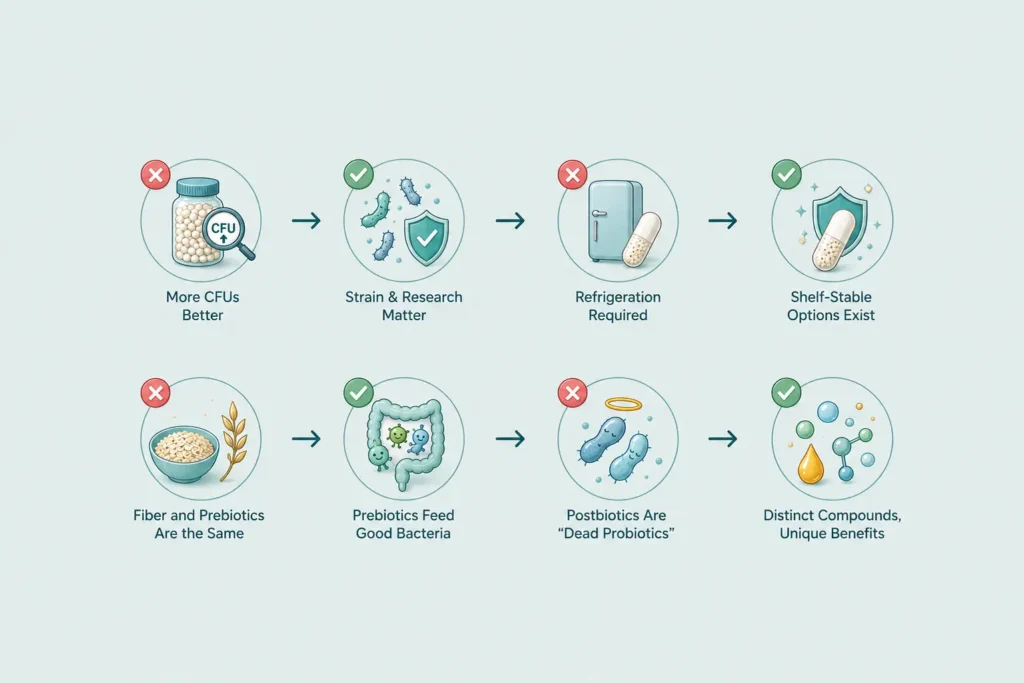
Myth: More CFUs always means a better probiotic. In reality, effectiveness depends on the specific strain and whether it has been studied for the benefit you’re looking for. A lower-CFU product with a well-researched strain can outperform a higher-CFU product with an untested one.
Myth: Probiotics need to be refrigerated to work. Some strains are formulated to be shelf-stable through a process that protects the bacteria until they reach your gut. Always check the label instead of assuming.
Myth: Prebiotics and fiber are the same thing. All prebiotics are fiber, but not all fiber is prebiotic. Prebiotic fiber specifically feeds beneficial bacteria; other types of fiber add bulk or slow digestion without necessarily feeding gut bacteria in the same way.
Myth: Postbiotics are just “dead probiotics.” While postbiotics are related to probiotic activity, they’re not simply inactive versions of the same bacteria. They’re distinct compounds, like short-chain fatty acids, with their own biological effects.
Do You Need All Three?
Not necessarily, and for most healthy people, a well-rounded diet already provides a reasonable baseline of all three categories without any supplementation at all. Still, there are situations where being more intentional makes sense.
Most people benefit most from a layered approach:
- A fiber-rich diet that naturally supplies prebiotics through fruits, vegetables, legumes, and whole grains
- Regular intake of fermented foods for a steady, low-dose source of probiotics
- Postbiotics as a targeted add-on, particularly if you have specific digestive concerns, don’t tolerate live bacteria well, or are looking for a more shelf-stable option
If your diet already includes a wide variety of fruits, vegetables, whole grains, and fermented foods, you may be getting more prebiotic and probiotic support than you realize, and a supplement may offer only marginal additional benefit. Supplements tend to be most useful when filling a specific gap, after a course of antibiotics, during travel when diet changes suddenly, or when digestive symptoms flare up and you’re looking for extra support.
Conclusion
The prebiotic vs probiotic vs postbiotic conversation isn’t about picking a winner. Each one plays a distinct, complementary role in supporting a healthy gut:
- Prebiotics feed the good bacteria already living in your gut, acting as fuel rather than as organisms themselves.
- Probiotics add beneficial live bacteria to your existing microbial community, helping restore balance and diversity.
- Postbiotics deliver the end-result compounds that bacteria produce, offering stable, targeted support without relying on live organisms.
Rather than choosing one over the others, the most effective approach usually combines all three, through a fiber-rich diet, regular consumption of fermented foods, and, where appropriate, a well-chosen supplement to fill in the gaps. If you have ongoing digestive issues or an underlying health condition, it’s worth talking to a doctor or registered dietitian before starting any new regimen, since individual gut health needs vary widely and what works well for one person may not be the right fit for another.
Frequently Asked Questions (FAQs)
What is the main difference between prebiotics and probiotics?
Probiotics are live bacteria that add beneficial microbes to your gut, while prebiotics are non-digestible fibers that feed the bacteria already living there. One introduces new organisms; the other fuels existing ones. This is the difference between pre- and probiotics in the simplest possible terms.
Can I take prebiotics and probiotics together?
Yes. In fact, taking them together, often called a synbiotic, can be more effective than taking either one alone, since prebiotics help probiotic bacteria survive, establish themselves, and multiply once they reach your gut.
What is the difference between prebiotics and probiotics in terms of food sources?
Prebiotic foods include garlic, onions, bananas, oats, and chicory root. Probiotic foods include yogurt, kefir, kimchi, sauerkraut, miso, and tempeh, typically in their unpasteurized, live-culture form. When it comes to prebiotics vs probiotic foods, the easiest rule of thumb is: plant fiber feeds, fermented foods populate.
Are postbiotics better than probiotics?
Not necessarily better, just different. Postbiotics are more stable and don’t require live bacteria to work, which makes them appealing for certain groups, but probiotics play a unique role in repopulating and diversifying the gut microbiome that postbiotics can’t replicate on their own.
What are the best prebiotic fruits?
Bananas, apples, and pomegranates are among the most commonly cited prebiotic fruits, largely due to their fiber and polyphenol content. Slightly underripe bananas in particular contain more resistant starch, a type of prebiotic fiber.
Do prebiotic and probiotic gummies actually work?
They can, provided they contain meaningful doses of both prebiotic fiber and specific, research-backed probiotic strains rather than trace amounts included mainly for label appeal. Checking the ingredient panel closely is worthwhile before buying.
Can too much prebiotic fiber cause side effects?
Yes. Consuming too much prebiotic fiber too quickly, especially from concentrated supplements like a prebiotic fiber supplement, can cause bloating, gas, or stomach discomfort. It’s best to increase intake gradually and drink enough water alongside it.
Is yogurt a prebiotic or probiotic food?
Yogurt with live active cultures is a probiotic food. It’s not a significant source of prebiotic fiber on its own unless it has been specifically fortified with added fiber.
How long does it take for prebiotics and probiotics to work?
Effects vary by individual and by product, but many people notice digestive changes within a few days to a few weeks of consistent intake. Long-term microbiome changes tend to take longer and are more closely tied to overall diet than any single supplement.