Medical disclaimer: This article is for informational purposes only and does not constitute medical advice. It is not a substitute for professional diagnosis or treatment. Always consult a qualified healthcare provider — such as a registered dietitian or endocrinologist — before making dietary changes, especially if you have been diagnosed with PMOS or suspect you may have it.
If you’ve ever sat in a doctor’s office, read a diagnosis of polycystic ovary syndrome, and thought, “but I don’t even have cysts” — you were right to be confused. That disconnect has frustrated millions of women for decades. And now, medicine has finally caught up. Building the right PMOS diet plan starts with understanding what this condition actually is.
The condition most of us know as PCOS (polycystic ovary syndrome) has been officially renamed PMOS, which stands for Polyendocrine Metabolic Ovarian Syndrome. The name change was announced in a landmark consensus paper published in The Lancet, carried out over ten years, involving more than 22,000 participants from six continents and 56 patient and professional organizations. While the transition is still underway, many clinicians continue to use PCOS — the scientific and patient community has broadly welcomed the change as long overdue.
That’s not just a name swap. It’s a paradigm shift. And if you’re living with PMOS, it changes how you think about your diet, your body, and your long-term health.
What Is PMOS, Really?
PMOS is the new name for what most people knew as PCOS. At its core, it is a syndrome of hormonal dysregulation, driven primarily by insulin resistance and an excess of androgens — male hormones like testosterone. The disorder involves the ovaries, but it is far from limited to them.
This is exactly why a well-designed PMOS diet plan matters so much: PMOS affects weight, metabolic health, mental health, skin, and the reproductive system. For too long, the old name reduced a complex, long-term hormonal condition to an ovarian problem — leading to missed diagnoses, misunderstood symptoms, and treatment that only addressed part of the picture. PMOS affects one in eight women globally — approximately 13% of women of reproductive age, according to the World Health Organization.
Why Was PCOS Renamed PMOS?
The original name dates back a century. When early surgeons discovered fluid-filled sacs on a patient’s ovaries, they labelled them cysts and named the condition accordingly. What they didn’t yet understand was that the irregular periods, elevated testosterone, and fertility struggles they were seeing were symptoms of a far deeper, system-wide hormonal disorder — not merely an ovarian one. The new name, PMOS, was chosen to reflect two things the old name missed entirely:
- Polyendocrine — recognising that the disorder involves a wide range of hormonal disturbances, including insulin, androgens, neuroendocrine hormones, and other factors beyond the ovaries.
- Metabolic — acknowledging the metabolic features central to the condition: insulin resistance, weight gain, elevated cardiovascular risk, and increased likelihood of developing type 2 diabetes.
PMOS Symptoms: What to Watch For
The hormonal disruption of PMOS can lead to a range of symptoms. Many women don’t receive a diagnosis until they experience difficulty getting pregnant or notice unexplained weight gain — often because the earlier signs were dismissed or misattributed. Common symptoms include:
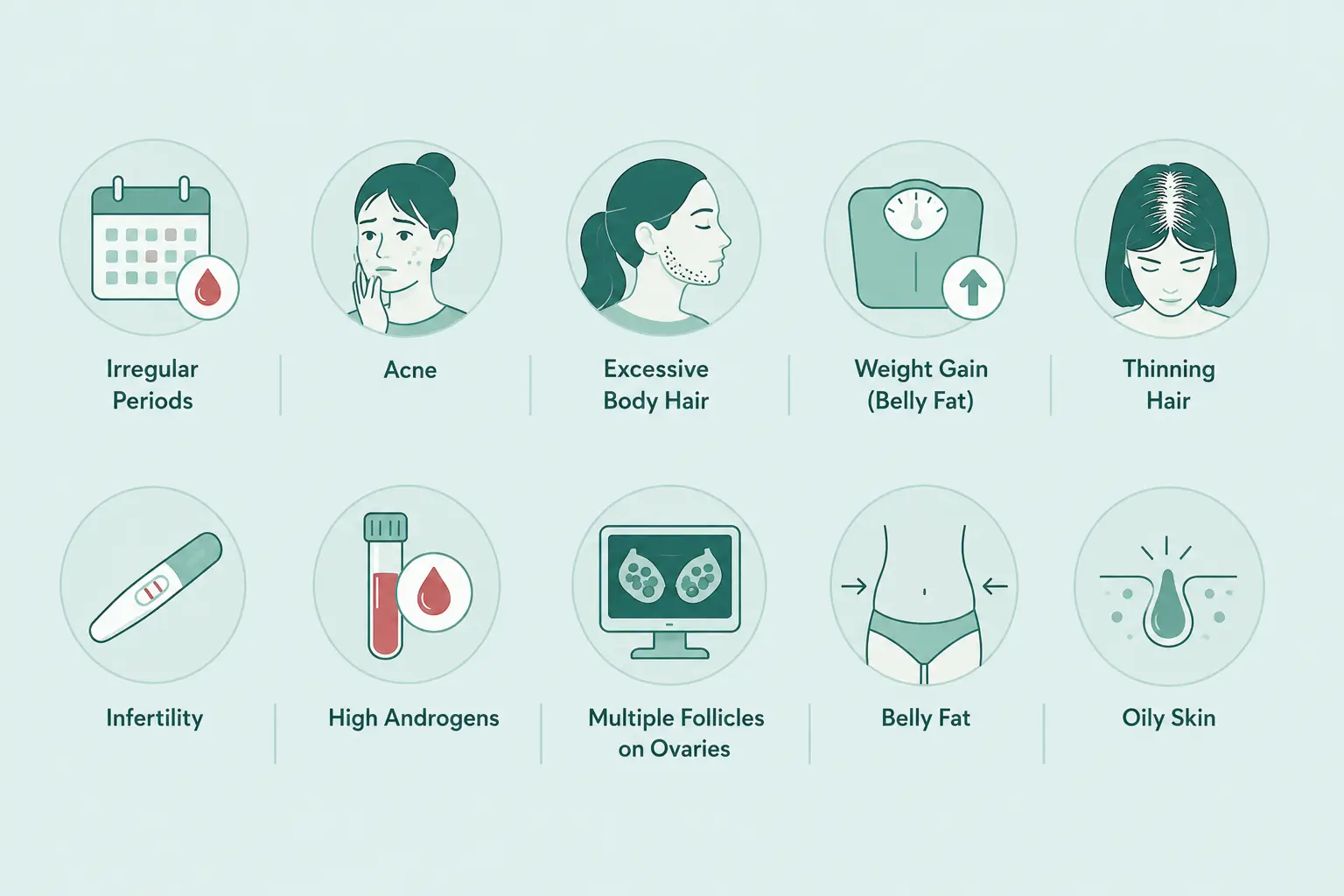
- Irregular or infrequent periods
- Excessive body or facial hair (hirsutism)
- Weight gain, particularly around the abdomen
- Acne, especially on the jawline or chin
- Thinning hair or hair loss on the scalp
- Difficulty conceiving
- Fatigue and low energy
- Mood changes, anxiety, or depression
These are not just cosmetic inconveniences. They are signs that your body’s metabolic and hormonal systems are under significant stress — and a targeted PMOS diet plan addresses them at the root. To be diagnosed with PMOS, two of these three criteria must be present: irregular or infrequent periods (cycles of 35 days or more); high androgen levels (confirmed by blood test or visible symptoms like acne and excess hair growth); and multiple immature follicles visible on the ovaries via ultrasound.
The PMOS–Insulin Connection: Why Food Matters So Much
Here is something that fundamentally changes how you approach PMOS: it is, at its core, a metabolic condition wearing a hormonal costume. Research shows that approximately 85% of women with PMOS also have insulin resistance (Stepto et al., 2013, Human Reproduction).
When you eat carbohydrates, your body breaks them down into glucose, and the pancreas releases insulin to move that glucose into your cells for energy. In insulin resistance, your cells stop responding to insulin properly — so your body produces more and more of it. This excess insulin triggers the ovaries to produce more androgens, which disrupts ovulation, worsens acne and hair growth, and makes weight management much harder.
When you support stable blood sugar, you support hormonal stability. That’s when things begin to shift — periods become more regular, energy improves, and weight starts to move. No crash diet can cure PMOS, but a thoughtful, metabolically sound PMOS diet plan can genuinely move the needle.
The PMOS Diet Plan: What to Eat
A good PMOS diet plan isn’t about eating less. It’s about eating smarter. The goal is to keep blood sugar steady, reduce chronic inflammation, and give your hormones the nutritional foundation they need to rebalance.
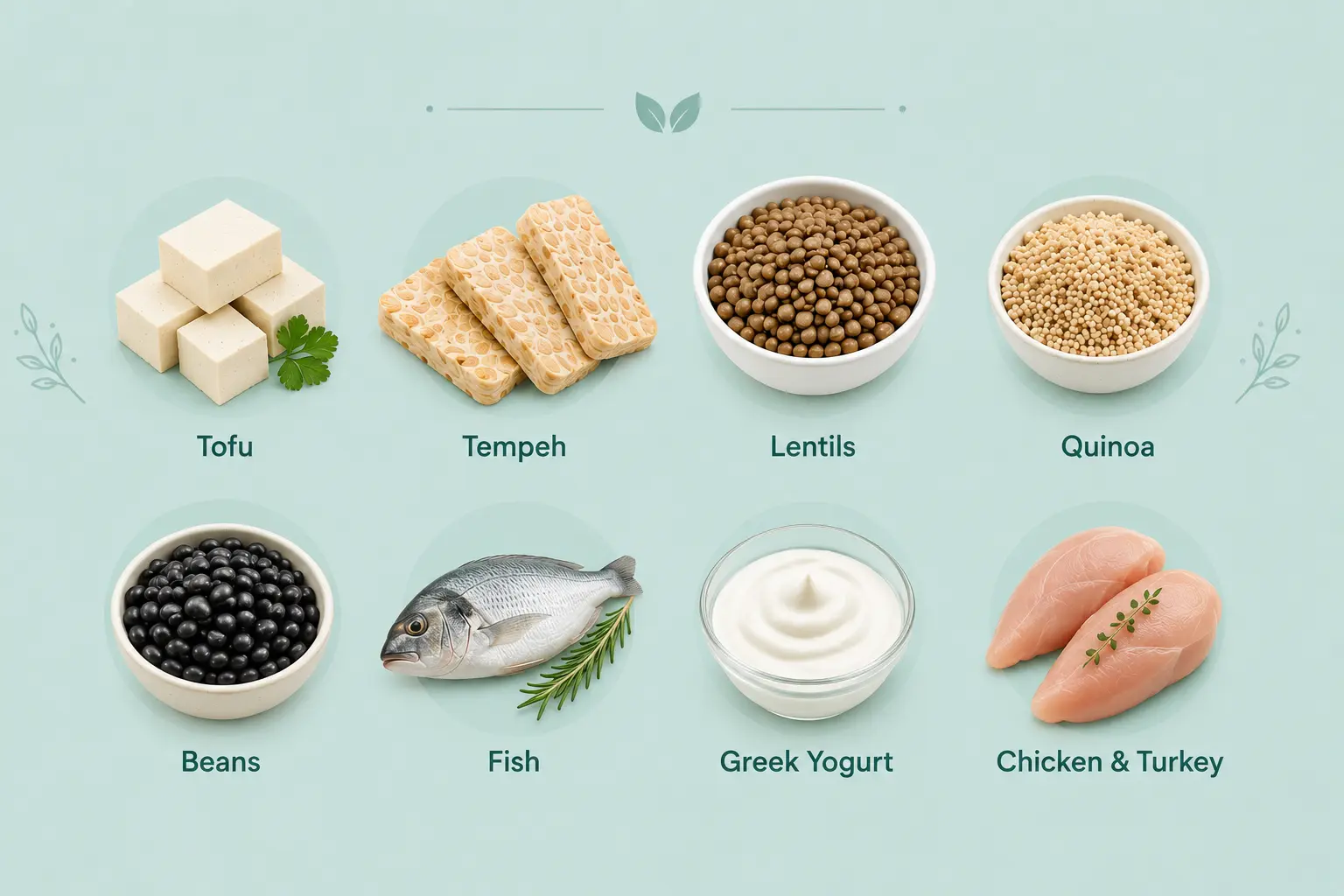
1. Lean and Plant-Based Proteins
Protein slows digestion — which means a gentler, slower rise in blood sugar after meals. It also keeps you full and supports your metabolism. Include protein at every meal, especially breakfast. Good sources: tofu, tempeh, lentils, quinoa, beans, wild-caught fish, Greek yogurt, chicken breast, eggs, and turkey.
2. High-Fibre, Low-Glycaemic Carbohydrates
Cutting carbohydrates entirely isn’t the answer — and most registered dietitians will tell you the same. What matters is the type of carbohydrate. Fibre-rich, low-GI foods digest slowly and avoid the sharp insulin spikes that worsen PMOS symptoms. Good sources: oatmeal, brown rice, sweet potatoes, chickpeas, lentils, whole-grain bread, barley, and quinoa. For morning ideas, see our high-fibre breakfast ideas.
3. Anti-Inflammatory Healthy Fats
Healthy fats are one of the most underrated tools in a PMOS diet plan. Chronic low-grade inflammation is one of the primary drivers of the hormonal cascade that worsens PMOS symptoms. Foods rich in omega-3 fatty acids actively reduce that inflammation and support hormone production. Good sources: avocado, extra-virgin olive oil, walnuts, flaxseeds, chia seeds, salmon, sardines, and mackerel. Our 7-day anti-inflammatory meal plan pairs perfectly with this approach.
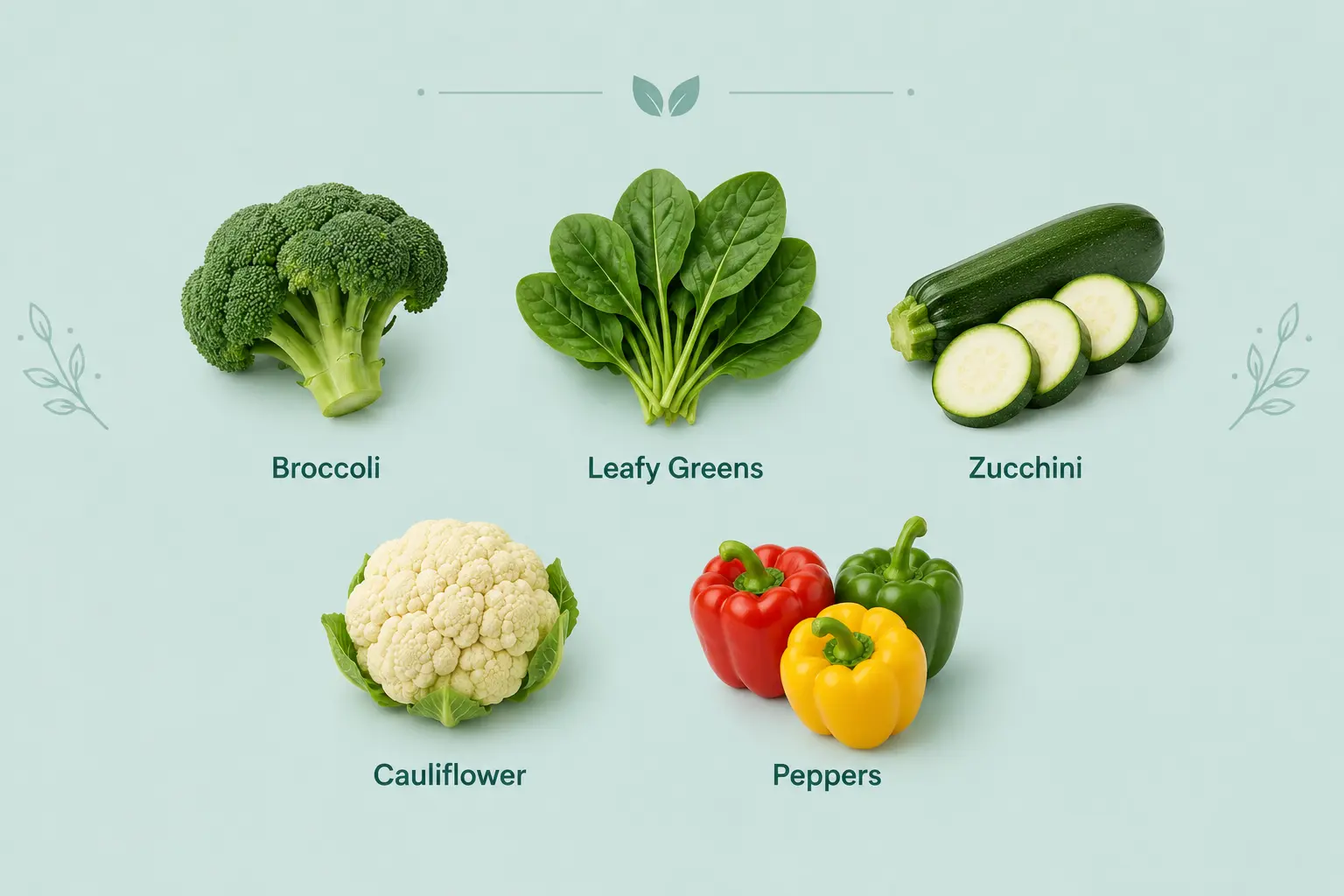
4. Colourful, Non-Starchy Vegetables
In any PMOS diet plan, these should form the largest portion of your plate. Non-starchy vegetables provide fibre and micronutrients without raising blood sugar — and many are directly anti-inflammatory. Emerging research also highlights the gut–hormone connection: a well-fed gut microbiome supports oestrogen metabolism and reduces androgen activity. Good sources: broccoli, leafy greens (spinach, kale, rocket), zucchini, cauliflower, peppers, cucumber, asparagus, and Brussels sprouts.
5. The Mediterranean Diet: The Gold Standard for PMOS
Of all dietary patterns studied in the context of PMOS, the Mediterranean diet has the strongest evidence base. A 2020 study in Nutrients found that PMOS patients following a Mediterranean eating pattern experienced significant improvements within three months: reduced waist circumference, lower insulin resistance, improved lipid profiles, and better hormonal balance. The DASH diet is also recommended and shares many of the same principles. It centres on whole grains, legumes, olive oil, fatty fish, and abundant vegetables — all of which tick the PMOS-friendly boxes. For more on cardiovascular-friendly eating, read our heart-healthy diet foods guide.
The PMOS Plate Method
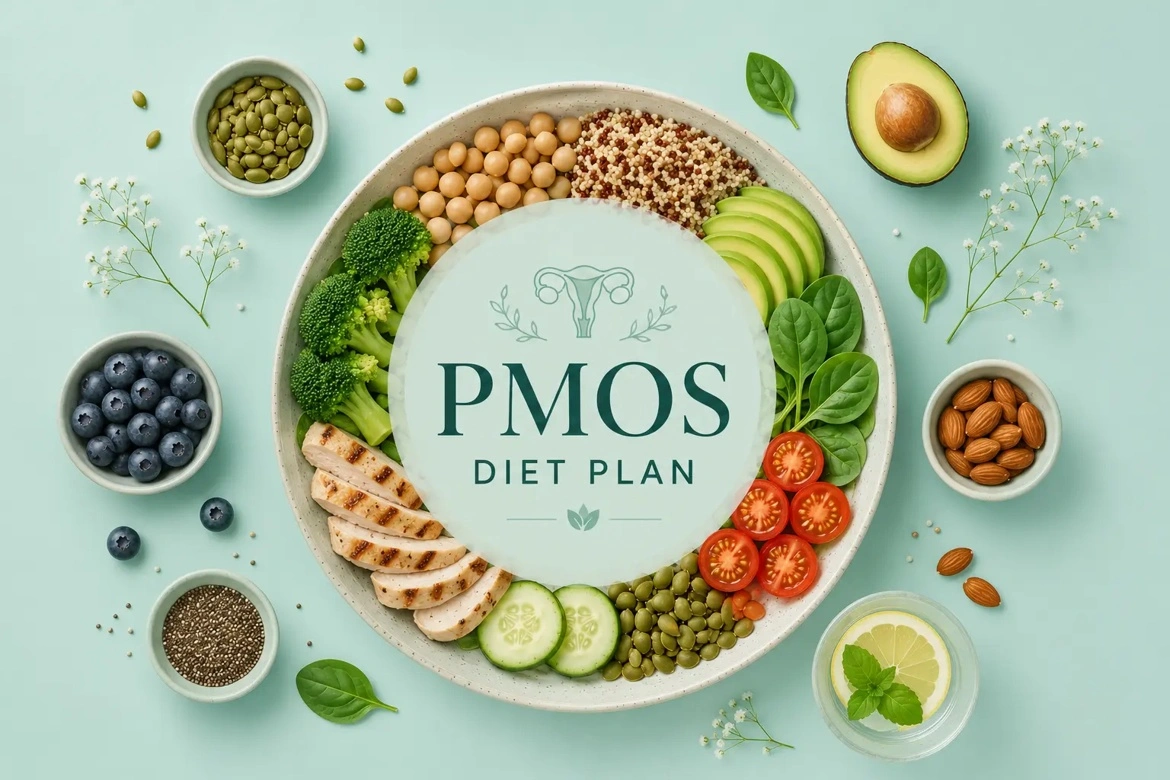
This plate method is the simplest way to picture a balanced PMOS diet plan. Use it as your visual guide at every meal. You don’t need to count calories — just build your plate around these proportions.
| Plate Component | Target | Ideal Foods | Why It Helps |
|---|---|---|---|
| Non-Starchy Vegetables | 50% of plate | Leafy greens, broccoli, cauliflower, zucchini, bell peppers | Fibre-rich, anti-inflammatory, gut-supportive |
| Clean Protein | 25% of plate | Wild salmon, grilled chicken, organic tofu, eggs, Greek yogurt | Slows digestion, steadies blood sugar, supports hormones |
| Complex Carbohydrates | 25% of plate | Sweet potato, quinoa, black beans, brown rice, oats | Low-GI, slow-release energy, avoids insulin spikes |
| Healthy Fats | 1–2 tablespoons | Extra-virgin olive oil, avocado, walnuts, flaxseeds | Reduces inflammation, supports hormone production |
What to Limit on a PMOS Diet
What you pull back on in your PMOS diet plan is just as important as what you add. None of this means you can never enjoy a treat again — it means building a foundation that keeps your blood sugar steady most of the time, so the occasional indulgence doesn’t derail your progress.
- Sugary drinks — sodas, fruit juices, energy drinks, and flavoured coffees cause sharp, rapid blood sugar spikes that are especially harmful in PMOS.
- Refined carbohydrates — white bread, pastries, white rice, and processed cereals digest quickly and drive insulin spikes.
- Ultra-processed foods — packaged snacks, fast food, and ready meals are high in refined fats, sugars, and additives that promote inflammation.
- Excessive alcohol — alcohol interferes with blood sugar regulation, disrupts sleep, and increases inflammation.
- Trans fats — found in some margarines, fried foods, and processed snacks; directly pro-inflammatory.
7-Day PMOS Meal Plan
This sample PMOS diet plan is designed to keep blood sugar stable throughout the day, reduce inflammation, and provide adequate protein at every meal. Adjust portions to your appetite and energy needs. Aim for 8–10 glasses of water daily — spearmint tea (which has shown promise in reducing androgen levels) and green tea are great additions.
| Day | Breakfast | Lunch | Dinner |
|---|---|---|---|
| Mon | Oatmeal with berries, chia seeds & walnuts | Grilled salmon over mixed greens with olive oil | Lentil soup with roasted cauliflower & quinoa |
| Tue | Greek yogurt with flaxseeds & sliced apple | Chicken & chickpea salad with lemon dressing | Stir-fried tofu with broccoli & brown rice |
| Wed | Scrambled eggs with spinach & whole-grain toast | Turkey lettuce wraps with avocado & tomato | Baked salmon with roasted sweet potato & asparagus |
| Thu | Smoothie: spinach, berries, almond butter, oat milk | Lentil & vegetable soup with whole-grain roll | Grilled chicken with zucchini noodles & pesto |
| Fri | Overnight oats with pumpkin seeds & cinnamon | Quinoa bowl with chickpeas, cucumber & tahini | Sardines on whole-grain toast with side salad |
| Sat | Veggie omelette with feta & rocket | Mediterranean bowl: brown rice, falafel, greens | Baked cod with roasted peppers & lemon |
| Sun | Whole-grain pancakes with fresh berries (no syrup) | Grilled chicken salad with olive oil & avocado | Slow-cooked lentil dahl with basmati rice |
Snack ideas: a small handful of walnuts, apple with almond butter, Greek yogurt with berries, hummus with cucumber slices, or a boiled egg with whole-grain crackers.
PMOS-Friendly Supplements Worth Knowing About
Diet is the foundation, but certain supplements have meaningful research behind them for PMOS specifically. Always discuss with your healthcare provider before adding any supplement, especially if you are on medication. For a women’s supplement overview, see our guide to the best supplements for women.
| Supplement | What It Does | Typical Dose | Evidence Level |
|---|---|---|---|
| Myo-Inositol | Improves insulin sensitivity; supports ovulation | 2–4g daily | Strong — multiple RCTs |
| Vitamin D | Deficiency is common in PMOS; supports insulin & mood | 1,000–2,000 IU daily (test first) | Moderate |
| Magnesium | Reduces insulin resistance; improves sleep | 200–400mg daily | Moderate |
| Omega-3 (fish oil) | Reduces inflammation & androgens | 2–3g EPA/DHA daily | Strong — multiple studies |
| Zinc | Reduces excess hair growth; supports skin | 25–40mg daily | Moderate |
| NAC (N-acetyl cysteine) | Improves insulin sensitivity; comparable to Metformin in some studies | 1,500–1,800mg daily | Moderate–Strong |
Supplement doses vary by individual. Blood tests for Vitamin D and other markers should guide dosing. Never self-prescribe — always work with a qualified clinician.
Beyond Diet: A PMOS-Friendly Lifestyle
Your PMOS diet plan is the core lever — but it works best when supported by a few other habits:
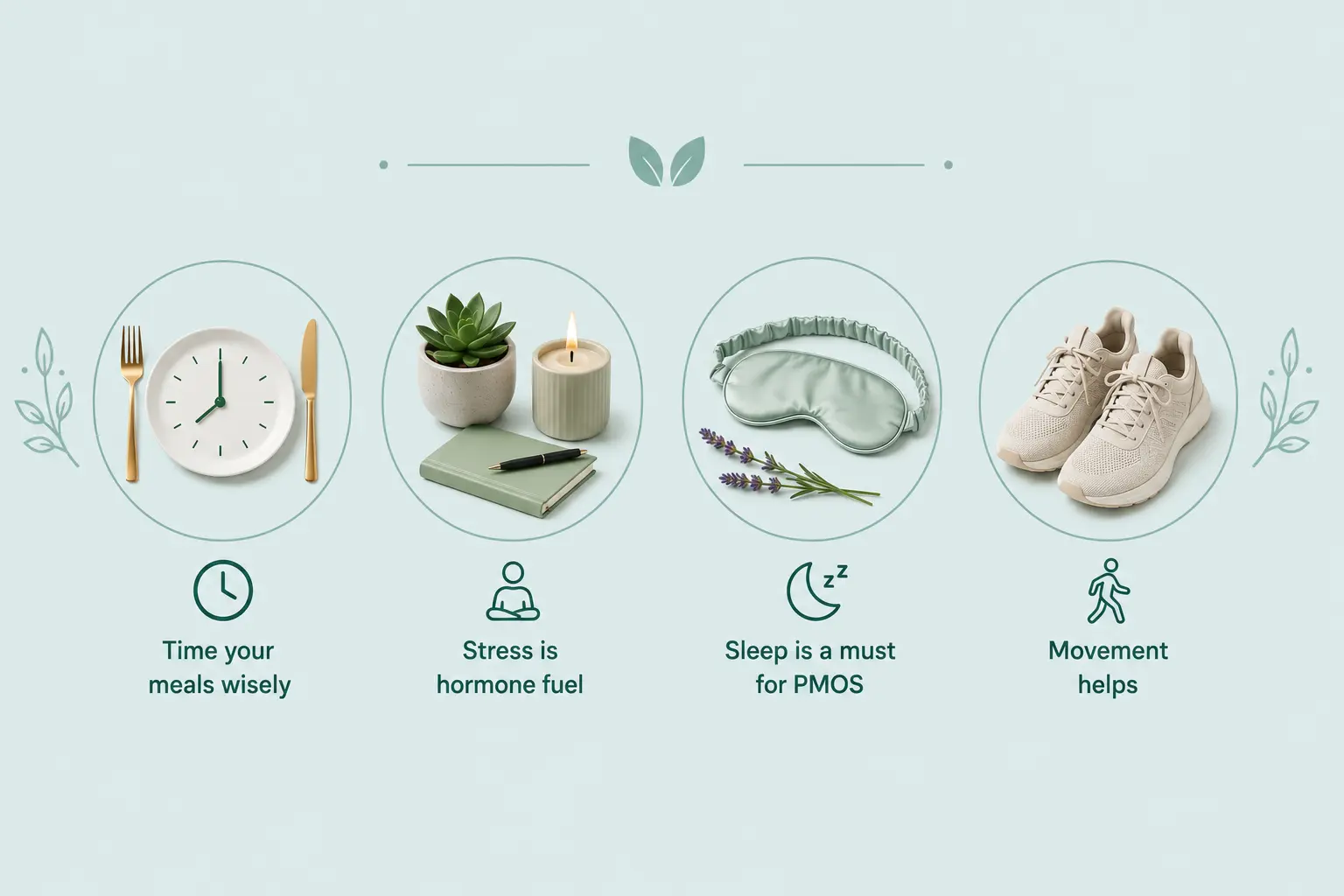
- Time your meals. Eating at regular intervals (three balanced meals, no skipping) keeps insulin from spiking and crashing throughout the day.
- Manage stress actively. Cortisol is one of the most effective drivers of insulin resistance. Even ten minutes of breathwork, walking, or journaling has a measurable effect — our Sunday reset routine is a gentle place to start.
- Prioritise sleep. Poor sleep disrupts leptin and ghrelin (the hunger hormones) and worsens insulin resistance. Aim for 7–9 hours of quality sleep.
- Move after meals. A 10–20 minute walk after eating has been shown to significantly improve post-meal insulin sensitivity — one of the simplest tools for PMOS management.
- Reduce endocrine disruptors. Avoid heating food in plastic containers and choose fragrance-free personal care products where possible.
How Long Does a PMOS Diet Take to Work?
This is one of the most common questions, and the honest answer is: it depends on where you’re starting and how consistently you apply the changes.
- Most women notice energy improvements and reduced bloating within 2–4 weeks of consistent dietary changes.
- Hormonal and menstrual improvements typically begin to appear at 3–6 months.
- Meaningful changes in insulin resistance markers are usually visible at 3–4 months on a consistent low-GI, anti-inflammatory diet.
- Skin improvements (acne, excess hair growth) are slower — expect 4–6 months, as these are androgen-driven and respond gradually.
The key insight: your PMOS diet plan doesn’t need to be perfect — it needs to be consistent. Three months of 80% compliance will produce more change than two weeks of 100% followed by giving up.
Final Thoughts: Your Plate Is Part of Your Treatment
Living with PMOS can be overwhelming — particularly if you’ve spent years being told it’s just about your ovaries, or that hormonal birth control is your only option. The renaming to PMOS is more than a linguistic update; it’s medicine finally acknowledging that this condition is bigger, more complex, and more treatable than previously understood.
A PMOS diet plan doesn’t need to be rigid or perfect. It needs to be consistent, intentional, and rooted in what the evidence shows: steady blood sugar, reduced inflammation, and food that genuinely nourishes your whole hormonal system. Start with one meal. Then the next. That is how real, lasting change happens.
Frequently Asked Questions About the PMOS Diet Plan
Is PCOS now called PMOS?
Yes. PCOS has been officially renamed PMOS (Polyendocrine Metabolic Ovarian Syndrome) following a landmark consensus paper published in The Lancet. The name reflects a more accurate understanding of the condition as a whole-body hormonal and metabolic disorder. The transition is ongoing — many clinicians still use the term PCOS.
Which foods are best for PMOS?
Fatty fish such as salmon, sardines, and mackerel are excellent — they provide protein alongside anti-inflammatory omega-3s. Other beneficial foods include non-starchy vegetables, legumes, whole grains, avocado, olive oil, Greek yogurt, eggs, and nuts. The common thread: foods that digest slowly, reduce inflammation, and keep insulin stable.
What foods should be avoided with PMOS?
Limit sugary drinks (sodas, fruit juices, sweetened coffees), refined carbohydrates (white bread, pastries, white rice), ultra-processed snacks, and excessive alcohol. These cause rapid insulin spikes that directly worsen the underlying hormonal dysfunction of PMOS.
What are the main symptoms of PMOS?
Common symptoms include irregular or absent periods, acne (especially on the jaw and chin), excessive facial or body hair, scalp hair thinning, unexplained weight gain around the abdomen, fatigue, and difficulty conceiving. Mood changes and anxiety are also frequently reported but often overlooked.
How long does it take for diet to improve PMOS symptoms?
Energy and digestive improvements often appear within 2–4 weeks. Hormonal and menstrual improvements typically emerge at 3–6 months of consistent dietary changes. Skin-related symptoms like acne and excess hair growth are slower — expect 4–6 months. Consistency matters far more than perfection.