Have you too been hearing what Retinol Serum and Vitamin C serum can do for your skin, fading away dark spots and acting as overnight anti-wrinkle wonders? It sounds like a magic potion, right? But what makes it so popular, or is it a gimmick? Are the results you see all over your social media real? Or maybe just some paid collaborations.
Let’s take a deep dive and see what the hype is: Retinol vs Vitamin C. Do you really need it, or is it just a marketing tactic? Before you get into adding anything new to your skincare routine, make sure to check if it aligns with your skincare goals and skin concerns because not every ingredient will suit your skin type. Some of these ingredients are for targeted use and are used only when needed.
So how do you know if a retinol serum or vitamin C serum is right for you?
Here is everything you should know before buying any retinol serum or vitamin C serum. Understanding how these ingredients work can help you make smarter skincare choices instead of simply following trends.
Retinol vs Vitamin C: Side-by-Side Comparison at a Glance
| Feature | Vitamin C | Retinol |
| What it is | Ascorbic acid (antioxidant) | Vitamin A derivative |
| Primary benefit | Brightening, antioxidant protection | Anti-ageing, cell turnover |
| Best for | Dark spots, dullness, uneven tone | Fine lines, wrinkles, texture, and acne |
| When to use | Morning | Night |
| Works on | Surface + antioxidant layer | Deep within the skin |
| Skin sensitivity | Low to moderate | Moderate to high |
| Beginner-friendly | Yes | Introduce slowly |
| Visible results | 4–6 weeks | 8–12 weeks |
| Sunscreen required | Yes | Yes (especially important) |
| Can combine? | Yes — use AM | Yes — use PM |
What is Vitamin C?
Scientifically known as ascorbic acid, Vitamin C is a potent antioxidant that has been used in skincare for ages now. Being antioxidant-rich, skincare helps protect cells from damage caused by free radicals.
What Does Vitamin C Serum Do?
With all the hype over social media, you would have seen getting brighter skin by using Vitamin C serums. And that is precisely what this ingredient does. Used widely for its brightening capabilities, Vitamin C also protects and gives your skin the superfood it needs.
It can effectively —
- Reduce dark spots and hyperpigmentation
- Support collagen production
- Protect against free radicals
- Improve overall skin tone
How to use Vitamin C serum?
Every time you get a new serum, you wonder, what goes first, the moisturiser or the serum? Well, how to use Vitamin C serum? It is a breeze and simplified. You can incorporate it into your existing skincare routine. Follow these simple steps:
- Cleanse your face
- Apply vitamin C serum
- Apply moisturizer
- Finish with sunscreen
You cannot miss out on sunscreen, as it is essential for protecting your face from any further damage. The best time to use Vitamin C is in the morning, as it helps with the environmental impact on your skin from all the dust and pollution.
Take a look at the Vitamin C concentration in your serum. Begin with 10 per cent and work your way up, keeping in mind your skin concerns.
How Vitamin C Works on a Cellular Level
Vitamin C operates in two ways.
1. Antioxidant neutralisation: Free radicals damage collagen fibres and skin cell DNA, accelerating ageing. Vitamin C donates electrons to neutralise these free radicals before they can cause structural damage to your skin cells.
2. Melanin inhibition: Hyperpigmentation and dark spots occur when melanocytes overproduce melanin. Vitamin C inhibits tyrosinase, which plays an essential role in melanin production. Less tyrosinase activity = less pigment production, which means a brighter skin over time.
3. Support for collagen synthesis: Vitamin C is an essential cofactor for the enzymes that make collagen fibres (prolyl hydroxylase and lysyl hydroxylase) work well in the skin. The new collagen is structurally weak without vitamin C, and topical application stimulates and stabilises collagen at the treatment site.
What is Retinol?
Coming to our next viral ingredient, Retinol is a form of Vitamin A, which rapidly increases cell turnover and stimulates collagen production. Unlike vitamin C, retinol works deeper within the skin and is usually applied at night.
What is Retinol Serum used for?
Being a dermatologist, I recommend the product Retinol, which is known to deliver results with consistent use. If your skin is showing early signs of aging, like smile lines and crows’ feet, or you want to improve your overall skin texture, then this is for you. Retinol helps with—
- Fine lines and wrinkles
- Skin texture
- Acne
- Enlarged pores
- Dark spots
Retinol does not work for everyone; it can make your skin super sensitive, so make sure you introduce it slowly over a period of time.
Pro Tip—If Retinol does not feel strong enough, then you can go with Retinal. What Is Retinal? Retinol is a stronger form of vitamin A than retinal but is still available in some over-the-counter products. It converts to retinoic acid faster than retinol, making it more potent.
How to use Retinol?
Every time you get a new serum, you wonder, what goes first, the moisturiser or the serum? Well, how to use Vitamin C serum? It is a breeze and simplified. You can incorporate it into your existing skincare routine. Follow these simple steps:
- Cleanse your face
- Apply vitamin C serum
- Apply moisturizer
- Finish with sunscreen
You cannot miss out on sunscreen, as it is essential for protecting your face from any further damage. The best time to use Vitamin C is in the morning, as it helps with the environmental impact on your skin from all the dust and pollution.
Take a look at the Vitamin C concentration in your serum. Begin with 10 per cent and work your way up, keeping in mind your skin concerns.
How Retinol Works on a Cellular Level
Retinol is a biological force that works through a conversion cascade:
1. Retinol converts to retinoic acid (retinaldehyde) after absorption, and then retinoic acid (active form) binds to the nuclear receptors (RAR and RXR) in skin cells. This binding determines gene expression directly.
2. Fast cell turnover: Retinol facilitates the turnover of old, damaged surface cells as they divide and migrate faster and therefore speeds up the transition from old and damaged skin cells to younger and healthier ones. This means fresh skin underneath and fine lines, uneven texture, and clogged pores look clean and smooth.
3. Collagen stimulation and matrix preservation: Retinoic acid upregulates the expression of collagen genes but also inhibits matrix metalloproteinases (MMPs), which destroy collagen and thus break down the existing collagen. The result: more collagen is produced and less is destroyed.
4. Pigment regulation: retinol disperses melanin granules and prevents melanin granules from reaching the surface of skin cells, which is why it’s effective in reducing the transfer of melanin granules from the skin to surface cells over time for dark spots and post-acne marks.
Which is Better For Your Concern?
| Skin Concern | Best Choice | Why |
| Wrinkles & fine lines | Retinol | Stimulates collagen + speeds cell turnover at a deeper level |
| Dark spots & hyperpigmentation | Vitamin C | Inhibits tyrosinase, reducing melanin production |
| Acne | Retinol | Accelerates cell turnover, unclogs pores, reduces sebum |
| Dullness & uneven tone | Vitamin C | Brightens and evens skin tone through antioxidant action |
| Sun damage | Vitamin C | Antioxidant neutralises UV-triggered free radical damage |
| Skin texture | Retinol | Resurfaces skin by removing dead cells faster |
| Beginners | Vitamin C | Gentler, fewer side effects, easier to incorporate |
| Sensitive skin | Vitamin C | Less likely to cause peeling or irritation |
| Complete anti-aging routine | Both | Use Vitamin C (AM) + Retinol (PM) for full coverage |
Can You Use Vitamin C and Retinol Together?
Yes, but not at the same time. And when used in combination by skincare experts and dermatologists, the key is to space them out:
Morning: Vitamin C serum → Moisturiser → SPF.
Night: Cleanser → Retinol → Moisturiser
Routine Order and Timing Guide
Week 1–2: Vitamin C in the morning only. Watch your skin.
Week 3–4: If your skin tolerates Vitamin C well, then take Retinol once a week, at night.
Week 5–8: Increase the frequency of retinol (once a week and then every other night) according to how sensitive your skin reacts.
Week 8+: If no excessive sensitivity is involved, you can use both regularly, Vitamin C every day in the AM and retinol 3–5 nights per week in the PM.
If it’s too much: Only use one ingredient. Vitamin C for 3–4 weeks and evaluate your skin. If your main concern is wrinkles and fine lines, you can go with retinol alone.
Important Layering Rules
- Never layer them on top of each other in the same routine
- Retinol should always be followed by a nourishing moisturiser to minimise irritation
- Broad-spectrum SPF 30+ is non-negotiable with both ingredients
- Do not combine with strong exfoliants (AHAs, BHAs) until your skin is fully adjusted.
Best Vitamin C and Retinol Products
Both of these are scientifically supported ingredients with proven results. Here are some of the best options across price points:
Best Vitamin C Serums
| Product | Concentration | Best For |
| The INKEY List 15% Vitamin C & EGF Brightening Serum | 15% | Beginners to intermediate |
| Youth To The People 15% Vitamin C Bright Cell | 15% | Brightening + antioxidant boost |
| Dermalogica Biolumin-C Vitamin C Serum | Stabilised complex | Daily glow, sensitive skin |
| Vitamin C 20% Brightening Serum (Medik8) | 20% | Advanced users, stubborn spots |
| Klairs Freshly Juiced Vitamin Drop | 5% | Sensitive or first-time users |
Best Retinol Serums & Creams
| Product | Strength | Best For |
| Murad Retinol Youth Renewal Night Cream | Encapsulated retinol | Anti-aging, wrinkles |
| First Aid Beauty Ultra Repair Retinol Complex Serum | Gentle | Sensitive skin beginners |
| Neutrogena Rapid Wrinkle Repair Retinol Serum | Retinol SA | Budget-friendly anti-aging |
| Celimax The Vita-A Retinol | Mild | Texture, tone, beginners |
| Good Molecules Gentle Retinol Cream | 0.10% | Very sensitive or first-time users |
What are the dos and don’ts for using Vitamin C and Retinol?
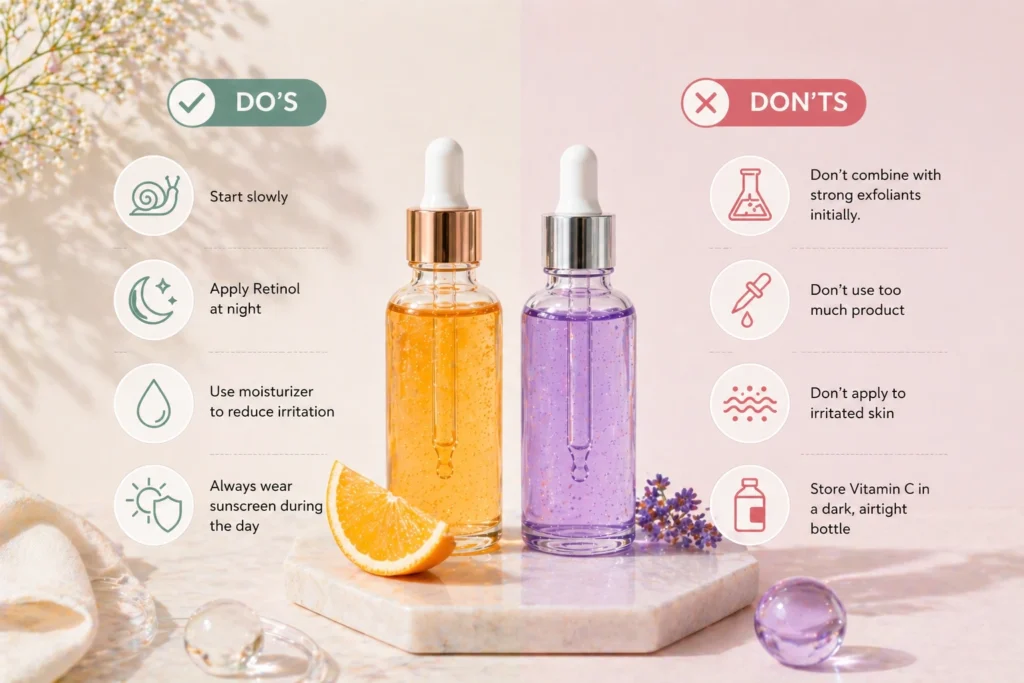
With such powerful ingredients, it’s simple to use them incorrectly or not see your desired results. Know that when it comes to retinol vs vitamin C, both take around 8-12 weeks of regular use to show skin improvements.
Do’s
- Start slowly
- Apply Retinol at night
- Use moisturiser to reduce irritation
- Always wear sunscreen during the day
Don’ts
- Don’t combine with strong exfoliants initially.
- Don’t use too much product
- Don’t apply to irritated skin
- Store Vitamin C in a dark, airtight bottle
Can I use vitamin C with retinol?
Often used in combination by skincare gurus and dermatologists. The answer to “Can I use vitamin C with retinol?“ is Yes. But you should not use them together at the same time. Space them out and use vitamin C during the day and Retinol during the night. With a slow introduction, see how your skin is reacting accordingly, and you can adjust for the best results.
If it is too much to handle, then stick to one ingredient only, use vitamin C for 3–4 weeks, and observe your skin. If your skin can take new products, and your concern is mainly wrinkles and fine lines, then you can opt for retinol alone.
What are the best Vitamin C and Retinol Products out there?
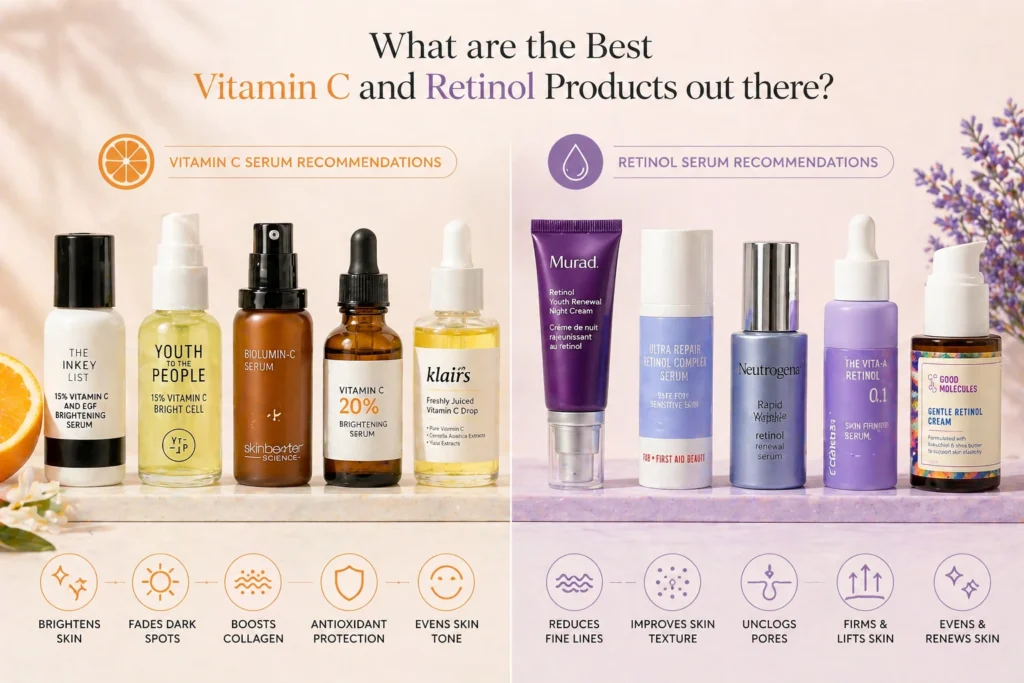
There are a bunch of brands that do great skincare with potent ingredients. This is not just a claim; it is proven to improve skin.
Vitamin C serum recommendations
- The INKEY List 15% Vitamin C & EGF Brightening Serum
- Youth To The People 15% Vitamin C Bright Cell
- Biolumin-C Vitamin C Serum
- Vitamin C 20% Brightening Serum
- Klairs Freshly Juiced Vitamin C Drop
Retinol Serum Recommendations
- Murad Retinol Youth Renewal Night Cream
- First Aid Beauty Ultra Repair Retinol Complex Serum
- Neutrogena Rapid Wrinkle Repair Retinol Renewal Serum
- Celimax The Vita-A Retinol
- Good Molecules Gentle Retinol Cream
Final Takeaway
Do Vitamin C and Retinol Work? Well, yes. They are scientifically backed ingredients, followed up with trials and results that are visible. The testimonials on the internet are not just a marketing tactic. You can use both together for a complete and targeted skin care routine, which must be followed up with skin-nourishing moisturisers and broad-spectrum sunscreens.
Frequently Asked Questions (FAQs)
1. What does vitamin C serum do?
Vitamin C serum brightens skin, reduces dark spots, and protects against environmental damage.
2. What does vitamin C serum do for your face?
It improves skin tone, boosts collagen production, and helps protect against premature ageing.
3. How to use vitamin C serum?
Apply vitamin C serum in the morning after cleansing and before moisturiser and sunscreen.
4. Can you use vitamin C and retinol together?
Yes, but use vitamin C in the morning and retinol at night to avoid irritation.
5. How long does it take to see results from Retinol or Vitamin C?
Both typically require 8–12 weeks of consistent use before visible improvements in skin tone, texture, and fine lines become noticeable.
6. Can beginners use Retinol?
Yes, but start very slowly. Begin with a low concentration (0.1%–0.25%) once a week and build up gradually. Always pair with a good moisturiser and sunscreen.
7. What happens if you use too much Retinol?
Overuse can lead to retinol burn: redness, peeling, dryness, and increased sensitivity. Always use a pea-sized amount and build frequency gradually.
8. Is Retinol safe during pregnancy?
No. Retinoids (including retinol) are not recommended during pregnancy or breastfeeding. Consult your doctor and consider alternatives like Bakuchiol, a plant-based retinol substitute.
9. Can Vitamin C cause skin irritation?
At higher concentrations (above 15–20%), Vitamin C can cause mild tingling or irritation in sensitive skin. Start at 10% and increase based on tolerance.
10. If I have acne, should I use Retinol or Vitamin C?
Retinol is generally more effective for acne-prone skin, as it accelerates cell turnover and helps unclog pores. However, Vitamin C can be beneficial for fading post-acne dark spots (PIH). Used together morning and night, they complement each other well.