Every parent has definitely faced those situations where your child is cranky, they haven’t touched their water bottle since breakfast, and something about them just feels… off. Is it a growth spurt? A bad mood? Or is it the early signs of dehydration in kids that you’ve read about but never quite knew how to spot?
Dehydration in children is one of those things that sneaks up quietly and then suddenly demands attention. Kids don’t always tell you they’re thirsty. They get busy, they get distracted, and by the time they say it, their little bodies may already be running low on fluids. That’s why learning the signs of dehydration matters so much, not to scare you, but to give you the sort of quiet confidence every parent is craving. If you’re the type who likes staying ahead of your body’s signals more broadly, our guide to common signs of hormonal imbalance is worth a read too.
This guide walks through everything you need to know: what dehydration in kids actually looks like, how it shows up differently in newborns versus toddlers versus school-age children, when a little extra water will fix things and when it’s time to head straight to urgent care or the ER. If you’re building out a home health reference library, our hantavirus symptoms, spread, and prevention guide follows a similar signs-and-red-flags format and pairs well with this one.
Why Kids Dehydrate Faster Than Adults
Most parents don’t realize until a pediatrician explains it: kids dehydrate faster than adults do. Their bodies are made up of a higher percentage of water, but they also lose it more quickly through fever, vomiting, diarrhea, or simply playing hard in the summer heat. Add in the fact that babies and toddlers can’t ask for a drink, and you have a recipe for dehydration symptoms in kids that can escalate faster than parents expect.
A mild case caught early is usually nothing more than a glass of water and a bit of rest. Left unnoticed, dehydration can erupt into a genuine medical emergency within hours, especially in infants. That’s the gap this article is going to fill. The sooner you recognize the signs of dehydration, the easier they are to reverse.
The Early Signs of Dehydration in Kids
Dehydration doesn’t happen all at once. It is gradual, and recognizing the early signs of dehydration is what keeps a manageable situation from becoming a scary one.
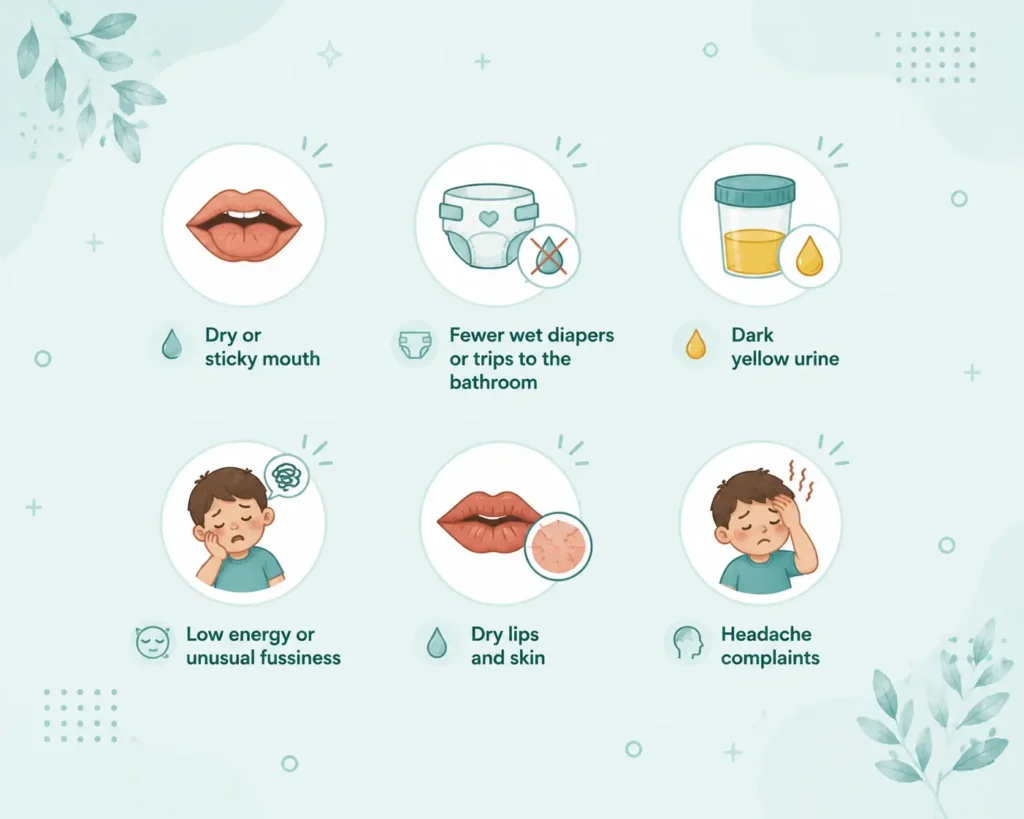
Watch for:
- Dry or sticky mouth: one of the first signs of dehydration, very often before your child even complains of thirst.
- Fewer wet diapers or trips to the bathroom: a noticeable drop in urination is a reliable early clue.
- Dark yellow urine: well-hydrated urine is pale; dark, strong-smelling urine is a signal worth paying attention to.
- Low energy or unusual fussiness: a child who’s usually bouncing off the walls suddenly appears tired or irritable.
- Dry lips and skin: chapped lips or skin that feels less supple than usual.
- Headache complaints: older kids might say they have a dull headache, which is always one of the earliest symptoms of dehydration in kids who can verbalize how they feel.
If you catch dehydration at this stage, the fix is usually simple: offer small, frequent sips of water or an oral rehydration solution, and keep an eye on how they respond over the next few hours.
Moderate to Severe Signs of Dehydration in Children
When dehydration gets beyond the early stages, symptoms of dehydration in kids are harder to miss and harder to ignore.
- Sunken eyes, a classic clinical sign that pediatricians look for immediately.
- No tears when crying, a very unsettling thing for many parents to observe.
- A sunken soft spot (fontanelle) in infants is one of the most obvious newborn dehydration signs.
- Skin that doesn’t bounce back: you pinch the skin on the back of the hand; in a hydrated child, it bounces back instantly. In a dehydrated one, it stays tented.
- Rapid breathing or a fast heartbeat.
- Extreme sleepiness or difficulty waking
- Cold or blotchy hands and feet.
- No urination for 8 hours or longer
These are red flags of dehydration in children that call for prompt medical treatment, not a wait-and-see approach. If you are noticing several of these together, this is the point where a visit to urgent care for dehydration, or the emergency room, is the right call rather than an overreaction.
How to Know If an Infant Is Dehydrated
Newborns and young babies are the group parents worry about most, and for good reason. The signs of dehydration in this age group are easy to miss: they can’t tell you they’re thirsty, they dehydrate faster than older children, and newborn signs of dehydration can be subtle at first.
Signs that indicate an infant may be dehydrated include:
- Fewer than six wet diapers in 24 hours.
- A dry mouth or tongue.
- Crying without tears.
- A sunken fontanelle (the soft spot on top of the head).
- Unusual drowsiness or lethargy.
- Skin that looks dry, loose, or doesn’t bounce back when pinched gently.
If you’re asking yourself how to know if an infant is dehydrated in the middle of the night with a fussy, feverish baby, trust your instincts. A pediatrician would rather get a call about a false alarm than miss a real case of dehydration in an infant, so when in doubt, reach out.
Common Causes of Dehydration in Kids
Knowing what leads to dehydration in kids makes it easier to prevent in the first place. The usual culprits include the following:
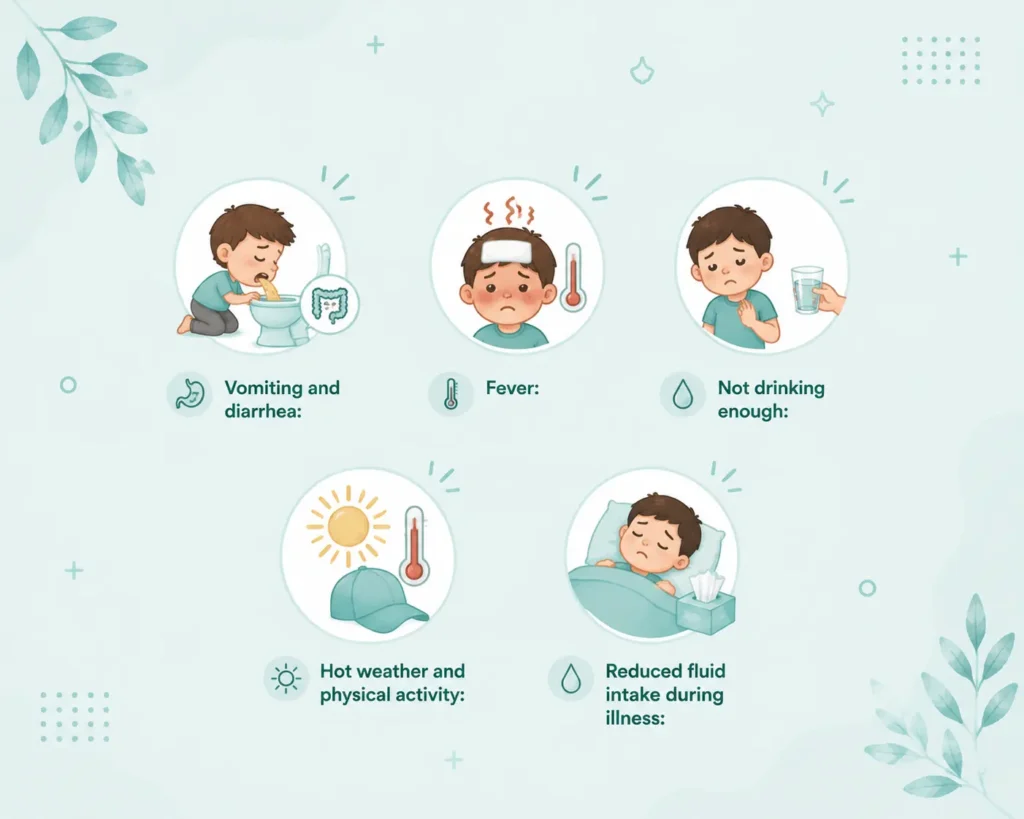
- Vomiting and diarrhea: often from a stomach bug, this is the number one cause of dehydration in children worldwide.
- Fever: higher body temperature increases fluid loss through sweat and breathing.
- Not drinking enough: kids get absorbed in play and simply forget to hydrate.
- Hot weather and physical activity: summer sports, playgrounds, and outdoor play can drain fluids quickly.
- Reduced fluid intake during illness: a sore throat or upset stomach can make children reluctant to drink at precisely the moment they need fluids most.
Knowing the cause allows you to respond properly and catch the signs of dehydration before they worsen. A child dehydrated from a stomach bug needs a very different approach than one who’s simply overheated from an afternoon at the park. MedlinePlus, a service of the National Institutes of Health, has a helpful overview of dehydration if you want a government-reviewed source alongside this guide.
How to Fix Dehydration in a Kid
Dealing with dehydration at home is often an effective treatment for mild to moderate cases. Here is what pediatricians commonly recommend:
- Offer small sips frequently rather than large amounts at once, which can trigger more vomiting if your child’s stomach is already upset.
- Use an oral rehydration solution (available at most pharmacies) rather than plain water alone, especially after vomiting or diarrhea, since these solutions replace lost electrolytes.
- Avoid sugary drinks and undiluted juice, which can actually worsen diarrhea and dehydration.
- Offer hydrating foods like watermelon, cucumber, soups, and popsicles if your child is eating normally.
- Keep track of wet diapers or bathroom trips to monitor improvement. Dress lightly and keep the environment cool if overheating is a factor.
Most mild cases resolve within a day with consistent fluid intake. Watching for improving signs of dehydration is the best way to know home care is actually working. If your child isn’t improving or seems to be getting worse despite your efforts, that’s your cue to escalate care.
When Should You Take Your Kid to the ER for Dehydration?
This is among the most searched questions for a reason: parents want a clear line, not a nebulous “use your judgment” line.
You should go to the ER (Emergency Room) or call your pediatrician immediately if your child shows any of these signs of dehydration:
- No urination for 8+ hours (or no wet diapers for 6+ hours in infants).
- Sunken eyes or a sunken soft spot.
- Extreme drowsiness, confusion, or difficulty waking up.
- Rapid heartbeat or breathing.
- Skin that stays tented after a gentle pinch.
- Persistent vomiting that prevents any fluids from staying down.
- High fever combined with any of the above symptoms.
- A newborn or infant under three months showing any dehydration symptoms at all.
Newborns and infants should always be evaluated sooner rather than later, because their condition can shift quickly. Recognizing severe signs of dehydration quickly can prevent complications. Moderate or severe symptoms for older kids are the deciding factor; mild thirst and dry mouth can usually be treated at home, but sunken eyes, lethargy, or a lack of urination means it’s time for professional care.
For more advanced cases, doctors will use an intravenous solution for dehydration to rehydrate a child quickly and safely, particularly when oral fluids aren’t being tolerated. This is a routine, well-established treatment, and it shouldn’t alarm you if your pediatrician recommends it. MedlinePlus’s entry on dehydration in children is another solid government-backed reference if you want to read further on when fluid loss becomes serious.
What Organs Shut Down First When Dehydrated?
It’s a question that many worried parents Google late at night, and the honest answer is reassuring in context: severe dehydration affects the kidneys first, because they depend on adequate fluid levels to filter waste and regulate the body.
As dehydration progresses, it can affect circulation and blood pressure and then the brain, causing confusion or lethargy. Mayo Clinic’s overview of dehydration covers this progression in more clinical detail if you want to read further. This level of organ stress is associated with severe, prolonged dehydration, not the mild thirst children experience on a hot afternoon. It’s a good reminder of why early detection of dehydration is so important, but it’s not a cause to be worried about every missed water bottle.
Quick Comparison: Mild vs. Severe Dehydration in Kids
Seeing the signs of dehydration side by side makes it easier to judge how serious a situation actually is.
| Symptom | Mild Dehydration | Severe Dehydration |
| Mouth | Slightly dry | Very dry, sticky |
| Urination | Slightly reduced | None for 8+ hours |
| Energy level | Mildly tired | Lethargic, hard to wake |
| Eyes | Normal | Sunken |
| Skin | Normal elasticity | Stays tented when pinched |
| Fontanelle (infants) | Normal | Sunken |
| Recommended action | Home fluids | Urgent medical care |
Preventing Dehydration Before It Starts
Prevention is the best way to treat dehydration in children, since staying ahead of the signs of dehydration is always easier than reacting to them. A few habits make all the difference:
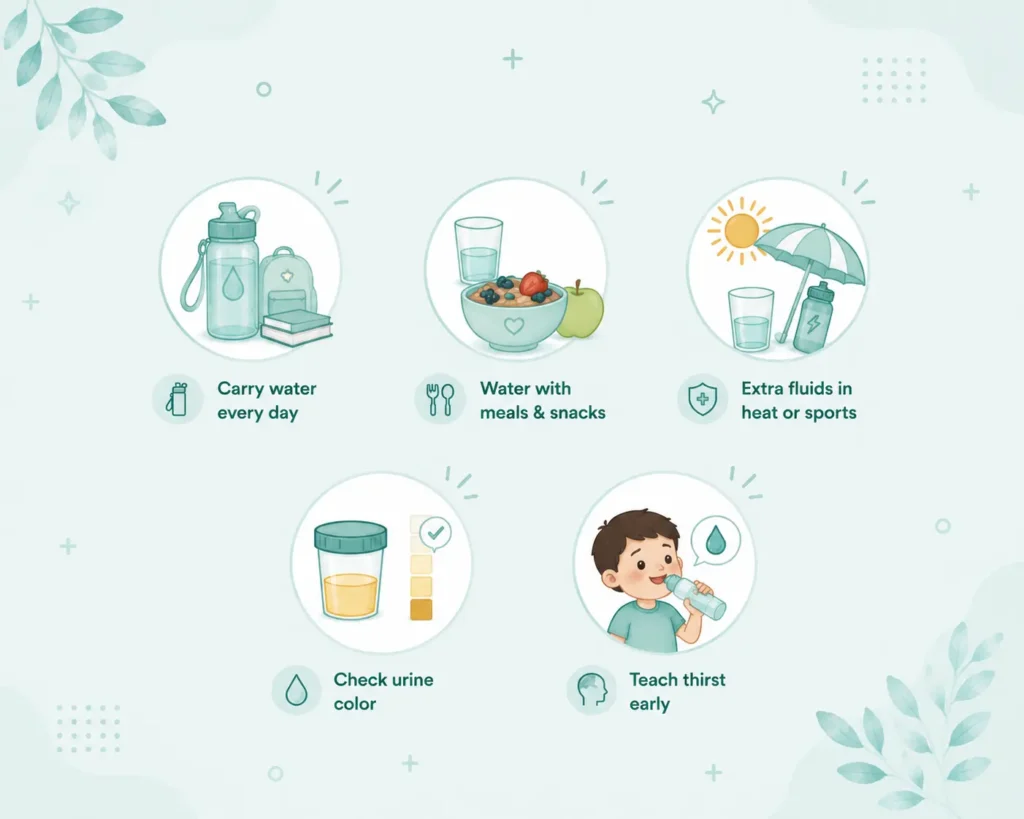
- Send a refillable water bottle to school or daycare, and make drinking throughout the day routine, not waiting until they’re clearly thirsty.
- Give water alongside meals and snacks as a default instead of an afterthought.
- Keep extra fluids on hand during illness, heat waves, and sports practices.
- Watch urine color as a daily check; pale yellow is the goal.
- Teach older kids to recognize their own thirst cues so they start the habit early.
None of this requires a complicated routine. It’s really just about making hydration a normal, visible part of the day rather than something that only comes up when a child is currently feeling unwell. The whole point of prevention is making sure you rarely need to look for signs of dehydration in the first place.
Trusting Your Instincts as a Parent
If there is one thing we can take away from all of this, it is that parents notice changes in their kids before anyone else does. You know your child’s normal energy level, their usual mood, and the way they typically look after a long day outside. When something feels different, like sluggishness that doesn’t lift, a dry mouth that lingers, or fewer trips to the bathroom, that instinct is worth listening to. The same instinct applies to less physical signs of strain, too—our guide on how to reduce study stress in kids covers a related pattern: kids often show something’s wrong through behavior long before they can say it out loud.
Dehydration is common in children, and in the majority of cases it’s mild and easily treated with a bit of extra fluid and rest. But knowing the red flags of dehydration in children, sunken eyes, no tears, a sunken soft spot, and extreme lethargy means you’ll never be caught wondering what to do next. Learning to spot the signs of dehydration early is what turns a worrying moment into a manageable one.
Final Thoughts
Knowing the signs of dehydration in children is not about becoming an anxious parent who panics about every missed water break. It’s about being the kind of parent who senses the small changes in your child’s moods (the quieter moods, the drier lips, the lighter diaper) and knows how to deal with them. Be it a drink of water on a hot afternoon or an urgent health appointment on a same-day visit to urgent care, that is the most reliable thing you have: what you see in your child is the most reliable tool that you have.
Disclaimer: This article is for informational purposes and not a substitute for professional medical advice. You should go to your pediatrician or emergency services if you’re concerned about your child’s symptoms.
Frequently Asked Questions (FAQs)
Q. How do you tell if you are dehydrated physically?
A. Common physical signs of dehydration are a dry, sticky mouth; dark yellow urine; fatigue and dizziness; dry skin; and decreased urination. In children, you will look for sunken eyes, no tears when they cry, and low energy.
Q. What are two early warning signs of dehydration?
A. Two of the most common early warning signs of dehydration are dry mouth and a drop in urination frequency or darker urine. Together, these two are usually the first telltale signs that fluid intake is low.
Q. What are the red flags of dehydration in children?
A. The most serious red flags are sunken eyes, a sunken soft spot in infants, no tears when crying, extreme sleepiness or difficulty waking, skin that doesn’t bounce back when pinched, and no urination for eight or more hours. These symptoms should be treated promptly.
Q. How to fix dehydration in a child?
A. Offer small, frequent sips of water or an oral rehydration solution, avoid sugary drinks, and include hydrating foods if your child is eating normally. Monitor for improvement within a few hours and seek medical treatment if symptoms worsen or don’t improve.
Q. When should I take my kid to the ER for dehydration?
A. If a child has no urination after eight or more hours, sunken eyes, extreme lethargy, rapid heartbeat, persistent vomiting, or skin that stays tented when pinched, seek emergency care immediately. Any dehydration symptoms in infants under 3 months should be evaluated immediately.
Q. What are the best ways to treat dehydration quickly?
A. Recognizing the signs of dehydration quickly matters just as much as which treatment you choose. For mild dehydration an oral rehydration solution has a quicker effect than just water, since it replaces lost electrolytes along with fluids. For moderate to severe dehydration, an intravenous solution administered by medical professionals is the fastest and safest method.
Q. What organs shut down first when dehydrated?
A. Severe signs of dehydration that go unaddressed can eventually affect major organs. In cases of severe, prolonged dehydration, the kidneys are usually affected first, followed by circulatory and neurological effects as the condition worsens. This level of impact is associated with significant, ongoing dehydration rather than everyday mild thirst.