There’s a particular kind of tired that comes from an anxious mind, the kind where your body is exhausted but your thoughts are not. If you’ve ever lain awake going over tomorrow’s to-do list at 2 a.m. or felt your heart pound before a meeting that hasn’t even started yet, you know that feeling well. The good news: yoga poses for anxiety aren’t an Instagram-based wellness trend. They’re one of the few tools with real evidence behind them, and you don’t need a studio membership, expensive gear, or years of flexibility training to start.
Some of the calmest, most centered mornings we’ve had weren’t on a mountaintop or a beach in Bali. They were on the floor of a hotel room, or a quiet corner of an Airbnb, working through a few yoga poses for stress and anxiety before the day’s plans even began. This guide walks through the ten best yoga poses that actually make a difference, why they work on a physiological level, and how to build a routine you’ll stick to, whether you’re at home, on the road, or squeezing in ten minutes between meetings.
Why Yoga Actually Calms an Anxious Mind
Before getting into the poses themselves, it’s worth understanding why this works, because that context is what makes the practice feel purposeful instead of performative.
Anxiety largely lives in the nervous system. When you’re stressed, your body shifts into sympathetic mode, the “fight or flight” state that speeds up your heart rate, shortens your breath, and tightens your muscles. Yoga poses for anxiety work because they physically counter that response. Slow, controlled breathing and gentle stretching activate the parasympathetic nervous system (“rest and digest”), which lowers cortisol, slows the heart rate, and signals to the brain that you’re safe.
This isn’t just anecdotal. Research on mind-body medicine has consistently linked regular yoga practice with lower symptoms of generalized anxiety, better sleep quality, and improved emotional regulation. The National Center for Complementary and Integrative Health (NCCIH), part of the NIH, reviews this research directly and notes that yoga may help people manage anxiety symptoms, alongside benefits for sleep, stress, and overall mental health.
Some studies specifically point to yoga’s effect on heart rate variability (HRV), a measurable marker of how well your nervous system shifts between stress and calm. It’s not a cure, and it’s not a substitute for therapy or medical care when anxiety is severe, but as a daily practice, it’s one of the most accessible tools available for regulating your baseline stress response.
That’s the real appeal of basic yoga poses for beginners: you don’t need prior experience to feel a difference. You can change your physiological state in five minutes with barely any movement at all.
How to Use This Guide
You don’t have to do all ten poses in one sitting. In fact, we’d suggest against it, especially if you’re new to this. Pick two or three that reflect how you feel today, tight shoulders, racing thoughts, or a knotted stomach, and start there. Consistency matters far more than intensity.
Each pose below covers what it does, how to get into it safely, and a small, practical tip to help it actually land in your day. Not every set of yoga poses works the same for every person, so treat this as a menu rather than a mandatory checklist.
The 10 Best Yoga Poses for Anxiety
1. Child’s Pose (Balasana)
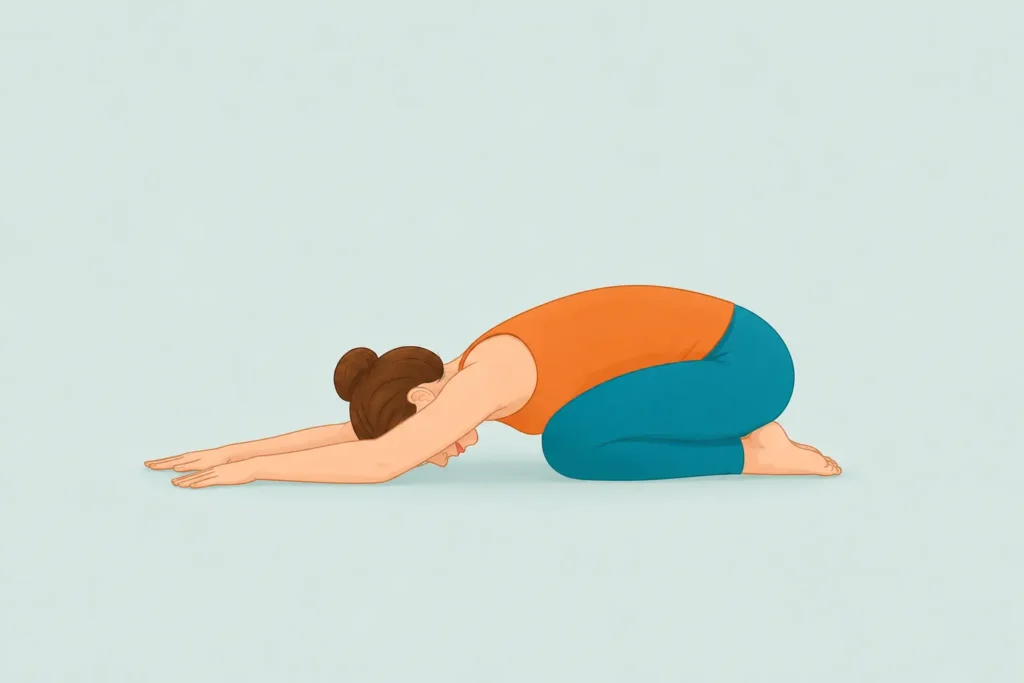
If you only remember one pose from this list, make it this one. Child’s Pose is usually the first position taught in beginner classes, and for good reason: it’s grounding, safe, and immediately calming.
How to do it: Kneel on the floor, big toes touching, knees apart. Sink your hips back toward your heels and extend your arms forward, resting your forehead on the mat.
Why it helps: The forward fold gently compresses the abdomen and can relieve the physical tension anxiety often causes in the stomach. It also brings your head below your heart, which has a naturally calming effect on the nervous system.
Tip: This is the pose we default to after a long flight. Thirty seconds of Child’s Pose does more for jet-lag anxiety than a coffee ever will.
2. Cat-Cow Pose (Marjaryasana-Bitilasana)
This gentle spinal flow is one of the most underrated yoga poses for stress and anxiety because it forces you to sync movement with breath, which is really the whole point of the exercise. Of all the yoga poses on this list, it’s also one of the easiest to slip into a busy morning without anyone noticing.
How to do it: Begin on all fours. Inhale, drop your belly, and lift your chest and tailbone (cow). Exhale, round your spine, and tuck your chin (Cat). Repeat slowly for 8–10 breaths.
Why it helps: The rhythmic movement mirrors the self-soothing motion we naturally reach for when upset, rocking and swaying. Pairing it with breath trains your nervous system to associate movement with exhale-driven relaxation.
3. Standing Forward Fold (Uttanasana)
There’s an almost immediate shift in this pose. Most people feel a drop in tension within a few breaths.
How to do it: Stand with feet hip-width apart, hinge at the hips, and let your upper body hang forward. If your hamstrings are tight, keep a soft bend in the knees and let your head and arms dangle.
Why it helps: Like Child’s Pose, this gentle inversion improves blood flow to the brain and helps lower cortisol levels. Among beginner-friendly yoga poses, it’s also one of the best because it requires no flexibility to feel effective. You’re not trying to touch your toes; you’re trying to release.
4. Legs-Up-The-Wall Pose (Viparita Karani)
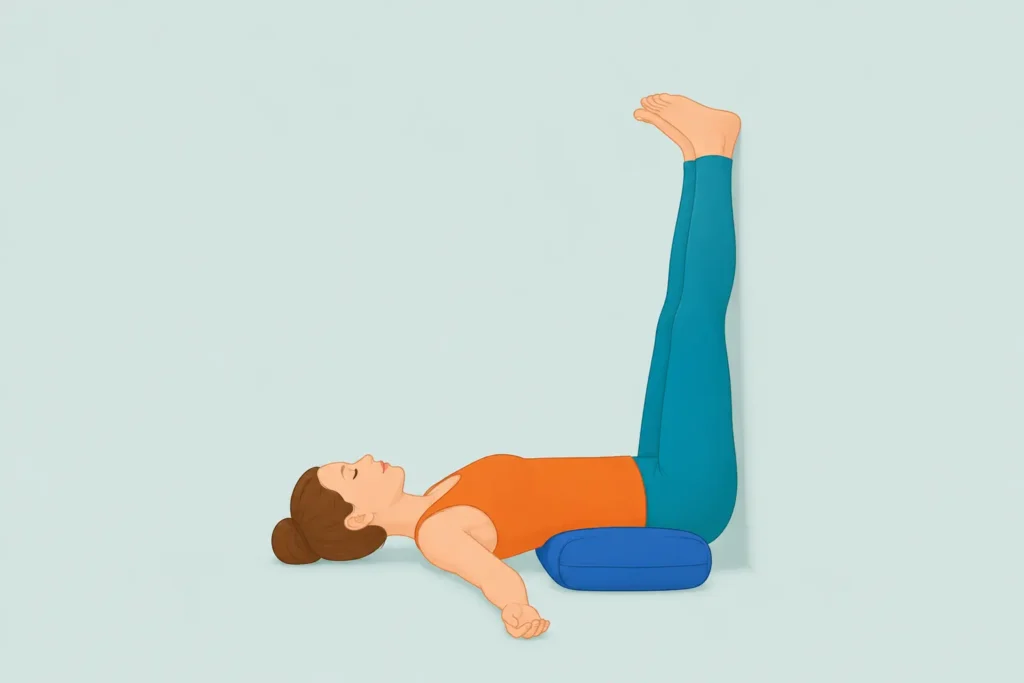
This is the pose we recommend most often to people who say, “I don’t have time for yoga.” No strength, no flexibility, and almost no effort required, just a wall and five minutes.
How to do it: Sit sideways next to a wall, then swing your legs up as you lie back, so your legs rest vertically against the wall and your body forms an L-shape.
Why it helps: This restorative inversion improves circulation, reduces swelling from travel or long periods of sitting, and passively relaxes the nervous system. Among all the yoga poses on this list, it’s one of the most effective for anxiety precisely because it asks nothing from you except stillness.
5. Seated Forward Fold (Paschimottanasana)
A deeper fold than Uttanasana, this pose asks for a bit more patience but rewards it with a genuine sense of internal quiet.
How to do it: Sit with legs extended in front of you. Inhale to lengthen the spine, then exhale as you fold forward from the hips, reaching for your shins, ankles, or feet, wherever you comfortably land.
Why it helps: Forward folds are considered introspective poses in yoga philosophy. They turn your attention inward, away from external stimulation, which is often exactly what an anxious mind needs.
6. Bridge Pose (Setu Bandhasana)
If your anxiety tends to show up as tightness across the chest and shoulders, common for anyone who spends long hours hunched over a laptop or phone, Bridge Pose is a genuine relief valve.
How to do it: Lie on your back, knees bent, feet flat on the floor, hip-width apart. Press into your feet and raise your hips toward the ceiling, clasping your hands beneath you if comfortable.
Why it helps: This gentle backbend opens the chest and shoulders, counteracting the collapsed posture that anxiety and stress tend to create. Opening the chest also allows for deeper, fuller breaths, which is the whole game when it comes to regulating anxiety in real time. Chest-opening yoga poses like this one are especially useful if you sit at a desk most of the day.
7. Corpse Pose (Savasana)
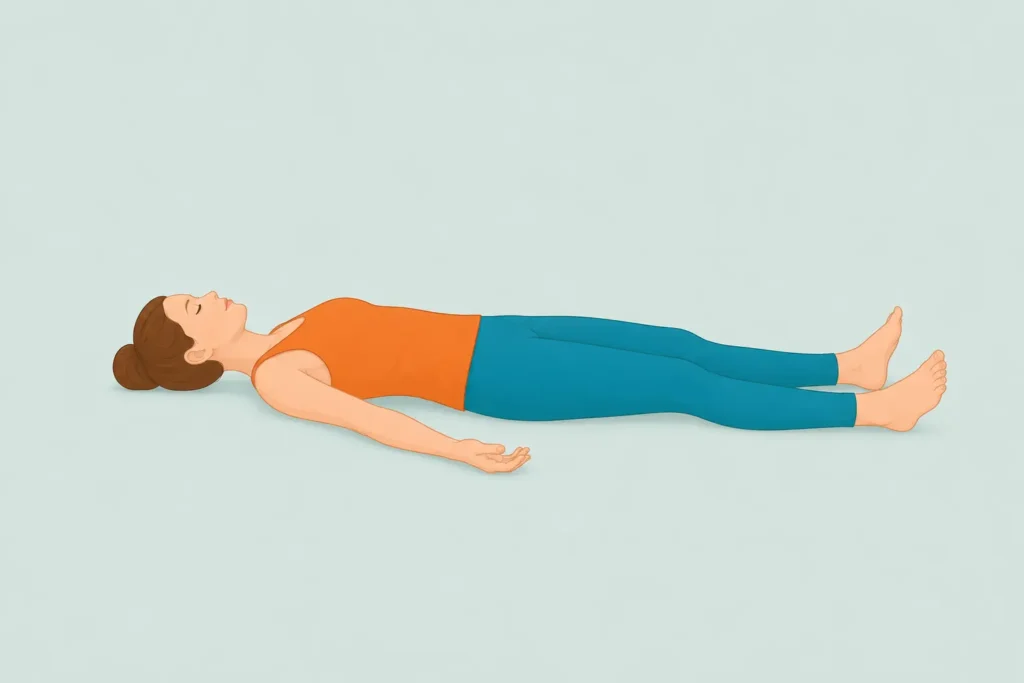
It looks like doing nothing. It’s actually one of the hardest poses to master and one of the most valuable.
How to do it: Lie flat on your back, arms relaxed at your sides, palms up, legs slightly apart. Close your eyes and let your whole body soften into the floor. Stay for 5–10 minutes.
Why it helps: Savasana gives your nervous system the time it needs to shift fully out of sympathetic mode. Skipping it, which most beginners do because it “feels unproductive,” is one of the biggest missed opportunities in a home yoga practice. Of all the yoga poses covered here, this is the one people are most tempted to rush through and the one that rewards patience the most.
8. Easy Pose with Breathwork (Sukhasana + Pranayama)
For some people, the pose itself matters less than what you do while you’re in it. This is less about the physical shape and more about training your breath.
How to do it: Sit cross-legged, spine tall, hands resting on your knees. Practice a 4-7-8 breath: inhale for 4 counts, hold for 7, exhale for 8. Repeat for 5–10 rounds.
Why it helps: Extended exhales are one of the quickest, safest ways to trigger the parasympathetic nervous system. Of all the yoga poses for stress and anxiety on this list, this is the most portable. You can do it on a plane, in a waiting room, or right before a stressful conversation.
9. Reclining Bound Angle Pose (Supta Baddha Konasana)
This is the pose we’d call “the emotional exhale.” It’s restorative and often brings real relief, sometimes even tears, for people who’ve been holding tension for a long time.
How to do it: Lie on your back and bring the soles of your feet together, letting your knees fall open to either side. Support your knees with cushions or blocks if there’s any strain in your hips.
Why it helps: This hip-opening pose targets an area of the body where many people unconsciously store stress. Paired with slow breathing, this can stop feeling like exercise and start feeling like genuine emotional release. Hip-opening yoga poses tend to surprise people with how much tension was sitting there unnoticed.
10. Mountain Pose with Mindful Breathing (Tadasana)
How to do it: Stand tall, feet grounded, arms at your sides. Close your eyes if that feels comfortable, breathe, and notice the points of contact between your feet and the floor.
Why it helps: It sounds almost too simple to matter, but Mountain Pose teaches something anxiety always disrupts: that you can feel rooted in your own body, in the present moment, without needing to fix or control anything. Standing yoga poses like this one are easy to underestimate precisely because they look like nothing is happening.
Quick Reference: All 10 Poses at a Glance
Here’s a fast way to scan all ten yoga poses and decide where to start based on how much time and energy you actually have today.
| Pose | Best For | Time Needed | Difficulty |
| Child’s Pose | Immediate grounding, stomach tension | 30 sec–2 min | Beginner |
| Cat-Cow | Syncing breath and movement | 1–2 min | Beginner |
| Standing Forward Fold | Fast tension release | 1–3 min | Beginner |
| Legs-Up-The-Wall | Low-effort, deep relaxation | 5–10 min | Beginner |
| Seated Forward Fold | Introspection, racing thoughts | 2–5 min | Beginner–Intermediate |
| Bridge Pose | Chest/shoulder tightness | 1–3 min | Beginner–Intermediate |
| Corpse Pose | Full nervous system reset | 5–10 min | Beginner (mentally challenging) |
| Easy Pose + Breathwork | Portable, in-the-moment relief | 3–5 min | Beginner |
| Reclining Bound Angle | Deep emotional release | 5–10 min | Beginner |
| Mountain Pose | Grounding, present-moment focus | 1–3 min | Beginner |
Yoga Poses for Anxiety, Matched to the Moment
Different situations call for different yoga poses. Here’s how to match the practice to what’s actually happening:
Before a stressful meeting or presentation: Easy Pose with Breathwork or Mountain Pose. Both are subtle enough to do at a desk or in a hallway without drawing attention, and both work fast.
Trying to fall asleep: Legs-Up-The-Wall, followed by Corpse Pose. This combination is one of the most reliable ways to downshift the nervous system before bed, especially if racing thoughts tend to keep you up.
Mid-flight or travel anxiety: Seated Forward Fold and Easy Pose with breathwork both work in a plane seat. Child’s Pose works well the moment you land and have floor space again.
Anxiety that shows up as physical tightness (jaw, shoulders, chest): Cat-Cow and Bridge Pose target this directly since both involve deliberate chest and shoulder movement.
A racing, looping mind that won’t settle: seated forward fold or reclining bound angle pose. The introspective, inward-focused nature of both poses gives an overactive mind somewhere to land. If the racing thoughts are being fed by your phone specifically, pairing this with our guide on how to stop doomscrolling addresses the habit feeding the anxiety, not just the symptom.
Building an Anxiety-Relief Yoga Routine You’ll Actually Keep
The best yoga poses in the world won’t help if the routine feels like one more obligation on your list. A few honest suggestions for actually sticking with these yoga poses long-term:
- Start small. Ten minutes of Child’s Pose, Cat-Cow, and Legs-Up-The-Wall are more sustainable and effective long-term than an ambitious hour you won’t be able to keep up by Thursday.
- Use habit stacking. Tie the practice to something you already do: right after brushing your teeth or before checking your phone at the airport after a flight. If you already have a Sunday reset routine, adding two or three of these poses to it is an easy way to start without creating a brand-new habit from scratch.
- Don’t chase the “perfect” pose. These aren’t performance poses. No one is grading your alignment. The goal is regulation, not aesthetics.
- Pair it with breath, always. Movement without breath awareness is just stretching. Breath is what actually changes your nervous system state.
- Track how you feel, not how you look. Anxiety relief isn’t visible in a mirror. Pay attention to your sleep, your morning mood, and how you react under pressure; that’s where the real data lives.
Common Mistakes to Avoid
A few patterns tend to undercut the benefits of an anxiety-focused practice, even when you’re doing the right yoga poses:
- Holding your breath during a pose. This is the single most common mistake. If you notice you’ve stopped breathing steadily, that’s the signal to ease back, not push further.
- Forcing flexibility you don’t have yet. Anxiety already puts the body on edge; forcing a deep stretch adds physical stress on top of the mental kind. Modifications (blocks, cushions, bent knees) exist for a reason.
- Skipping Savasana because it “feels unproductive.” This is often the single most valuable few minutes of the entire practice, precisely because it asks for nothing.
- Practicing only when anxiety is already high. These poses work best as a consistent daily habit, not just a fire extinguisher for acute panic. Prevention beats reaction.
- Comparing your practice to a studio class or an influencer’s routine. The version of yoga that actually reduces your anxiety is the one you’ll do on a bad day in your living room, not the one that photographs well.
A Note on Safety and When to Modify
Most of the yoga poses above are gentle enough for nearly everyone, but a few situations call for extra caution:
- Pregnancy: Skip deep forward folds and any pose that compresses the abdomen. Legs-Up-The-Wall and Cat-Cow are generally considered safe, but check with your doctor or a prenatal yoga teacher for personalized guidance.
- Vertigo or inner ear issues: Inversions like legs-up-the-wall may need to be modified or avoided. A supported reclining pose can offer similar calming benefits without the head position change.
- Recent injury to the back, neck, hips, or knees: Several poses here involve bending or pressure through these joints. When in doubt, work with a physical therapist or yoga instructor who can modify positioning for you specifically.
- High blood pressure or certain heart conditions: Some inversions are generally discouraged. This is worth a quick conversation with your doctor before starting a new practice.
None of this is meant to be alarming; most people can do all ten of these poses safely without any modification. NCCIH’s own safety review notes that yoga is generally low-risk compared to higher-impact physical activities, with most injuries being minor strains rather than anything serious. It’s simply worth pausing if something feels sharp, dizzying, or wrong, rather than pushing through it because a guide told you to.
A Note on What Yoga Can’t Do
We’d be doing you a disservice if we framed these yoga poses for anxiety as a complete solution. For situational stress, poor sleep, or the daily overwhelm that travel, work, and life throw at you, this practice is genuinely powerful. But if anxiety is persistent, intense, or interfering with your ability to function day to day, yoga works best alongside, not in place of, professional help from a therapist or doctor. If avoidance and burnout tend to show up alongside your anxiety, our piece on how to stop procrastinating covers that specific overlap in more depth. Think of this practice as one tool in a broader toolkit, not a replacement for the whole kit.
Final Thoughts
Anxiety rarely responds to force. It responds to small, repeated signals of safety, a slower breath, a softened posture, and five quiet minutes on the floor before the day demands anything of you. These yoga poses for anxiety aren’t magic, but they are reliable, and reliability is worth more than intensity when you’re trying to build a calmer relationship with your own mind.
Whether you roll out a mat in your living room or find floor space in a hotel room halfway across the world, these yoga poses come with you. That’s why they work.
Frequently Asked Questions (FAQs)
Q. Which yoga pose is best for anxiety?
A. Among the many yoga poses out there, Child’s Pose and Legs-Up-The-Wall Pose are the most popular for immediate relief because both are restorative, require no strength, and gently stimulate the parasympathetic nervous system. For long-term regulation, pairing any pose with slow, extended breathing matters more than which specific shape you’re in.
Q. What is the 3-3-3 rule for anxiety?
A. The 3-3-3 rule is a quick grounding technique: name three things you can see, three things you can hear, and move three parts of your body (ankles, fingers, and shoulders). It’s designed to interrupt a spiral of anxious thoughts by anchoring you in the present moment, and it pairs naturally with poses like Mountain Pose or Easy Pose, where you’re already working with stillness and sensation.
Q. What herbal remedies are commonly used for calming anxiety and excitement?
A. Chamomile, lavender, and ashwagandha are among the most commonly used herbal remedies associated with calming effects, often taken as teas, tinctures, or supplements. Herbal remedies can interact with medications, though, so it’s worth consulting a healthcare provider before adding any to a regular routine, especially if you’re already on prescribed treatment for anxiety.
Q. How long should I hold each yoga pose for anxiety relief?
A. Most restorative poses are effective when held between 30 seconds and 5 minutes, depending on the pose. Deeply restorative positions like Legs-Up-The-Wall or Savasana tend to work best when held longer, for five to ten minutes, to give your nervous system enough time to actually downshift.
Q. Can beginners do these yoga poses without any experience?
A. Yes. Every pose on this list was chosen specifically because it works well as a basic yoga pose for beginners. None require advanced flexibility or strength, and modifications (cushions, a wall, bent knees) are built into the instructions above.
Q. How often should I practice yoga to reduce anxiety and see results?
A. Most people notice a difference in mood and tension within the first one to two weeks of practicing five to ten minutes daily. For measurable, longer-term change in anxiety symptoms, consistency over four to six weeks tends to show the clearest results in research on mind-body practices.
Q. Can yoga poses replace anxiety medication or therapy?
A. No, and it’s not meant to. Yoga can meaningfully reduce situational stress and support emotional regulation, but for diagnosed anxiety disorders, it works best as a complement to professional care, not a replacement for it. If anxiety is significantly affecting your daily life, a therapist or doctor should be part of the plan alongside any yoga practice.
Q. What’s the difference between yoga poses for beginners and yoga poses for anxiety specifically?
A. There’s a lot of overlap, but the emphasis differs. Beginner-friendly yoga poses are chosen mainly for accessibility; they don’t require flexibility or strength. Anxiety-focused poses are chosen for their effect on the nervous system specifically: forward folds, gentle inversions, and breath-paired movement that actively shift the body out of a stress response. Most of the poses in this guide qualify as both.
Q. Is it better to do these poses in the morning or at night?
A. Both work, just for different goals. Morning practice, especially Mountain Pose, Cat-Cow, or Standing Forward Fold, helps set a calmer baseline for the day ahead and works well alongside a broader morning routine if you’re building one out. Evening practice, particularly legs-up-the-wall and corpse pose, is more about winding the nervous system down before sleep. If you can only pick one time, choose whichever moment in your day tends to carry the most anxiety.
Q. Do I need a yoga mat or any special equipment to start?
A. No. A towel, carpeted floor, or even a hotel room rug works fine for most of these yoga poses. A wall is genuinely useful for Legs-Up-The-Wall Pose, and a cushion or folded blanket can help with knee or hip support in a few of the seated and reclining poses, but none of this is required to get started today.