Quick answer: When you pick a how to pick a men’s blazer, check the shoulders first. The shoulder seam should end where your shoulder bone ends, and the jacket should lie flat across your upper back. Alterations can fix almost everything else (sleeves, waist, and sometimes length) for a reasonable price. Your first blazer should be navy, in a mid-weight wool you can wear most of the year. Look for a half-canvas jacket if your budget allows. Choose the style details last, because they matter much less than fit.
Most guides start with lapels and colors. That order is backwards. A $150 blazer that fits your shoulders will look better than a $900 one that doesn’t, so this guide follows the order you should check things in the fitting room.
Start With the Shoulders, Because a Tailor Can’t Really Fix Them
Shoulder alterations exist, but they’re expensive and risky. Many tailors will advise against them. Treat the shoulders as the one measurement that has to be right off the rack.
Here’s what to look for:
- Seam position. The shoulder seam should sit at the edge of your shoulder bone. If it hangs past it, the jacket is too big. If the sleeve pulls in toward your neck, it’s too small.
- The wall test. Stand sideways next to a wall in the jacket. If the shoulder pad touches the wall before your arm does, the shoulder is too wide.
- Divots below the shoulder. A dent or ripple in the sleeve just under the shoulder pad means the jacket is too wide for your frame.
- Collar gap. The jacket collar should rest against your shirt collar. If a gap opens at the back of your neck when you stand normally, the problem is in how the jacket was cut, and that’s hard to fix.
If the shoulders pass, keep going. If they fail, try a different size or brand, even when everything else looks fine.
The Other Fit Checks, Ranked by How Easy They Are to Fix
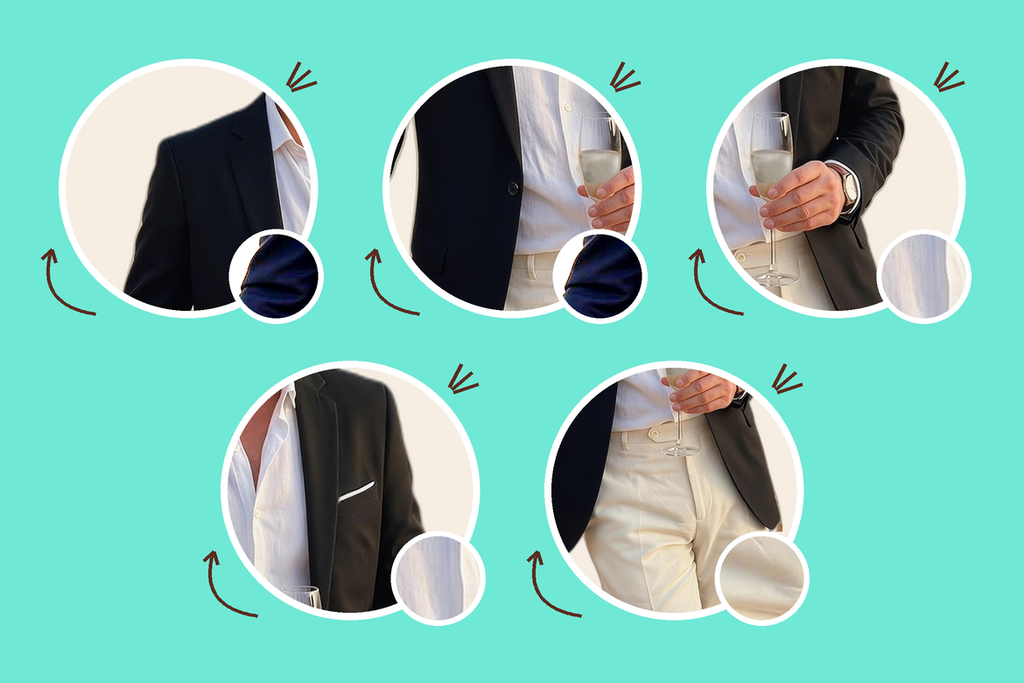
Once the shoulders work, you’re deciding whether the rest is close enough to tailor. The table below shows typical US alteration prices. They vary a lot by city, so treat them as rough ranges.
| Fit point | What right looks like | Fixable? | Typical cost |
| Shoulders | Seam at shoulder bone, no divots | Rarely, and risky | $75+ if they’ll do it |
| Jacket length | Covers your seat | Not really | Shortening it throws off the pocket placement |
| Chest | Lies flat, no pulling at the button | A little | Limited by seam allowance |
| Waist | Light shape, no X-shaped creases | Yes | 25–50 |
| Sleeve length | About ¼”–½” of shirt cuff showing | Yes, usually | 20–40; more with working buttonholes |
Jacket Length
Let your arms hang naturally and curl your fingers. The hem should land around the middle of your cupped hand, and it should cover the curve of your seat. Recent cropped cuts look sharp on a hanger but make most men look top-heavy. Since length is close to impossible to change, don’t buy a jacket that’s wrong here.
Chest and Button Closure
Button the top button (or the middle one on a three-button jacket). Look for creases spreading out from the button in an X shape. That means it’s too tight. You should be able to slide a flat hand under the lapel without straining the button, but a full fist shouldn’t fit. If it does, the jacket is too big.
Sleeve Length
The sleeve should end around your wrist bone and show a little shirt cuff. This is the most common alteration, and it’s cheap, with one catch. On jackets with working buttonholes on the cuffs (often called “surgeon’s cuffs”), shortening the sleeve from the cuff end can mean taking it off at the shoulder, which costs a lot more. If you’re between sizes, pick a jacket with non-working buttons, or one that’s already the right length.
A Quick Reality Check Before You Buy
Put your phone and wallet in the pockets you actually use. Then reach forward as if you’re grabbing a steering wheel, and sit down. A blazer that only looks good while you stand still won’t get worn. Some pull across the back when you reach it is normal. Seams straining or a collar lifting off your neck is not.
How to Pick a Men’s Blazer Based on Your Build
Fit rules are the same for everyone, but some details help certain builds more than others.
- Shorter men (under about 5’8″): Look for Short sizes (36S, 38S, and so on), not shortened Regulars. A two-button jacket with a slightly higher button stance and narrower lapels makes your torso look longer. Skip big patterns and wide checks.
- Taller men (6’1″ and up): Buy Long sizes. On a Regular, the sleeves and body will run short, and adding length isn’t possible. Textured fabrics and patch pockets break up a long frame nicely.
- Broad or athletic builds: Check the drop, which is the difference between jacket chest and trouser waist sizes. Standard cuts assume about 6 inches. If you have a big chest and a narrow waist, a brand with an “athletic” cut and a 7–8 inch drop will save you a big waist alteration.
- Heavier builds: A soft, slightly structured shoulder and a single button stance work better than a very fitted cut. Dark solid colors and vertical texture help. Don’t size down to look slimmer. A jacket that pulls at the button draws the eye straight to your middle.
Fabric: Pick for Your Climate and How Often You’ll Wear It
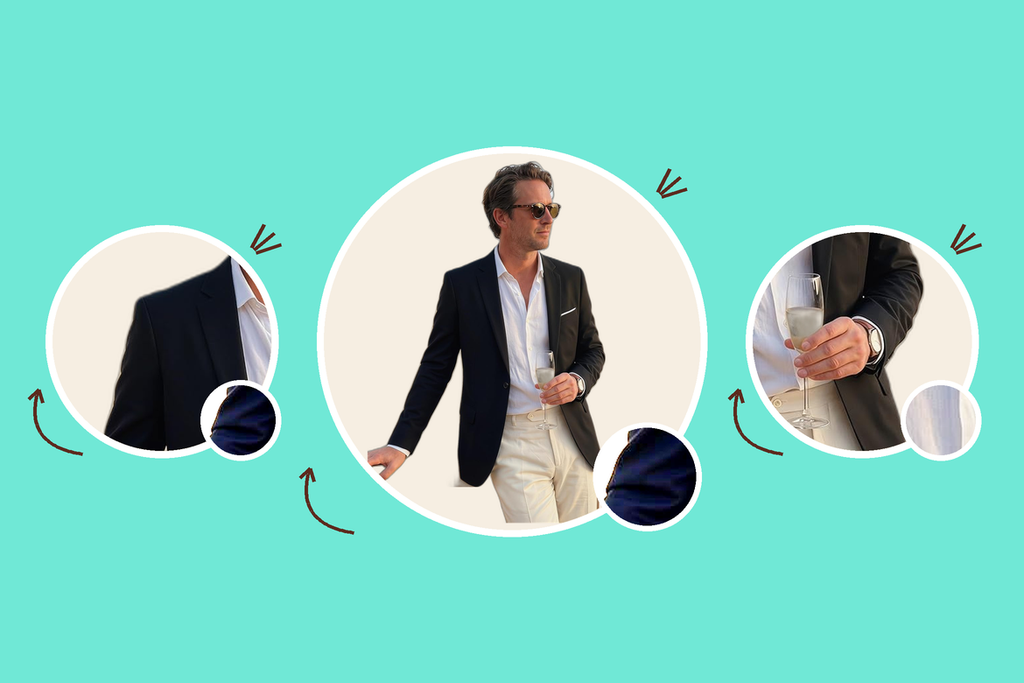
Fabric decides when you can wear the blazer, how it holds up, and how it looks after a full day.
| Fabric | Best season | Best for | Watch out for |
| Mid-weight worsted wool | Most of the year | Your first blazer, office, events | Very smooth versions can look like an orphaned suit jacket |
| Hopsack wool | Spring through early fall | Travel, warm offices | Fewer options off the rack |
| Flannel or tweed | Fall and winter | Weekends, layering over knits | Too warm for much of the South and Southwest |
| Cotton (twill or chino) | Spring and summer | Casual wear with jeans | Wrinkles, and can lose shape over time |
| Linen or linen blends | High summer | Weddings, warm-weather events | Wrinkles quickly; part of the look, but not for everyone |
| Wool with a little stretch | Year-round | Commuting, travel, long days | Too much synthetic content gets shiny and traps heat |
A note on “Super” numbers: labels like Super 110s or Super 150s describe how fine the wool fibers are. Higher isn’t automatically better. For a jacket you’ll wear often, roughly Super 100s to 130s balances a nice feel with durability. Finer cloth wrinkles and wears out faster.
Construction Matters More Than the Label
Inside, a blazer is held together one of three ways:
- Fused: Glue holds the layers together. It’s cheap and fine for occasional wear, but the front can stiffen or bubble after years of dry cleaning.
- Half-canvas: A layer of canvas is stitched through the chest and lapels. The jacket shapes itself to you over time, and the lapel rolls more naturally. For most people this is the best value.
- Full-canvas: Canvas runs the full length of the front. It’s the most expensive option and lasts the longest.
To check in a store, pinch the fabric just below the chest pocket and pull the layers gently apart. If you feel a separate loose layer floating between the outer fabric and the lining, there’s canvas there. If it all feels like one stiff sheet, the jacket is fused.
Rough US price ranges: Fused blazers usually run under $250. Half-canvas jackets tend to sit between $300 and $800. Full-canvas usually starts around $800. When you’re ready to compare, browse our half-canvas blazer picks or see wool blazers under $400.
Style Details: Settle These Last
These choices change the character of the jacket. They won’t rescue a bad fit.
- Lapels: Notch lapels are the everyday default. Peak lapels look dressier and work better on double-breasted jackets. Aim for a lapel width roughly in proportion to your shoulders. For most men that’s around 3 to 3½ inches at the widest point.
- Buttons: Two buttons is the most versatile. Fasten the top one when standing and never the bottom one. Undo the jacket when you sit.
- Vents: Side vents (two slits at the back) hang cleanly and let you put your hands in your pockets without the jacket bunching. A center vent is more traditional American and slightly more casual. No vent looks sleek but creases when you sit.
- Structure: A structured jacket has padded shoulders and a firmer chest, which looks sharper with trousers and a tie. An unstructured one has little or no padding and a lighter lining. It feels closer to a cardigan and suits open collars and jeans.
- Pockets: Flap pockets are standard. Patch pockets, sewn onto the outside, make a jacket look more casual and work especially well on cotton and linen.
Which Color to Buy First
Navy first. It works with gray trousers, khakis, chinos, and dark or mid-wash jeans, with a white or light blue shirt, or a knit polo. Hardly any combination looks wrong.
Then mid-gray. It goes with navy or brown trousers and gives you a second look without much thought.
Then texture. Your third blazer can be the fun one: a brown tweed, an olive cotton, or a subtle check. By then you’ll know which fabrics and cuts work for you.
One mistake comes up all the time: wearing a suit jacket as a blazer. A smooth, shiny suit jacket worn with jeans looks like it lost its pants. Real blazers and sport coats usually have more texture, whether that’s hopsack, flannel, tweed, or a matte weave. That texture is what lets them stand on their own. If you want separates, shop sport coats made to be worn without matching trousers.
Common Mistakes That Make a Good Blazer Look Wrong
- Sizing up “to be safe.” You end up with a jacket that’s too big everywhere, and a tailor can’t fix the shoulders.
- Ignoring Short and Long sizes. Many men wear Regulars because that’s what the rack has. Ask for the other lengths or order them online.
- Skipping the tailor. Most blazers need at least a sleeve adjustment. Plan 30–60 for alterations when you set your budget.
- Cutting the vent stitching too late, or never. New jackets often ship with the vents and pockets loosely stitched shut. Snip the X-stitch on the vents before you wear it. The pockets are your call, but leaving them shut helps the jacket keep its shape.
- Overloading the pockets. A heavy phone or keys will pull the front out of shape over time.
FAQ
What size blazer should I get?
Measure your chest at its fullest point with your arms down. That number in inches is usually close to your jacket size (a 40-inch chest is often a 40). Then pick a length by height: Short under about 5’8″, Regular from about 5’8″ to 6’0″, Long at 6’1″ and up. Brands vary, so always check fit in person when you can.
Should a blazer be tight or loose?
Neither. It should lie flat across the chest and back, with a little shape at the waist. When buttoned, you should be able to move your arms and sit comfortably without the button pulling.
What’s the difference between a blazer and a sport coat?
Today the terms often get used the same way. Strictly speaking, a traditional blazer is a solid color, often navy, sometimes with metal buttons. A sport coat comes in more patterns and textures. Both are made to be worn without matching trousers, unlike a suit jacket.
Can I wear a blazer with jeans?
Yes. Pick a less structured blazer in a textured fabric like cotton, hopsack, or tweed. Pair it with dark, slim-but-not-skinny jeans and leather shoes or clean minimalist sneakers.
Is it worth paying more for a canvassed blazer?
If you’ll wear it once a week or more, usually yes. A half-canvas jacket keeps its shape better, the lapels roll more naturally, and it handles years of wear and cleaning better than a fused one.