Disclosure: This post features Dore & Rose products. Nimble Journal may earn a commission or have a paid partnership with the brand mentioned in this article. All opinions on fit, feel, and performance are our own.
Silk or Bamboo: Which Dore & Rose Pillowcase Is Right for Your Hair?
You know the feeling. You wake up, glance in the mirror, and your hair looks like it fought a small battle overnight, frizzy on one side, flattened on the other, and tangled in a way that costs you twenty minutes and half a bottle of leave-in conditioner just to undo.
Here’s the twist: the culprit usually isn’t your shampoo, your brush, or the weather. It’s the thing your head rests on for seven or eight hours every single night, your pillowcase.
It’s an easy detail to overlook, but it’s the quiet variable that can undo everything else in your hair routine. A sulfate-free shampoo, a weekly mask, a heat protectant, and a serum applied religiously before bed—all of it can be quietly undone by one rough, thirsty fabric working against you for eight hours straight.
That’s the gap Dore & Rose has built its whole product line around. The brand makes exactly two things, silk pillowcases and bamboo pillowcases, both aimed at the same core problem: friction and moisture loss while you sleep, just solved in slightly different ways. So let’s settle it: which one belongs on your bed?
Why the Fabric Under Your Cheek Matters So Much
The average adult spends roughly a third of their life asleep, hair and face pressed against the same surface, night after night. That’s thousands of hours of friction and moisture transfer happening while you’re completely unaware of it.
Standard cotton, still the most common pillowcase fabric in most homes, has a rougher fiber structure than most people assume. Under a microscope, cotton fibers are uneven and slightly coarse, gripping hair strands instead of letting them glide, exactly what produces tangles, breakage, frizz, and stubborn sleep creases on your skin.
Cotton is also a natural moisture magnet, the same quality that makes it excellent for towels. On a pillowcase, that absorbency becomes a problem: overnight, cotton quietly pulls moisture out of your hair and skin, along with whatever oils or treatments you applied before bed. By morning, a good portion of that product isn’t on your hair anymore. It’s in the fabric.
Add body heat to a rough, absorbent surface, and you get the perfect environment for static, split ends, and the dullness that makes hair look tired even after a full night’s rest. None of this is dramatic on any single night; it’s cumulative, which is why so many people don’t connect the dots until they switch fabrics and notice the difference almost immediately.
This is the core idea behind why a hair care pillowcase matters at all and behind whether a given pillowcase is good for hair in the first place: remove that nightly friction and moisture drain so the rest of your routine can actually do its job.
The Dore & Rose Silk Pillowcase: The Brand’s Original Beauty-Sleep Fabric
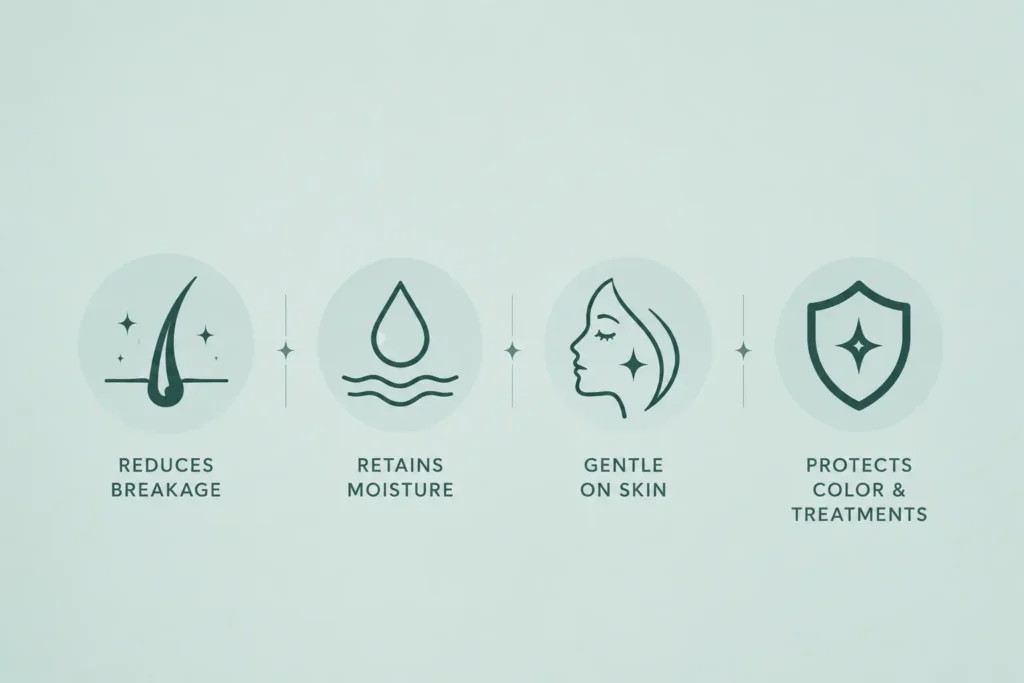
Silk has carried a reputation for luxury and skincare for centuries, and it’s earned, not just marketed, the same quiet, understated appeal covered in our piece on what quiet luxury fashion actually means. Dore & Rose’s silk pillowcase works on one simple property: smoothness. The fibers are tightly woven and naturally slick, so hair glides across the surface instead of catching or snagging.
As a silk pillowcase for hair, it cuts down on friction-based breakage, helps hair hold onto moisture, noticeably reduces frizz and bedhead, and goes easy on color-treated or chemically processed hair, helping color and treatments last longer between salon visits.
For skin, that same smooth surface reduces the pulling and creasing that can contribute to fine lines over time, and it won’t drink up night cream the way cotton does. As a silk pillowcase for hair and skin both, this dual benefit is a big part of why the fabric has stuck around in beauty routines for so long. If you’ve ever applied a rich moisturizer only to find your pillowcase soaked by morning, this is the fix, and it pairs naturally with anyone already following a skin cycling routine that relies on overnight actives actually staying on the skin.
The trade-off is that genuine silk asks for a little more care, usually a gentle hand wash or a cold, delicate cycle. For some people that small ritual is worth the payoff; for others, it’s the one thing holding them back, which is exactly why Dore & Rose also makes bamboo.
The Dore & Rose Bamboo Pillowcase: The Practical, Everyday Choice
Bamboo, made from bamboo-derived viscose or lyocell, is what people reach for when they want most of silk’s benefits without the extra upkeep. According to Dore & Rose, the bamboo pillowcase is naturally breathable and moisture-wicking; marketed as hypoallergenic and antibacterial (a pick the brand positions toward acne-prone skin or sensitive scalps); more affordable than genuine silk; fully machine washable; and made from a more sustainably grown material overall, since bamboo generally requires fewer pesticides and less water than many other crops. If sustainability is a factor in your buying decisions more broadly, it’s worth a look at the broader shift toward sustainable fashion happening across categories right now, bedding included.
Where it falls slightly short: bamboo is smooth, but not quite as slick as silk at the fiber level. It reduces friction significantly compared to cotton, but silk still edges it out on pure glide, a difference that barely registers day to day for most people.
Silk vs. Bamboo Pillowcase, Side by Side
| Feature | Silk | Bamboo |
|---|---|---|
| Friction reduction | Excellent | Very good |
| Moisture retention for hair | Excellent | Good |
| Breathability / cooling | Good | Excellent |
| Hypoallergenic properties | Good | Excellent |
| Price point | Higher | Moderate |
| Care & maintenance | Delicate, hand wash | Machine washable |
| Sustainability | Moderate | High |
| Best for | Frizz, breakage, color-treated hair | Hot sleepers, sensitive skin, everyday use |
Neither fabric is the “wrong” answer in this bamboo vs silk pillowcase comparison. They solve slightly different problems, which is likely why Dore & Rose make both instead of picking a side.
Matching the Pillowcase to Your Hair Type
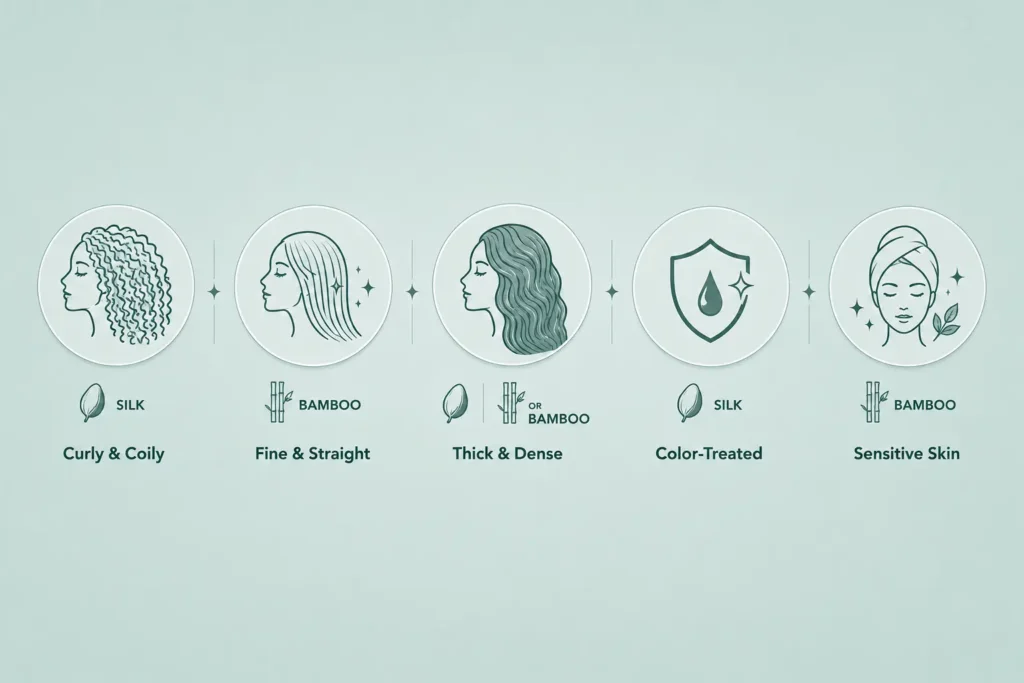
Curly and coily hair runs drier and frizzes more easily, since natural oils have a harder time traveling down the twists of the hair shaft. Silk is usually the stronger pick here, helping curls hold their shape instead of unraveling into frizz.
Fine, straight hair is more prone to looking flat and static-charged. Bamboo’s breathability helps, since fine hair can look greasy fast when trapped against a hot, non-breathable surface.
Thick, dense hair does reasonably well on either fabric, though many reviewers note silk’s glide makes morning detangling noticeably easier, since more hair means more surface area exposed to friction each night.
Color-treated or chemically processed hair, balayage, keratin, perms, and relaxers are more vulnerable to friction damage since processing already weakens the cuticle. Silk is usually the better call here too.
Sensitive or acne-prone scalp and skin tend to do better with bamboo, thanks to its moisture-wicking properties, which can help cut down on oil, sweat, and buildup along the hairline and jaw overnight.
Let Climate and Season Weigh In
Where you live and what season it is can shift which fabric performs better. In hot, humid climates, or through summer almost anywhere, bamboo’s breathability becomes the bigger advantage, since overheating increases sweat, which can mean a greasier scalp by morning. In colder, drier climates or winter months, moisture retention becomes the priority, since indoor heating and cold air both strip hydration from hair and skin, and silk’s ability to lock in moisture becomes especially valuable.
Plenty of people keep both in rotation: bamboo for warmer months, silk for colder ones. It doesn’t have to be an either-or decision if your climate shifts throughout the year.
The Simple Way to Decide Which Pillowcase Is Good for Hair
Strip away the marketing, and it comes down to two questions:
- Do you struggle more with frizz, breakage, and dryness? Reach for silk.
- Do you struggle more with overheating, sweat, or sensitive skin? Reach for bamboo.
Plenty of people land in the middle and keep one of each: bamboo for everyday use and silk for dry seasons or special occasions.
Common Mistakes and Myths
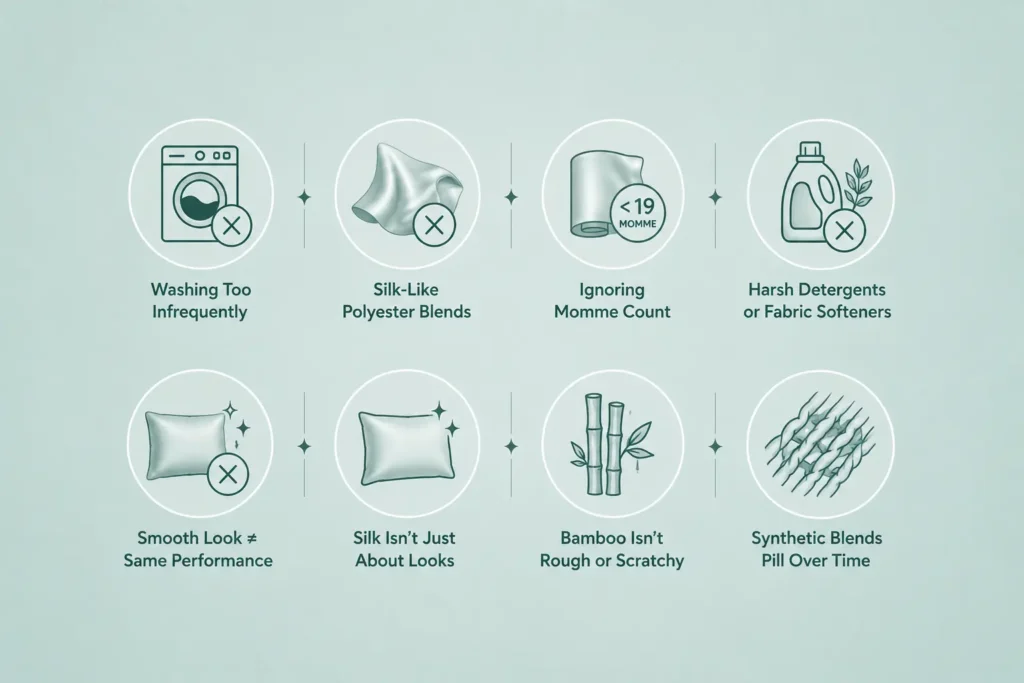
A few small oversights chip away at the benefits of either fabric:
- Washing too infrequently. Even smooth fabrics collect oil and product buildup over time.
- Settling for “silk-like” polyester blends that mimic the look but trap heat rather than wick it away.
- Ignoring momme count. A range of 19–22 momme is generally considered the sweet spot for silk durability and smoothness. Dore & Rose states its silk pillowcases are woven at 22 momme, on the higher end of that range.
- Using harsh detergents or fabric softeners, which strip both silk and bamboo of their natural texture over time.
A few myths are worth clearing up too. Not every smooth-looking pillowcase performs the same; appearance alone doesn’t guarantee genuine silk or bamboo’s friction and moisture behavior, especially once a synthetic blend starts pilling. Silk isn’t just about looking fancy; the benefits are grounded in fiber structure and material science. And bamboo pillowcases aren’t rough or scratchy; that mix-up comes from picturing raw bamboo stalks rather than the soft, processed viscose or lyocell that actually ends up in bedding.
What to Expect After You Switch
If you’re coming from cotton, the first night can feel a little different, almost too smooth, since your head may shift slightly more than it’s used to. That adjustment tends to fade within a few nights. Many people report less morning frizz within the first week, with fuller improvements in texture and moisture after two to three weeks of consistent use. Skin benefits, like fewer sleep crease marks, are often noticeable even sooner.
A pillowcase upgrade is a supporting habit, not a miracle fix. It won’t repair already-damaged ends or reverse months of heat damage. What it can do is stop adding new friction-based stress to your hair every night, so the rest of your routine finally gets a fair shot at working.
Our Take: Which Dore & Rose Pillowcase Should You Buy?
Silk is the specialist; bamboo is the all-rounder. Silk offers slightly superior friction reduction and moisture retention, making it a strong pick for dry, curly, or color-treated hair. Bamboo offers excellent breathability, easier care, and a lower price point, making it the practical everyday choice for most households, especially hot sleepers and anyone with sensitive skin.
Either way, both are a meaningful upgrade over standard cotton. The real mistake isn’t choosing bamboo over silk or silk over bamboo; it’s staying on a rough cotton pillowcase and wondering why your hair never quite cooperates in the morning.
You can browse Dore & Rose’s full pillowcase lineup on the brand’s official site — replace this link with Dore & Rose’s actual URL or your affiliate link before publishing.
Frequently Asked Questions (FAQs)
Is a silk pillowcase really better for hair than cotton?
Yes, in most cases. Silk’s smooth fiber structure significantly reduces the friction that causes tangles, breakage, and frizz, while helping hair hold onto its natural moisture overnight.
Does a bamboo pillowcase help with hair growth?
Bamboo doesn’t directly stimulate growth, but its breathability and moisture-wicking qualities support a healthier scalp environment, which can indirectly contribute to stronger, less brittle-looking hair over time.
How often should I wash my Dore & Rose pillowcase?
Once a week is a reasonable baseline for either fabric. Both silk and bamboo resist bacteria buildup better than cotton, but oil, sweat, and product residue still accumulate and can affect skin and hair if left too long.
Which is more affordable, silk or bamboo?
Bamboo pillowcases are generally more budget-friendly than genuine mulberry silk, while still offering much of the same smoothness and comfort for daily use.
Can a pillowcase actually reduce frizz overnight?
Yes. Since both silk and bamboo reduce friction compared to cotton, hair is far less likely to tangle or rough up while you sleep, which can noticeably cut down on morning frizz and bedhead.
What’s the best fabric for a pillowcase for hair overall?
There isn’t a single universal answer to what the best fabric for a pillowcase for hair actually is; it depends on your hair type and climate. Silk tends to be the stronger pick for dry, curly, or color-treated hair, while bamboo tends to suit fine hair, sensitive skin, and hot sleepers better. Many people end up keeping one of each rather than picking permanently.