
Dore & Rose sells silk and bamboo pillowcases, silk pajamas, sleep masks and small extras, all built around one idea: what you sleep on affects your hair and skin. This guide puts everything in one place. It covers how the silk and bamboo pillowcases differ, what the pajamas are like to wear, the sleep masks and extras, how the brand compares with Eberjey, and which piece is worth buying first.
Prices, colours and product ranges change often, so check the Dore & Rose site for current details before you buy.
The Short Answer (If You’re Skimming)
Choose Dore and Rose if you want true silk pajamas for women, genuine cooling sleepwear, potential skin and hair benefits, and that liquid-smooth feel, at a price that’s notably fair for real silk.
Choose Eberjey if you want soft, stretchy loungewear you can wear all Sunday, you’d rather machine-wash and forget about it, and silk feels like more commitment than you’re ready for.
For hot sleepers specifically, It has the stronger fabric case. For everyone else, it depends more on how you actually want to feel at night; here’s the full breakdown.
Meet the Two Brands
Dore and Rose: The Silk Specialist
It built its identity around one material: 100% mulberry silk. No blends, no “silky feel” polyester substitutes. The brand focuses on doing one thing well: classic, elegant silk pajamas, slip dresses, robes, and accessories like pillowcases and sleep masks.
That focus shows in the details. The pieces have the drape real silk delivers, the kind that skims the body rather than clinging to it. The aesthetic leans timeless and quiet: clean piping, relaxed cuts, rich colorways that read as intentional rather than trend-driven.
What makes Dore and Rose interesting in the luxury space is pricing. Traditional silk houses often charge $300 to $500 for a pajama set. They sell comparable mulberry silk at a noticeably lower price point by going direct to consumer, a meaningful part of why the brand has been picking up converts from older, more established labels.
Eberjey: The Modal Icon
Eberjey has been around since the mid-90s and became known for one product above all: the Gisele PJ set, made from stretchy TENCEL modal. If you’ve seen those relaxed, contrast-piped pajamas all over Instagram, that’s the Gisele.
Credit where it’s due: Eberjey’s modal is genuinely soft, with a jersey-like stretch, and it’s fully machine washable. The brand has expanded into robes, loungewear, and cotton styles, but modal remains its signature.
Modal isn’t silk, though, and it doesn’t behave like silk. That difference is the center of this comparison.
Why the Fabric Under Your Cheek Matters So Much
The average adult spends roughly a third of their life asleep, hair and face pressed against the same surface, night after night. That’s thousands of hours of friction and moisture transfer happening while you’re completely unaware of it.
Standard cotton, still the most common pillowcase fabric in most homes, has a rougher fiber structure than most people assume. Under a microscope, cotton fibers are uneven and slightly coarse, gripping hair strands instead of letting them glide, exactly what produces tangles, breakage, frizz, and stubborn sleep creases on your skin.
Cotton is also a natural moisture magnet, the same quality that makes it excellent for towels. On a pillowcase, that absorbency becomes a problem: overnight, cotton quietly pulls moisture out of your hair and skin, along with whatever oils or treatments you applied before bed. By morning, a good portion of that product isn’t on your hair anymore. It’s in the fabric.
Add body heat to a rough, absorbent surface, and you get the perfect environment for static, split ends, and the dullness that makes hair look tired even after a full night’s rest. None of this is dramatic on any single night; it’s cumulative, which is why so many people don’t connect the dots until they switch fabrics and notice the difference almost immediately.
This is the core idea behind why a hair care pillowcase matters at all and behind whether a given pillowcase is good for hair in the first place: remove that nightly friction and moisture drain so the rest of your routine can actually do its job.
The Dore & Rose Silk Pillowcase: The Brand’s Original Beauty-Sleep Fabric
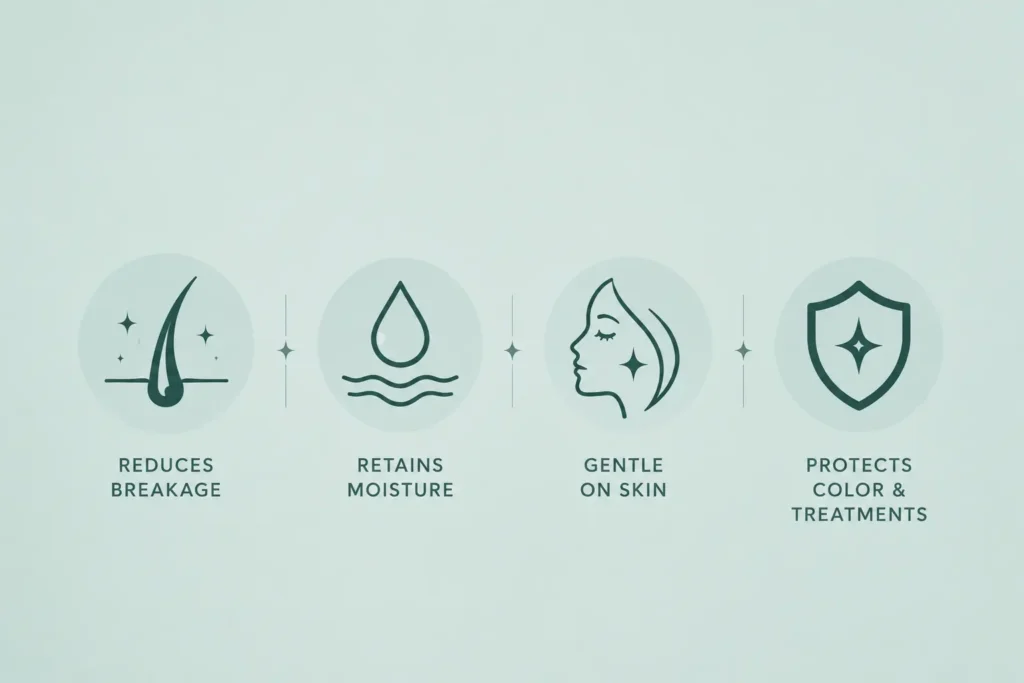
Silk has carried a reputation for luxury and skincare for centuries, and it’s earned, not just marketed, the same quiet, understated appeal covered in our piece on what quiet luxury fashion actually means. Dore & Rose’s silk pillowcase works on one simple property: smoothness. The fibers are tightly woven and naturally slick, so hair glides across the surface instead of catching or snagging.
As a silk pillowcase for hair, it cuts down on friction-based breakage, helps hair hold onto moisture, noticeably reduces frizz and bedhead, and goes easy on color-treated or chemically processed hair, helping color and treatments last longer between salon visits.
For skin, that same smooth surface reduces the pulling and creasing that can contribute to fine lines over time, and it won’t drink up night cream the way cotton does. As a silk pillowcase for hair and skin both, this dual benefit is a big part of why the fabric has stuck around in beauty routines for so long. If you’ve ever applied a rich moisturizer only to find your pillowcase soaked by morning, this is the fix, and it pairs naturally with anyone already following a skin cycling routine that relies on overnight actives actually staying on the skin.
The trade-off is that genuine silk asks for a little more care, usually a gentle hand wash or a cold, delicate cycle. For some people that small ritual is worth the payoff; for others, it’s the one thing holding them back, which is exactly why Dore & Rose also makes bamboo.
The Dore & Rose Bamboo Pillowcase: The Practical, Everyday Choice
Bamboo, made from bamboo-derived viscose or lyocell, is what people reach for when they want most of silk’s benefits without the extra upkeep. According to Dore & Rose, the bamboo pillowcase is naturally breathable and moisture-wicking; marketed as hypoallergenic and antibacterial (a pick the brand positions toward acne-prone skin or sensitive scalps); more affordable than genuine silk; fully machine washable; and made from a more sustainably grown material overall, since bamboo generally requires fewer pesticides and less water than many other crops. If sustainability is a factor in your buying decisions more broadly, it’s worth a look at the broader shift toward sustainable fashion happening across categories right now, bedding included.
Where it falls slightly short: bamboo is smooth, but not quite as slick as silk at the fiber level. It reduces friction significantly compared to cotton, but silk still edges it out on pure glide, a difference that barely registers day to day for most people.
Silk vs. Bamboo Pillowcase, Side by Side
| Feature | Silk | Bamboo |
|---|---|---|
| Friction reduction | Excellent | Very good |
| Moisture retention for hair | Excellent | Good |
| Breathability / cooling | Good | Excellent |
| Hypoallergenic properties | Good | Excellent |
| Price point | Higher | Moderate |
| Care & maintenance | Delicate, hand wash | Machine washable |
| Sustainability | Moderate | High |
| Best for | Frizz, breakage, color-treated hair | Hot sleepers, sensitive skin, everyday use |
Neither fabric is the “wrong” answer in this bamboo vs silk pillowcase comparison. They solve slightly different problems, which is likely why Dore & Rose make both instead of picking a side.
Matching the Pillowcase to Your Hair Type
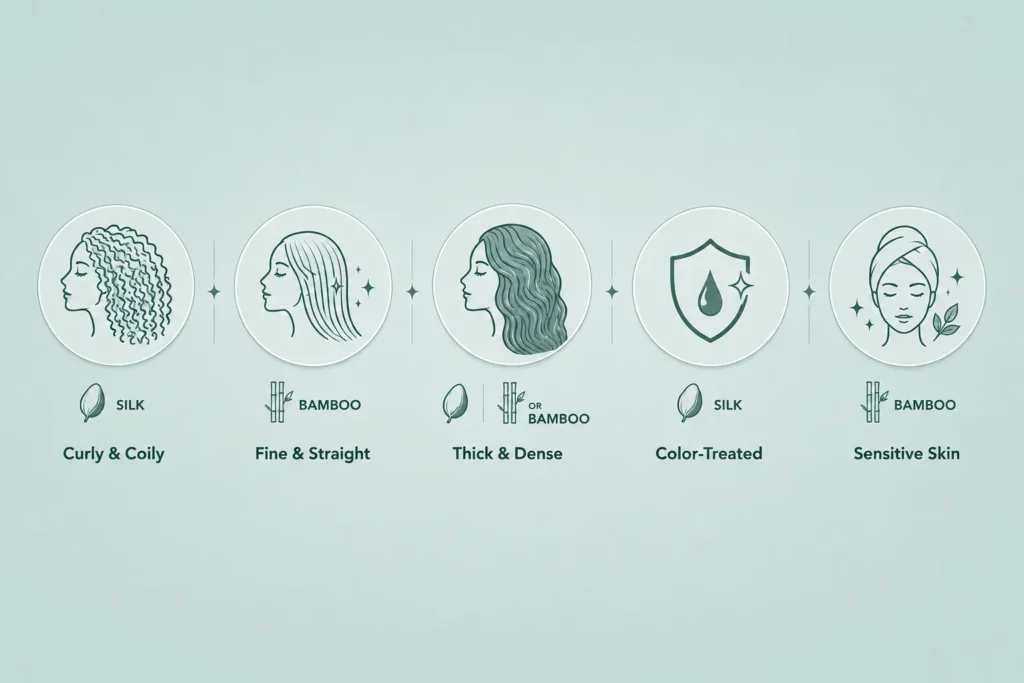
Curly and coily hair runs drier and frizzes more easily, since natural oils have a harder time traveling down the twists of the hair shaft. Silk is usually the stronger pick here, helping curls hold their shape instead of unraveling into frizz.
Fine, straight hair is more prone to looking flat and static-charged. Bamboo’s breathability helps, since fine hair can look greasy fast when trapped against a hot, non-breathable surface.
Thick, dense hair does reasonably well on either fabric, though many reviewers note silk’s glide makes morning detangling noticeably easier, since more hair means more surface area exposed to friction each night.
Color-treated or chemically processed hair, balayage, keratin, perms, and relaxers are more vulnerable to friction damage since processing already weakens the cuticle. Silk is usually the better call here too.
Sensitive or acne-prone scalp and skin tend to do better with bamboo, thanks to its moisture-wicking properties, which can help cut down on oil, sweat, and buildup along the hairline and jaw overnight.
The Fabric: What Makes Quality Silk Pajamas Different
The biggest question with any silk pajama purchase is simple: is it actually silk or a cheap imitation dressed up in marketing language?
The best silk pajamas use 22 momme, 6A-grade mulberry silk, often with a small amount of spandex added for stretch. Momme measures the weight and density of silk. Anything above 19 momme is generally considered good quality for sleepwear, and 22 momme sits comfortably in the “excellent” range. Grade 6A is the highest commercial grade of mulberry silk, with longer, more uniform fibers and fewer imperfections.
This matters because cheap silk pajamas tend to use lower momme counts or blend in synthetic fibers without disclosing it. That’s why they feel thin, shiny in the wrong way, or scratchy after a few washes. Fabric choice is one of the clearest signals separating serious silk sleepwear from loungewear labels simply riding the silk trend.
Look for OEKO-TEX® Standard 100 certification too, an independent certification confirming the material has been tested for harmful substances. That matters if you have sensitive skin or just want peace of mind about what’s touching your body for eight hours a night.
Comfort and Fit: How Do They Actually Wear?
Silk sounds luxurious on paper, but plenty of silk pajamas fail at the fit stage: too boxy, too clingy, or sized inconsistently.
The better sets solve this with stretch-silk construction that adapts to a range of body shapes rather than a single rigid cut. Pants with an elastic waistband and drawstring give a secure, flexible fit instead of the “one size fits all” problem common in loungewear.
Silk naturally regulates temperature, so good silk pajamas feel cool against the skin on a warm night but still add a layer of warmth when temperatures drop. That’s one of the most underrated benefits of quality silk pajamas: you’re not forced to choose between “too hot” and “too cold” the way cotton or synthetic loungewear can force you to.
The overall silhouette in premium silk sleepwear tends to be elegant rather than sporty, which matters if you want your loungewear to look put-together even when you’re just making coffee at 7 a.m.
Design and Range: More Than Just One Pajama Set
One thing that separates the strongest silk sleepwear brands from single-product labels is the breadth of the collection. Ideally, you’re not buying one set and hoping it holds up; you’re buying into a coordinated sleep system.
A well-built lineup typically includes the following:
- Long-sleeve silk pajama sets for cooler months or year-round wear if you tend to run cold
- Camisole-and-shorts silk pajama sets for warmer weather or a lighter feel
- Silk robes to layer over pajamas
- Silk sleep masks made of the same mulberry silk used throughout the pajamas
- Silk bonnets for protecting hair overnight, worth pairing with a sulfate free shampoo if hair health is part of why you’re buying in
Buying a pajama set alongside a mask or bonnet is where the “sleep ritual” positioning really shows up: the pieces are designed to be worn together. Look for color choices that favor timeless, elevated tones over trend-driven prints, which is why quality silk pajamas tend to work as a longer-term wardrobe investment rather than a seasonal buy.
Best Sleep Masks
Sleep masks are Dore & Rose’s calling card. The brand markets them as award-winning silk sleep masks for better sleep and smoother, brighter skin, and there’s a real range to choose from depending on what you need.
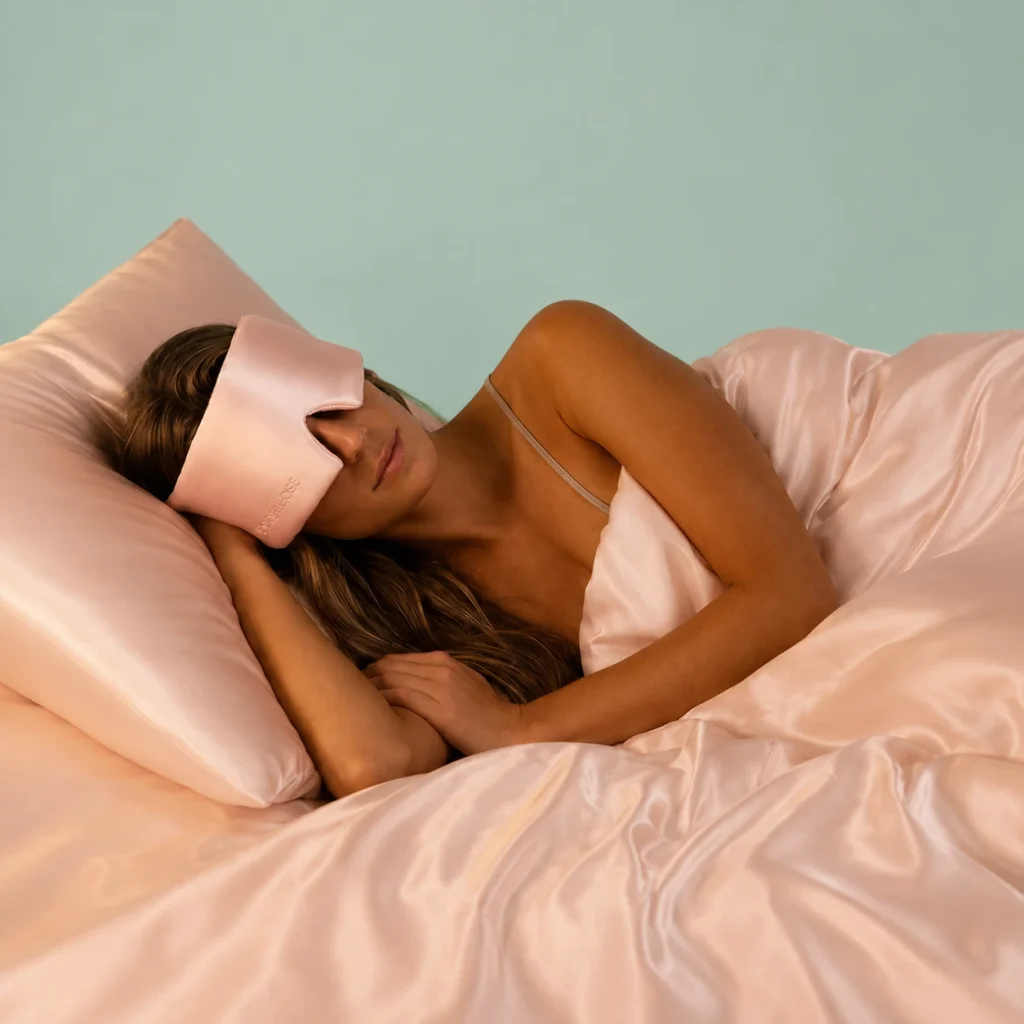
Deep Sleep Mask: The Bestseller
- Material: 23 momme mulberry silk.
- Price: €56,00, often reduced to €45,00.
- Choice: Available in 14 colors, easily the widest range in the lineup.
This is the one to try if you want maximum darkness and a plush, contoured fit. It’s the brand’s most popular mask and a solid first purchase.
Aura Sleep Mask
- Material: 23 momme mulberry silk.
- Price: €63,00, sometimes around €50,00.
- Choice: Three colors available.
A more refined, design-forward option for anyone who wants something a little more considered than the standard mask shape.
Cooling Sleep Mask
- Material: Aeris™ cooling fabric.
- Price: €56,00, often €45,00.
If you run warm at night or sleep in a hot room, this mask uses cooling technology instead of silk to keep things fresh through the night. Ideal for hot sleepers, menopausal night sweats, or summer travel.
How do you choose between them? Go with the Deep Sleep Mask for everyday blackout comfort and the widest color range, Aura for a more design-forward look, and the Cooling Mask if temperature is your main sleep disruptor.
Don’t Overlook the Extras: Bonnets, Scrunchies & More
The smaller accessories round out the sleep routine and make excellent add-ons.
- Premium Silk Bonnet: 23 momme mulberry silk, €81,00 (often €65,00), breathable, silky-soft, fully adjustable. Helps protect hair overnight, especially for curly and textured hair.
- Silk Headband: €30,00. Keeps hair off your face and doubles as a daytime accessory.
- Washing Bag for Silk: €11,00 (often €9,00). A small purchase that meaningfully protects silk during washing.
- Cooling Comforter: Aeris cooling fabric, €169,00 (often €114,00), for hot sleepers who want temperature control at the duvet level.
Dore and Rose vs Eberjey: Side-by-Side Comparison
| Feature | Dore and Rose | Eberjey |
| Signature fabric | 100% mulberry silk | TENCEL™ Modal (stretch knit) |
| Feel | Cool, smooth, fluid drape | Soft, stretchy, jersey-like |
| Cooling performance | Strong, naturally thermoregulating | Breathable, but a fitted knit holds more warmth against the skin. |
| Skin & hair benefits | Reduces friction; commonly cited skin/hair benefit | Minimal, not a stated benefit of the fabric |
| Care | Gentle wash, air dry | Fully machine washable |
| Price (PJ set) | Mid-luxury, strong value for real silk | Similar price range, for modal |
| Aesthetic | Elegant, classic, occasion-worthy | Casual, cozy, lounge-focused |
| Durability | Lasts for years with proper care | Lenzing markets TENCEL Modal as pill- and shrink-resistant; real-world wear varies with garment construction and washing habits |
| Best for | Hot sleepers, gifting, skin-conscious buyers | Loungewear lovers wanting a low-maintenance routine |
Cooling Performance: The Hot Sleeper Test
If you run hot at night, this is the section that matters most.
Silk moves heat and moisture away from the body and releases it, which is why it stays cool to the touch through the night. Modal absorbs moisture well but, as a fitted knit, keeps a layer of fabric pressed against warm skin. On a night past 75°F, that difference tends to show up clearly: the modal set can start to feel like a layer you’d rather not be wearing, while silk is more likely to stay comfortable.
Price and Value
The two brands sit in a similar price band while offering different materials, which is what makes this comparison interesting rather than obvious.
<cite index=”43-1″>An Eberjey Gisele set typically runs from around $128 to $168</cite> depending on the style. That’s real money for the model, however nice the modal is, and comparable stretch-knit sets exist elsewhere for less, so part of the price reflects the brand itself.
Dore and Rose sets land in a similar-to-moderately-higher range depending on the piece, for actual mulberry silk, a fabric that historically costs two to three times more from legacy silk brands. On a pure material-value basis, Dore and Rose delivers more fabric quality per dollar. It’s one of the few corners of luxury pajamas where “affordable luxury” is a reasonably accurate label rather than an aspirational one.
So, Which Should You Buy?
Buy Dore and Rose if:
- You sleep hot or deal with night sweats
- You care about the skin and hair benefits of what you sleep in
- You want pajamas that feel like an occasion, not just an upgrade
- You’re gifting and want a strong, reliable reaction
- You want the most fabric quality for your money
Buy Eberjey if:
- Stretchy, machine-washable comfort is non-negotiable
- Your pajamas double as all-day loungewear
- You’d rather not think about garment care at all
Both are legitimate brands with customers who genuinely love what they make. If the question is specifically about cooling performance, skin and hair benefit, and fabric value per dollar, Dore and Rose has the stronger case. If the question is about stretch, easy care, and all-day wearability, Eberjey holds its own.
Care Tips: Making Your Products Last
Premium materials reward a little care. Here’s how to keep your Dore & Rose pieces looking and feeling their best.
For silk (pillowcases, masks, bonnets, PJs):
- Use a washing bag. It protects delicate fibers from snags and abrasion in the machine, a small purchase that meaningfully extends the life of your silk.
- Wash cool and gently, using cold water on a delicate or silk cycle with a mild, silk-appropriate detergent. Avoid harsh detergents and bleach.
- Skip the fabric softener; it coats silk fibers and dulls the natural sheen.
- Air-dry away from direct sunlight. Heat and prolonged sun exposure weaken silk fibers and can fade color. Never tumble dry on high heat.
- Iron on low if needed, ideally on the reverse side, or steam gently instead.
For cotton, poplin, and pointelle:
- Machine washable and generally low-maintenance.
- Wash in cool to warm water and tumble dry low to preserve shape and softness.
- Wash pillowcases and masks regularly, since they sit against your skin nightly and staying clean is part of the actual benefit.
For cooling fabrics (Aeris™):
- Follow the care label closely, since engineered performance fabrics can have specific requirements.
- Generally, cool washes and air- or low-heat drying preserve the cooling properties.
General good habits:
- Rotate two pillowcases so you always have a fresh one while the other is in the wash.
- Store silk somewhere cool and dry, out of direct light.
- Address stains promptly and gently rather than scrubbing hard.
Gift Recommendations
Dore & Rose products make natural gifts, well-made, broadly appealing, and the kind of thing most people won’t buy for themselves. Here’s how to match a gift to the occasion and budget.
Under €50, thoughtful and easy:
- Silk Headband (€30)
- Silk Scrunchies
- A washing bag for silk paired with a small accessory
Perfect for secret Santa gifts, stocking fillers, or a small “thinking of you” gesture.
€50–€90, the crowd-pleasers:
- Deep Sleep Mask (the safest, most broadly loved choice)
- Premium Silk Pillowcase
- Jersey Sleep Set
A sleep mask or pillowcase is genuinely hard to get wrong, no sizing decisions are required, and it reads as more expensive than it actually costs.
€90 and up, the showstoppers:
- Deep Sleep Bundle or Aura Escape Bundle
- Long Premium Silk PJ Set
- Cooling Comforter
These work well for birthdays, anniversaries, Mother’s Day, new parents, or anyone recovering and in need of comfort. Dore & Rose also offers corporate gifting, worth exploring for client or team gifts.
Gifting tips:
- When in doubt, choose a mask or pillowcase; no sizing concerns.
- For sleepwear, check for a mix-and-match option so you can match size and color with more confidence.
- A bundle feels generous and removes the guesswork of coordinating pieces.
- Neutral colors (ivory, grey, and soft pink) are the safest bet for someone whose taste you don’t know well.
Pros and Cons of Silk Pajamas
What to look for:
- Real 22 momme, 6A grade mulberry silk with OEKO-TEX® certification
- Stretch construction that adapts to different body types
- Temperature-regulating fabric, ideal for year-round wear
- A complete, coordinated range: sets, robes, masks, and bonnets
- Giftable packaging straight out of the box
- A track record of consistent, verifiable customer feedback
What to consider before buying:
- Delicate hand-wash or gentle machine care, no dryer
- Genuine silk pajamas sit at a premium price point
- Shipping times can run longer during high-demand periods
Our Take: Which Dore & Rose Pillowcase Should You Buy?
Silk is the specialist; bamboo is the all-rounder. Silk offers slightly superior friction reduction and moisture retention, making it a strong pick for dry, curly, or color-treated hair. Bamboo offers excellent breathability, easier care, and a lower price point, making it the practical everyday choice for most households, especially hot sleepers and anyone with sensitive skin.
Either way, both are a meaningful upgrade over standard cotton. The real mistake isn’t choosing bamboo over silk or silk over bamboo; it’s staying on a rough cotton pillowcase and wondering why your hair never quite cooperates in the morning.
You can browse Dore & Rose’s full pillowcase lineup on the brand’s official site — replace this link with Dore & Rose’s actual URL or your affiliate link before publishing.
Frequently Asked Questions (FAQs)
Is a silk pillowcase really better for hair than cotton?
Yes, in most cases. Silk’s smooth fiber structure significantly reduces the friction that causes tangles, breakage, and frizz, while helping hair hold onto its natural moisture overnight.
Does a bamboo pillowcase help with hair growth?
Bamboo doesn’t directly stimulate growth, but its breathability and moisture-wicking qualities support a healthier scalp environment, which can indirectly contribute to stronger, less brittle-looking hair over time.
How often should I wash my Dore & Rose pillowcase?
Once a week is a reasonable baseline for either fabric. Both silk and bamboo resist bacteria buildup better than cotton, but oil, sweat, and product residue still accumulate and can affect skin and hair if left too long.
Which is more affordable, silk or bamboo?
Bamboo pillowcases are generally more budget-friendly than genuine mulberry silk, while still offering much of the same smoothness and comfort for daily use.
Can a pillowcase actually reduce frizz overnight?
Yes. Since both silk and bamboo reduce friction compared to cotton, hair is far less likely to tangle or rough up while you sleep, which can noticeably cut down on morning frizz and bedhead.
What’s the best fabric for a pillowcase for hair overall?
There isn’t a single universal answer to what the best fabric for a pillowcase for hair actually is; it depends on your hair type and climate. Silk tends to be the stronger pick for dry, curly, or color-treated hair, while bamboo tends to suit fine hair, sensitive skin, and hot sleepers better. Many people end up keeping one of each rather than picking permanently.


1 comment
[…] of what to wear with them. Too casual and you look like you just woke up. Too dressy, and the smooth fabric clashes with the rest of the outfit. This guide goes over how to style linen pants for every […]