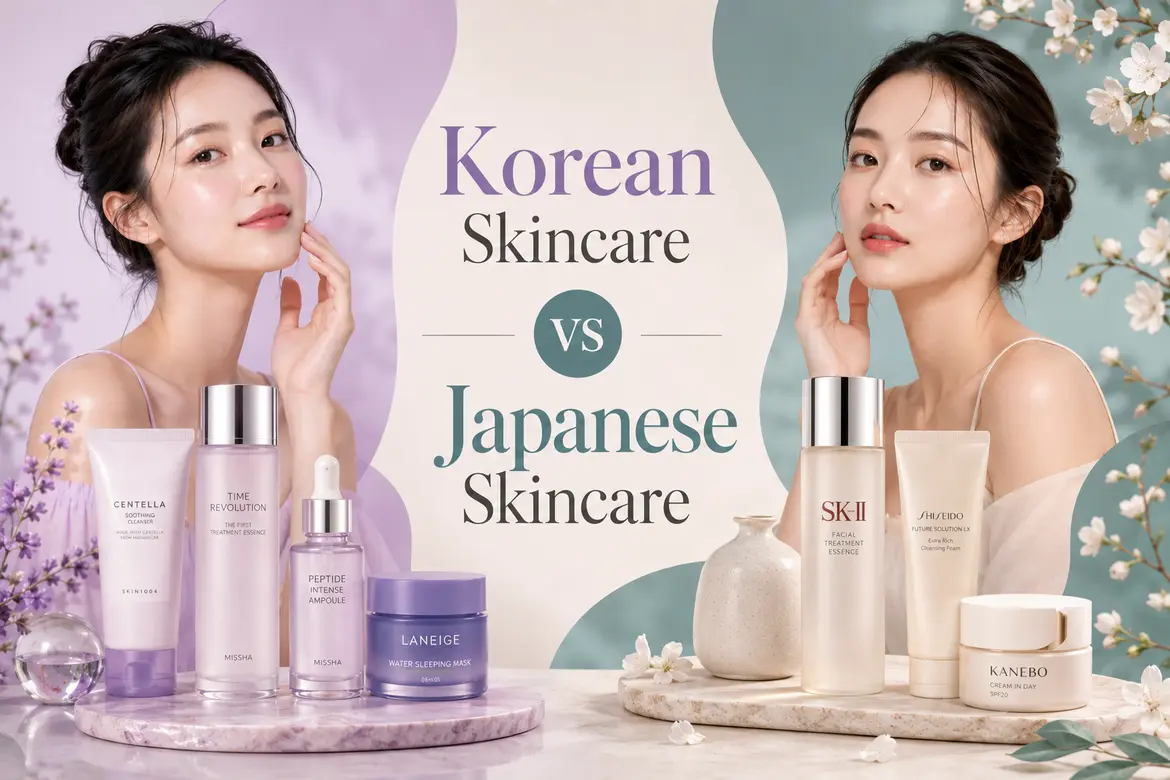
With tons of skincare flooding the market, you would have seen a new aisle of Korean skincare popping up somewhere out there. But it raises an interesting question: Do we really need this much skincare? Do Western markets not already have billion-dollar skin care companies that have delivered results for decades now? So, why did the sudden change arise?
K-beauty boomed due to social media virality and raised curiosity in the Western world, primarily because it was different from what was being followed. People jumped in to see how such elaborate skin care works, inspired by Asian skin that doesn’t seem to age. This diverse approach to skincare is what led people to explore this new branch.
But really, what if we already have it all? What is different about Korean and Western skincare, and what other skincare trends are on the rise in Japanese skincare? So let’s do a quick round-up of Japanese skincare vs Korean skincare vs Western skincare.
What is the Philosophy Behind Skincare?
What sets each of these skincare industries apart is its value system and its actual aim. Each has its own skincare philosophy, and they grow on their USP.
Korean Skincare
We all know what the best skincare is all about: glass skin. And what’s the key to glass skin? It’s hydration, so the Korean skincare mantra is hydration and prevention. Skincare starts even if there are no visible signs of skin damage.
It is a lifestyle choice that involves following a 10-step Korean skincare routine each day. The focus here is on skin wellness, which nourishes your skin.
Western Skincare
In the Western world, skincare focuses more on addressing skin concerns, such as acne, pigmentation, acne marks, and fine lines, after these issues arise. Making it treatment-centric. Products with a potent ingredient list are chosen for immediate relief, often focusing on active ingredients that target specific issues such as hydration, exfoliation, and anti-aging.
Japanese Skincare
This is a whole new world; the routines are elaborate and are a mix of both the Western and Korean worlds. The ingredients are often natural, with one or two scientifically backed ones, such as hyaluronic acid or retinol, which help to enhance hydration and promote skin renewal. These skincare favorites are followed religiously, like the famous rice mask.
What does Korean Vs Japanese skincare look like?
Korean Skincare Routine Steps:
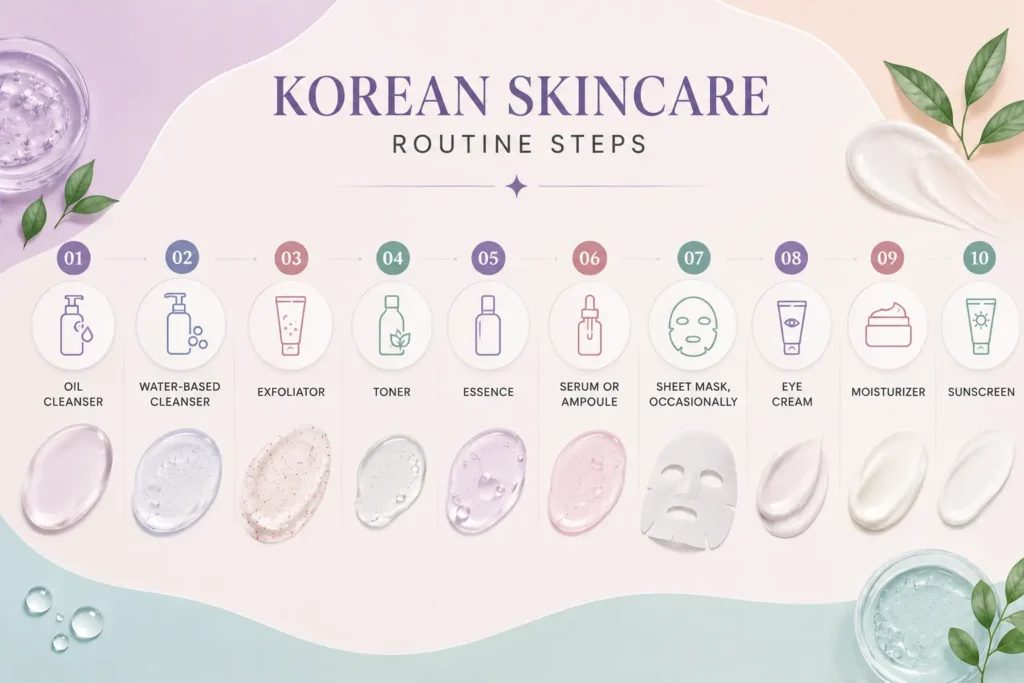
In a true Korean skincare routine, you will find 10 steps, but you can always pick according to your skin’s requirements.
- Oil cleanser
- Water-based cleanser
- Exfoliator
- Toner
- Essence
- Serum or ampoule
- Sheet Mask, occasionally
- Eye cream
- Moisturizer
- Sunscreen
Western Skincare Routine Steps
Western skincare is about treatment, which makes it super straightforward. But the ingredients can be harsh, leaving your skin barrier damaged, which can be addressed later.
- Cleanser
- Treatment (retinol, exfoliant, vitamin C)
- Moisturizer
- Sunscreen
Japanese skincare routine steps
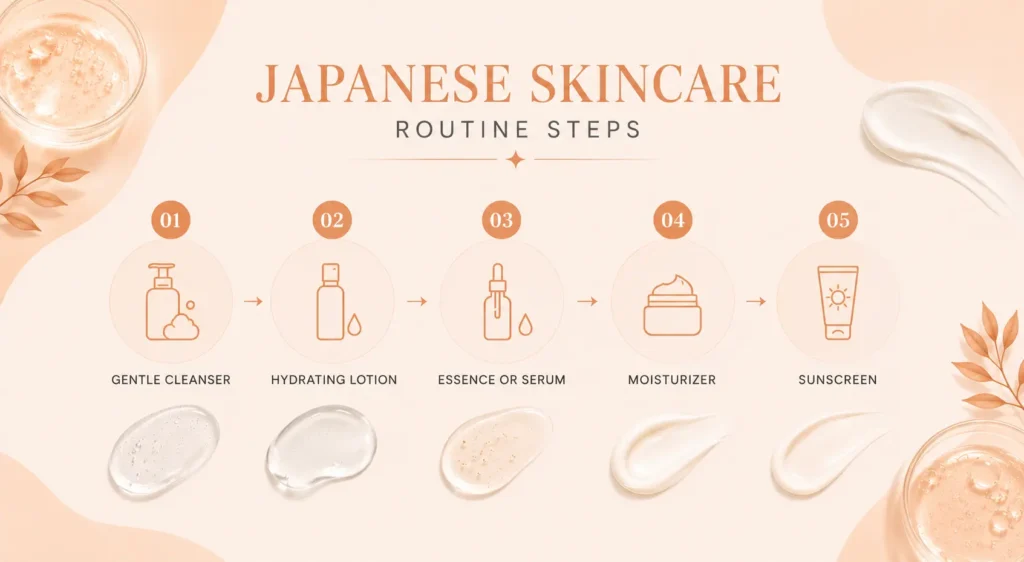
The Japanese skincare routine is known for being simple, elegant, and effective:
Here are the steps followed generally
- Gentle cleanser
- Hydrating lotion
- Essence or serum
- Moisturizer
- Sunscreen is a popular product in Japan.
These hero ingredients are used in Korean Skincare
Ingredients in Korean skincare
The ingredients in K-beauty products are mostly hydrating, soothing, and innovative as well.
- Snail mucin
- Centella asiatica (Cica)
- Rice ferment extract
- Propolis
- Hyaluronic acid
- Niacinamide
- Green tea
- Ginseng
Apart from skincare products, Koreans are big on drinking their skincare. Indeed, this is achieved through the consumption of antioxidant-rich teas and drinks. So, along with the skincare routine, you must also follow the Korean diet.
Ingredients in Western Skincare
Western skin care ingredients are science-backed with years of testing and dermatologist approvals.
- Retinol and retinoids
- Vitamin C
- Glycolic acid
- Salicylic acid
- Benzoyl peroxide
- Peptides
- Hydroquinone
Sensitive skin may not tolerate some of these ingredients well, leading to damage to the skin barrier. Acne is a huge skin concern in the US, so exfoliating skin ingredients are often used. Since this condition can impact skin sensitivity levels, we prioritize addressing immediate skin concerns before correcting the skin barrier.
Ingredients in Japanese skincare
You will find many traditional ingredients that have been staples in the Japanese skincare market.
- Rice bran
- Camellia oil
- Green tea
- Hyaluronic acid
- Sake ferment extract
- Collagen
What are some Popular Korean Skincare Brands?
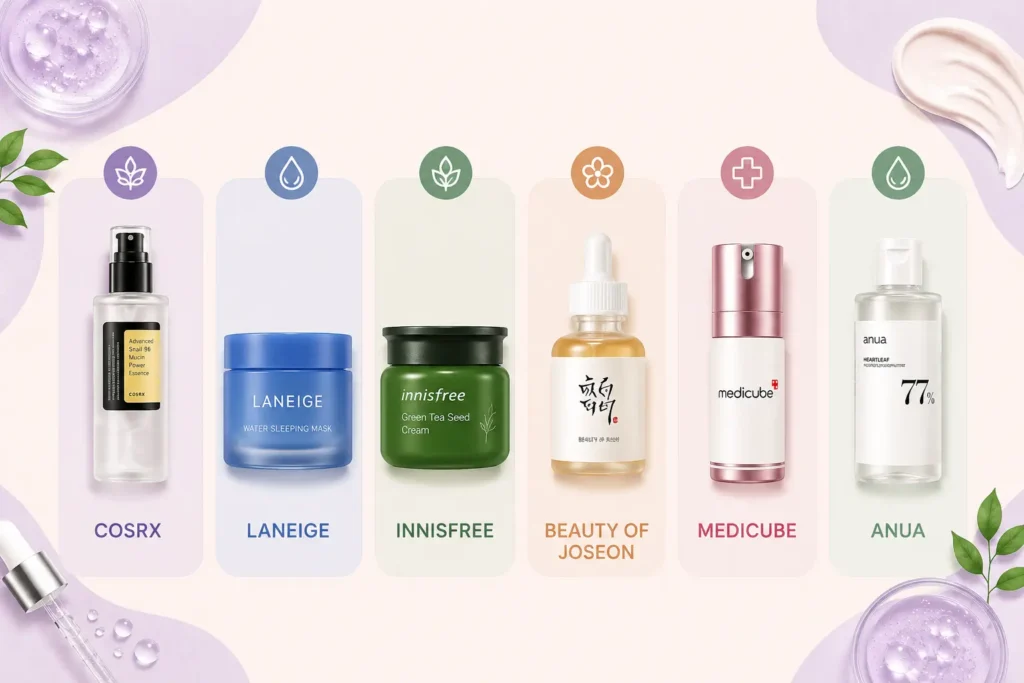
If you want to build a Korean skincare routine with the best skincare brands, then you must check these out.
- COSRX
- Laneige
- Innisfree
- Beauty of Joseon
- Medicube
- Anua
These brands are not just popular in the US but equally loved by Asians.
What are popular Western Skincare Brands?
- CeraVe
- Ordinary
- Rhode
- Paula’s Choice
- La Roche-Posay
- Caudalie
- Byoma
- Roc
- Ole Henriksen
What are the Best Selling Japanese skincare brands?
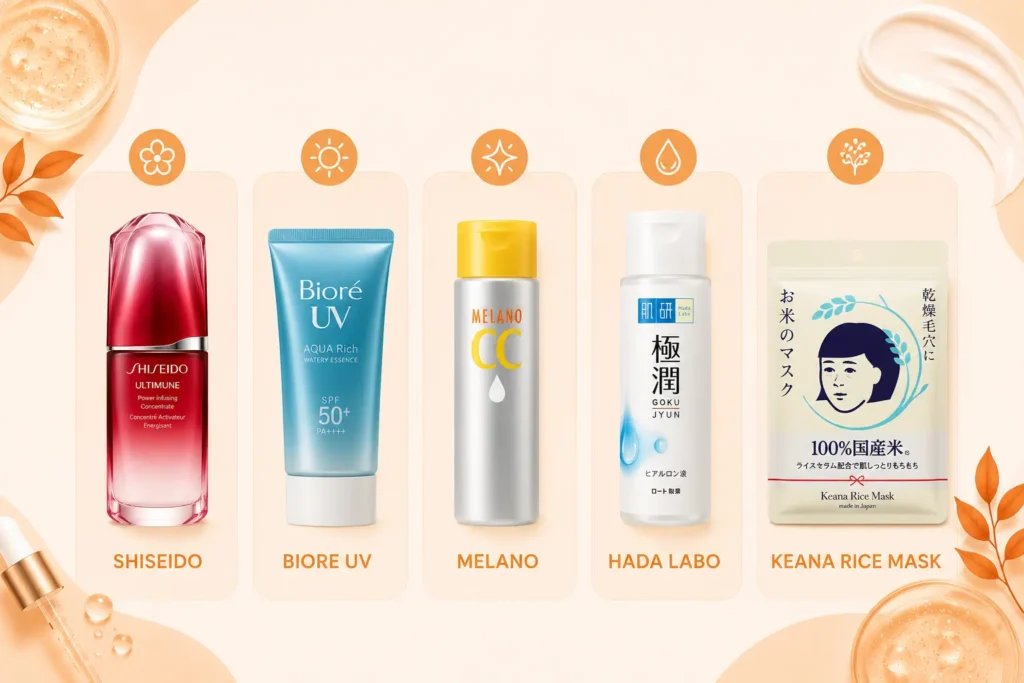
If you are building a Japanese skincare routine and don’t know where to start, these brands should definitely be on your list.
- Shiseido
- Biore UV
- Melano
- Hada Labo
- Keana Rice Mask
Again, legacy products and brands do very well with the skincare routine since they have earned a generation’s liking and trust by delivering results.
How are these products tested?
Testing of products plays a huge role in why these two skincare industries are so different. This doesn’t really apply to Japanese vs Korean skincare because they follow a similar testing pattern. Korea is extremely innovative when it comes to tech, and similarly, they test their products with dermatologists. Their ability to derive potent ingredients from natural resources and still maintain their bioavailability is key. Western skincare brands tend to focus on:
Clinical trials, FDA ingredient safety standards, dermatologist-developed formulas, and medical-grade treatments. Coming back to Japanese vs Korean skincare, Japanese focus more on products with consistent results and what the bestsellers are.
So Which one is Better?
There is no one-stop solution when it comes to skincare, be it a Japanese skincare routine or the best Korean skincare brands. You must choose according to your skin type and skin concerns. Why stick to one when you can mix and match? The best mix would be to go with preventive and hydrating skincare products, treatment-based skincare from a US or French pharmacy, and sunscreen and simplicity in Japanese skincare.
How to Build Your Own Skincare Routine?
Here are some product recommendations from Japanese, Korean, and Western Skincare:
- DHC cleansing oil
- Dermalogica Toner Spray
- Anua Hyaluronic Acid Serum
- RoC Beauty Retinol
- Laneige Sleeping Mask
- Biore UV Sunscreen
Similarly, you can build your own custom skincare with elements from the skincare industry.
Takeaway
At the end of the day, the real winner in the debate between Japanese vs Korean skincare and Western skincare is balance. If you love the ritual of a layered skincare routine, embrace it. It also works if you like the ease of use of Western skincare products with potent active ingredients.
The best skincare routine isn’t about geography—it’s about understanding your skin and choosing products that support its health.
And in today’s beauty world, there’s no reason you can’t mix the glow of skincare, the elegance of Japanese skincare, and the science of Western dermatology into one routine that works perfectly for you.
FAQs
1. What is the main difference between Korean and Japanese skincare?
Korean skincare focuses on multi-step layering routines (often 10+ steps) designed to achieve “glass skin” — a hydrated, luminous, and dewy complexion. It embraces trendy ingredients like snail mucin, niacinamide, and fermented extracts. Japanese skincare follows a minimalist 4–6 step routine centered on prevention and achieving “mochi skin” — soft, smooth, and bouncy skin. Japanese brands rely on time-tested ingredients like green tea, rice bran, and camellia oil.
2. Which is better for sensitive skin — Korean or Japanese skincare?
Japanese skincare is generally better suited for sensitive skin. It prioritizes gentle, minimal formulations that strengthen the skin barrier without overwhelming it. Japanese brands are well known for their rigorous dermatological testing and hypoallergenic formulas. Korean skincare, while highly effective, often uses potent actives like AHAs, BHAs, and retinol that may irritate reactive or sensitive skin types.
3. Is Korean or Japanese skincare better for anti-aging?
Both offer excellent anti-aging benefits through different approaches. Japanese skincare excels at prevention — world-class sunscreen technology and antioxidant-rich ingredients like green tea and fermented rice bran protect skin from premature aging. Korean skincare focuses on correction, using innovative actives like snail mucin, peptides, retinol, and Vitamin C derivatives to target fine lines and uneven skin tone. Many experts recommend combining both for best results.
4. Can I mix Korean and Japanese skincare products together?
Yes, absolutely! Mixing Korean and Japanese skincare products is not only possible but highly recommended. A popular combination is using Japanese cleansers and sunscreens — renowned for their superior quality — alongside Korean essences, serums, and sheet masks. The key is to layer products from thinnest to thickest consistency and avoid combining too many active ingredients at once to prevent irritation.
5. Which skincare routine is better for beginners — Korean or Japanese?
Japanese skincare is generally more beginner-friendly due to its simplified 4–6 step routine, affordable product costs, and gentle formulas. Korean skincare’s 10-step routine can feel overwhelming and expensive for those just starting out. Beginners interested in K-beauty can start with a simplified 5-step routine — cleanser, toner, serum, moisturizer, and SPF — and gradually add more products as their skin adjusts.
6. What is the difference between “glass skin” and “mochi skin”?
“Glass skin” is a Korean beauty ideal describing skin so clear, smooth, and luminous it resembles glass — achieved through intense hydration, layering lightweight essences, and brightening treatments. “Mochi skin” is a Japanese beauty concept named after the soft, chewy rice cake, referring to skin that is plump, bouncy, smooth, and evenly textured. While glass skin emphasizes radiance and translucency, mochi skin focuses on softness and elasticity.