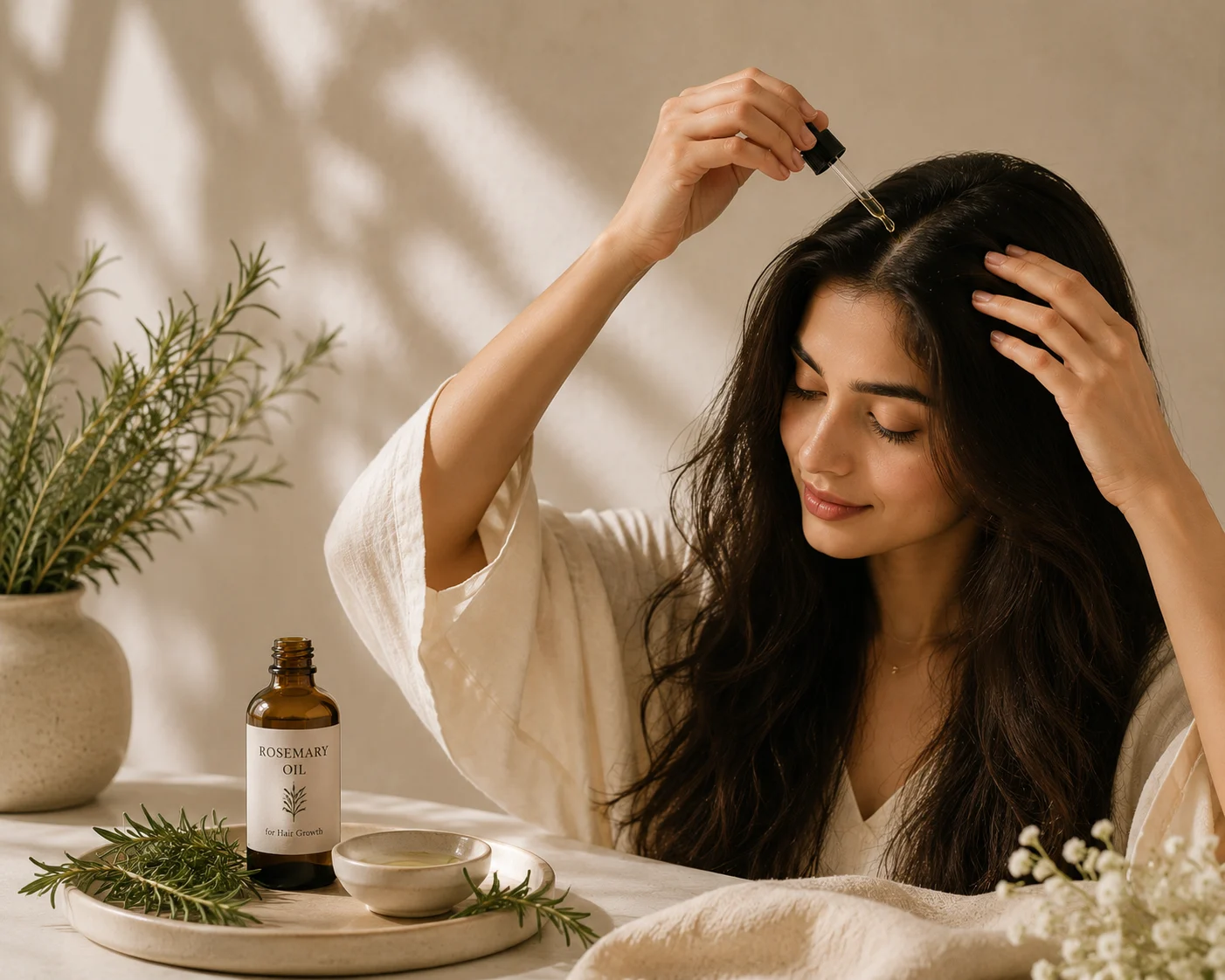
Many people suffer from thinning hair and shedding their hair due to medications, illnesses, lifestyle choices, or cost. They many times choose to find a natural remedy before trying any prescription medication. One specific product that people continue to talk about for hair growth purposes is rosemary oil. Users on social media have reported that it helps grow thicker hair and reduces shedding as well as makes the scalp healthier. However, is there any scientific evidence to back these claims? Can Rosemary Oil possibly stimulate the hair follicles and assist with re-growing hair for all types of hair loss?
Since the rosemary oil is typically made from organic materials, research has shown that it may improve blood circulation, reduce inflammation, and help in the regrowth of hair depending on a person’s adherence, type of use, and the underlying cause of the hair thinning. To help individuals understand the scientific research supporting the use of rosemary oil for hair thickening, we will discuss the findings from a few studies and compare the effectiveness of using rosemary oil and minoxidil. We will also provide safe ways to use rosemary oil for optimum results.
What Is Rosemary Oil?
Rosemary oil is a natural essential oil made from the leaves of the rosemary plant, Rosmarinus officinalis, which has been used by people for many centuries to help improve circulation, reduce inflammation, and treat scalp issues.
When it comes to rosemary oil for hair growth, it is commonly used to help with the following:
- Thinning Hair
- Excessive Shedding
- Weak Hair Follicles
- Dry or Flaky Scalp
- The Early Stages of Pattern Baldness
The reason for the increase in popularity of rosemary oil is the findings of studies that suggest it may be just as effective as topical hair growth treatments for stimulating hair follicles.
The Science: How Does Rosemary Oil for Hair Growth Work?
To appreciate the way rosemary oil functions, we must first understand the biology of hair loss. Androgenetic alopecia (AGA), or male/female pattern baldness, is the most common subtype of hair loss. The main cause of AGA is dihydrotestosterone (DHT), a hormone byproduct, which causes hair follicles to shrink, leading to cessation of hair production.
Rosemary oil addresses hair loss by working through three distinct biological pathways:
- DHT Inhibition: Carnosic acid, which can be found in rosemary extract, is an anti-inflammatory compound proven to inhibit 5-alpha reductase, the enzyme responsible for converting testosterone (T) into DHT in hair follicles.
- Increased Microcirculation: Just as we exercise to increase blood flow to our muscles, rosemary oil increases local blood flow to our scalps when applied topically. Increased blood flow provides oxygen and nutrients to the hair bulb, allowing for further extension of the anagen (growth) phase of hair.
- Reduction of Inflammation: For hair to grow, the scalp must be healthy. Rosemary is a powerful antioxidant and helps combat oxidative stress and irritation that could otherwise lead to premature shedding of hair through anti-inflammation.
Rosemary Oil vs Minoxidil: What the Research Says
Rosemary essential oil is increasingly gaining recognition within modern medicine as a viable alternative solution to treat hair loss, specifically for men and women with androgenetic alopecia (male/female pattern baldness).
In a pivotal 2015 randomized clinical trial, researchers designed an experiment to compare the efficacy of rosemary essential oil versus commercial hair growth products containing minoxidil, the active ingredient in most hair regrowth treatments (2% minoxidil), on subjects who were experiencing androgenetic alopecia.
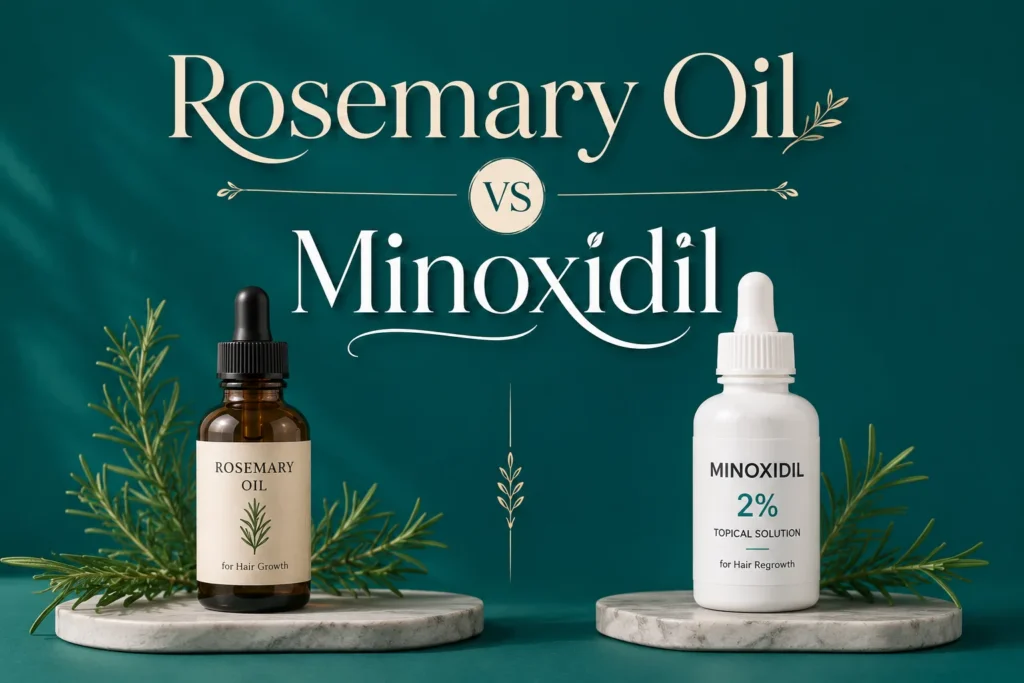
The 2015 Clinical Study Breakdown
| Metric | Rosemary Essential Oil | Minoxidil (2%) |
| Study Duration | 6 Months | 6 Months |
| Hair Count Increase (3 Months) | No significant change | No significant change |
| Hair Count Increase (6 Months) | Significant, measurable increase | Significant, measurable increase |
| Scalp Itching & Irritation | Low / Minimal | Significantly higher |
Key Takeaways from the Study
- Equal Effectiveness: At the conclusion of the study (after 6 months of treatment), men and women treated with either rosemary essential oil or 2% minoxidil showed statistically equal increases in their hair counts.
- Time Required to See Results: Neither the rosemary essential oil nor the minoxidil group witnessed results at the 3-month measurement period, supporting the idea that it takes time and consistency in order to obtain results from treatment.
- Less Scalp Irritation: Subjects who used the minoxidil solution reported a statistically significant greater amount of itching, flaking, and irritation compared to the groups who used rosemary oil.
Managing Expectations: Realistic Rosemary Oil Hair Growth Results
Although research indicates promising results, having realistic expectations is important. For example, although it is possible that rosemary oil may stimulate hair growth in new hair follicles or regenerate dormant follicles, it is unlikely that rosemary oil will help to regrow hair in completely scarred or dormant follicles that have not had any follicle activity for 10 years. As a general representation of results from using rosemary oil for the purposes of hair growth, you can expect the following patterns of results:
Typical Timeline for Results
| Timeframe | What You May Notice |
| 2–4 weeks | Reduced scalp dryness or irritation |
| 4–8 weeks | Less hair shedding during washing or brushing |
| 3 months | Improved hair texture and density |
| 6 months | Noticeable regrowth in thinning areas |
Months 1–2: Reduction in hair loss on a daily basis; improvement in the condition of the scalp, including reduced oil and dandruff.
Months 3–4: Initial indicators of stability; hair feels thicker at the roots.
Months 5-6+: New vellus hairs are visible along the front hairline and part lines, in addition to a denser overall head of hair.
How to Use Rosemary Oil for Hair: A Step-by-Step Guide
Rosemary essential oil should not be placed directly on the scalp only. Essential oils are extremely concentrated substances and can cause damage to the skin if not diluted with a carrier oil before applying.
The following are three methods of using rosemary oil on—and for the health of—your hair:
Dilute with a Carrier Oil (The Scalp Massage Method)
You will need a carrier oil that is appropriate for your scalp type. Good choices include: Jojoba or argan oil (lightweight) for oily or fine hair; castor oil or coconut oil (heavyweight) for dry or coarse textures.
- The Golden Ratio: The rule of thumb when mixing your essential oil with a carrier oil is 4-5 drops of pure, organic rosemary essential oil for every tablespoon of carrier oil you choose. After mixing the carrier oil and the rosemary oil together, you will want to divide your hair into sections and apply the mixture directly onto your scalp.
- Application: Use your fingertips (as opposed to your fingernails) or a silicone scalp massager to massage the oil into your scalp for 5 minutes; this will provide an additional benefit through circulation.
- Massage: Allow the oil to remain on your scalp for at least 30 minutes and up to 2 hours prior to thoroughly washing your hair with a clarifying shampoo.
- Duration: Complete this treatment 2-3 times per week to find the right frequency.
Shampooing with Rosemary Oil
If you don’t have enough time to do an oil treatment, it’s easy to do this as part of your normal shower routine.
- Add 2 to 3 drops of rosemary essential oil directly to the amount of shampoo you use in your palm.
- Massage it into your scalp and then let it sit for 2 to 3 minutes while you continue showering so the active ingredients can be absorbed before you rinse out the shampoo.
Who Should Be Careful Using Rosemary Oil?
Sensitive Scalps & Skin Conditions: For those with skin allergies, such as eczema or psoriasis, using this oil may bring on outbreaks. Always conduct a test by putting a small amount of the product on your forearm to see how you react.
Pregnant or Nursing Individuals: In high doses, this oil can stimulate the uterus. Though it is normally used alone with little threat, it is always best to check with your doctor about using rosemary oil.
Allergy Sufferers: If you have an allergic reaction to mint, basil, sage, or lavender, you may get contact dermatitis from using rosemary oil.
Common Mistakes That Limit Results
If the hair growth you expect from using rosemary oil is not happening, watch for these common mistakes when applying it:
Using It Undiluted: When applying an essential oil directly to your skin, it can cause irritation and inflammation of the hair follicle that can cause more hair to fall out. You should always mix an essential oil with a carrier oil.
Giving Up Too Soon: Hair grows very slowly. Many people stop using the oil after four weeks of treatment. However, studies show that you will likely need to use the oil for at least six months in order to see a substantial change.
Clogging the Scalp: Compounding hair with heavy oils on a daily basis will clog hair follicles and may lead to problems such as folliculitis. To avoid this, you should limit the application of any heavy treatment product to 2–3 times a week.
Skipping the Massage: It is important to apply the oil to the hair and the scalp because the oil will need to reach the hair at the roots. Additionally, you need to massage the oil into the scalp to increase microcirculation in the scalp, which will allow for better absorption of the oils you applied.
The Verdict: Should You Add Rosemary Oil to Your Routine?
If you are experiencing early signs of hair loss, postpartum hair loss, or want to increase the overall density of your hair without using synthetic chemicals, rosemary oil is one of the best options available that has been proven effective by scientific studies. It is a relatively inexpensive option with very few side effects, making it comparable to the over-the-counter products available on the market.
To get the best results from using rosemary oil, make sure you only use 100% pure, steam-distilled Rosmarinus officinalis essential oil. Combine your topical regimen using rosemary oil with a healthy diet, good stress management, and maintaining a healthy scalp to create an optimal environment for your hair to thrive.
FAQs
Q. How long will it take rosemary oil to make my hair grow?
Ans. Most users experience less hair loss after 6 to 8 weeks; however, visible growth may take up to 3 to 6 months of consistent application.
Q. Is it alright to use rosemary oil daily?
Ans. Daily use may be too intense for those with sensitive scalps; most professionals suggest using diluted rosemary oil between 2 and 4 times weekly.
Q. Can rosemary oil be used on any hair type?
Ans. Rosemary oil will work on straight, wavy, curly, and coily hair, but your results will be affected by the cause of your hair loss rather than just the texture.
Q. Can I combine rosemary oil with minoxidil?
Ans. While many individuals do use both together, you should consult a dermatologist before doing so in order to avoid irritation from either a treatment or possible interaction between both.