There’s a particular sort of misery that comes with wearing a mask in July heat. Your breath fogs up, your skin feels like it’s trapped under plastic wrap, and by the time you’ve walked two blocks, you’re wondering if you’ll survive the summer with your face intact. If that’s you, you’re not alone, and that’s exactly why we put this guide together.
Comfort shouldn’t be a luxury, not even for something as simple as staying cool outdoors. Whether you’re commuting, running errands, working outside, or trying to get through a heatwave without melting, a good cooling face mask can genuinely change your day. The best part: you don’t have to spend a fortune on fancy athletic wear brands to get one that works. You can build your own version that rivals anything on a store shelf with a few household items and about twenty minutes.
This guide covers everything: what actually makes a mask “cooling,” several DIY methods depending on what you already have at home, how to pick the best cooling face mask fabric, and answers to the questions people ask most once the temperature starts climbing.
Why Regular Masks Feel So Unbearable in Summer
Before getting into DIY builds, it’s worth understanding why standard masks trap heat in the first place. Most surgical and cloth masks are designed with breathability and filtration in mind, not temperature regulation. They sit close to your skin, block airflow around your mouth and nose, and trap the warm, humid air you exhale. That trapped moisture has nowhere to go in hot weather, so it just sits against your face, making you feel sweatier and stickier than you actually are.
A proper cooling face mask works in one of two ways: evaporative cooling (fabric that wicks moisture and uses evaporation to lower surface temperature) or embedded cooling (gel inserts or phase-change materials that feel cold to the touch). This distinction matters because it tells you which DIY approach will actually work for your climate and your skin type.
What Makes a Face Mask Genuinely “Cooling”
Not every mask that claims to be cooling actually cools. Here’s what separates a mask that looks breathable from one that actually performs:
- Moisture-wicking fabric — pulls sweat away from the skin so it can evaporate faster
- Lightweight, breathable weave — allows air circulation instead of trapping heat
- UPF (UV protection) rating — useful if you’re outdoors for long stretches
- Reusable, washable material — a cooling mask you can’t clean quickly becomes a hot, damp problem
- Snug but non-restrictive fit — tight enough to feel the cooling effect, without pressing so tightly that it traps warmth
Keep these five criteria in mind as you go through each DIY build below. They’ll help you judge whether your version is actually working, or just feels novel for the first five minutes.
DIY Cooling Face Mask #1: The Frozen Gel Pack Insert Mask
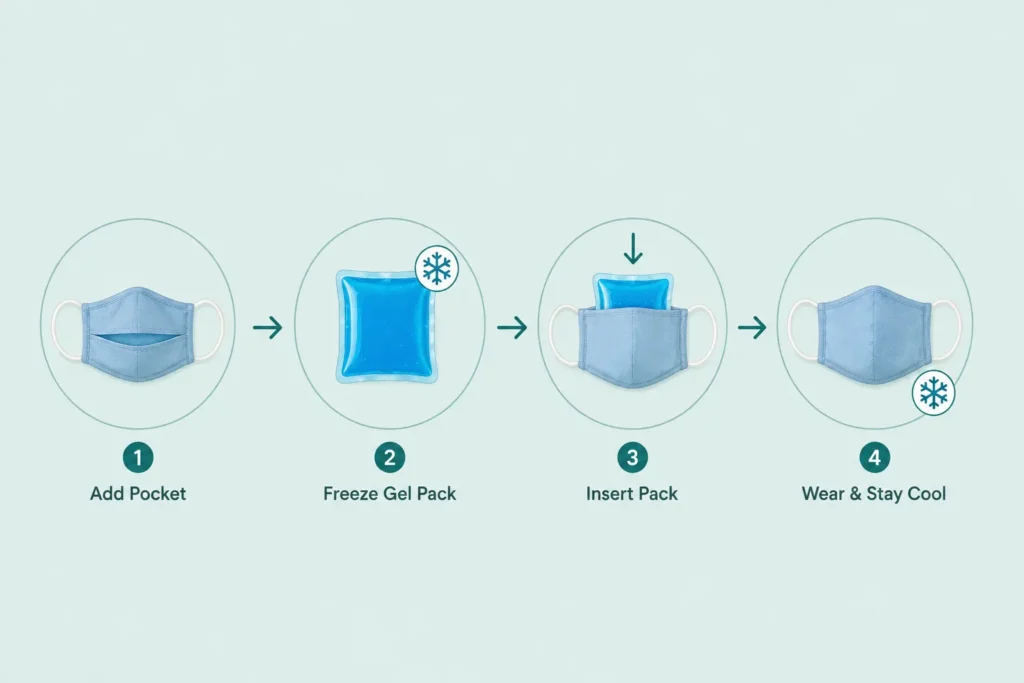
This is probably the most popular homemade approach, and it’s the one closest to what you’ll find in premium cooling face mask products sold online.
What you’ll need:
- A breathable cotton or bamboo fabric mask (store-bought or homemade)
- A small reusable gel ice pack (the flexible, freezer-safe kind used for lunch boxes)
- A thin pocket sewn or safety-pinned into the mask’s inner lining
How to make it:
- Take a simple fabric mask with a front pocket, or add one yourself by sewing a slim pouch to the inside layer.
- Freeze the gel pack for at least two hours.
- Slide the frozen gel pack into the pocket just before you head out.
- Wear the mask as normal. The gel stays cool against your face for 30 to 45 minutes, depending on outdoor temperature.
This method genuinely earns its reputation as one of the most effective cooling face mask builds, because it uses actual refrigeration, not just breathable fabric. The trade-off is that it needs a freezer nearby for recharging, so it works best for short outings rather than a full day outside.
DIY Cooling Face Mask #2: The Wet Bandana Evaporative Cooler
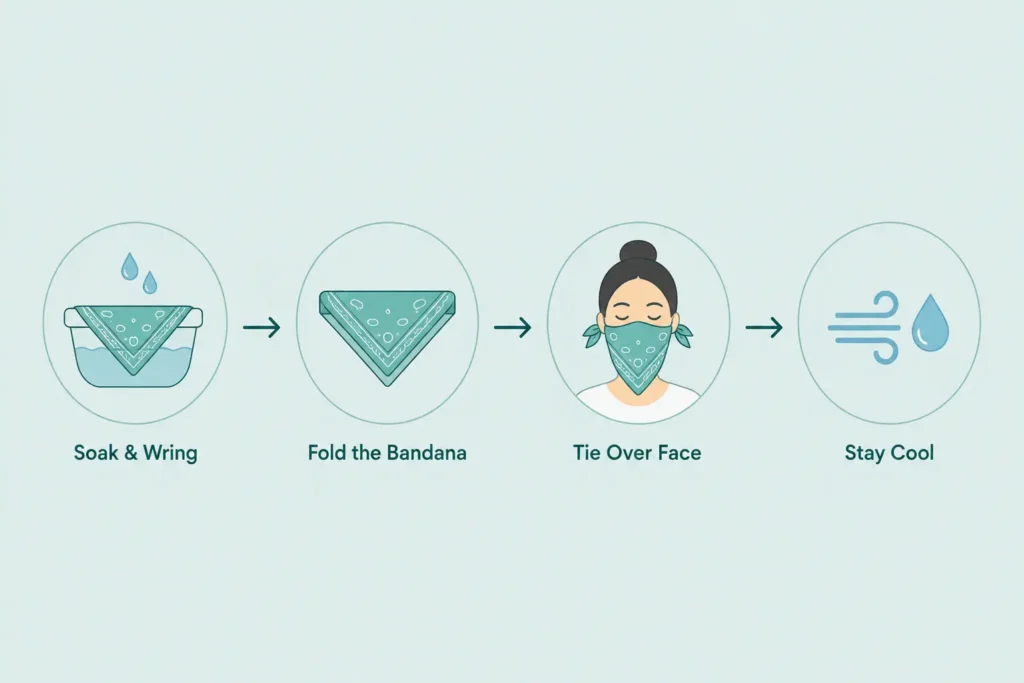
This one’s old-school, borrowed from athletes and outdoor workers who’ve used wet cloth for temperature regulation for decades, long before “cooling face mask” became a marketing term.
What you’ll need:
- A soft cotton bandana or thin cloth
- Water
- Optional: a few drops of peppermint essential oil for an extra cooling sensation
How to make it:
- Soak the bandana in cool water and wring it out until it’s damp, not dripping.
- Fold it into a triangle or rectangle shape.
- Tie it snugly but comfortably over your nose and mouth.
- As the water evaporates, it pulls heat away from your skin, creating a natural cooling effect that lasts 20 to 30 minutes before needing a re-soak.
This is the simplest, most budget-friendly cooling face mask you can build, and it’s a favorite among people who spend long hours doing yard work, hiking, or standing at outdoor events. The peppermint oil trick isn’t just a gimmick, either: menthol activates cold receptors in your skin, so even when the fabric is only mildly cool, it feels noticeably colder.
DIY Cooling Face Mask #3: The Aloe Vera Gel Infused Mask
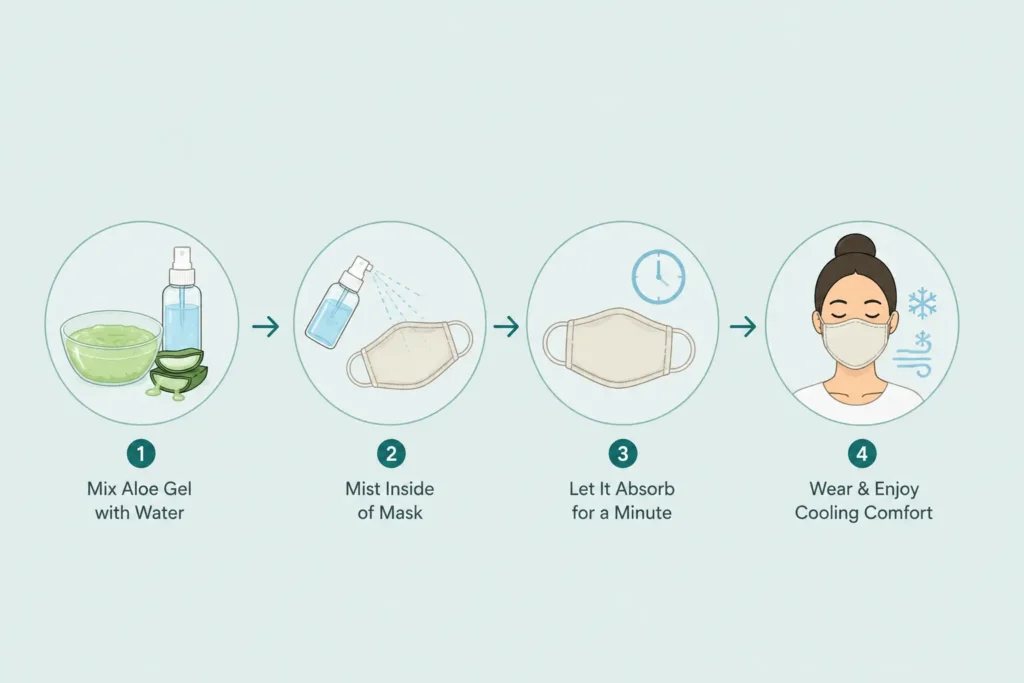
If you want something that cools your skin while also soothing sun exposure or mask-related breakouts (sometimes called “maskne”), this version does double duty.
What you’ll need:
- A thin, breathable fabric mask
- Pure aloe vera gel
- A small spray bottle with water
How to make it:
- Mix a spoonful of aloe vera gel with a few tablespoons of water in the spray bottle until it’s a light, spreadable consistency.
- Lightly mist the inside of your mask before wearing it.
- Let it sit for a minute so the fabric absorbs the moisture evenly.
- Wear as usual. The aloe provides a mild cooling sensation while also calming irritated skin.
This method is particularly popular among people with sensitive skin who find that regular sweat and mask friction cause redness or irritation in summer. It’s less intensely cold than the gel-pack version, but it offers a gentler, longer-lasting comfort that many people genuinely prefer for daily wear.
DIY Cooling Face Mask #4: The Frozen Fabric Roll Method
This is a clever middle ground between the wet bandana and the gel-pack mask, ideal if you don’t have a reusable ice pack lying around.
What you’ll need:
- A thin cotton washcloth
- A resealable plastic bag
- Freezer space
How to make it:
- Wet the washcloth, wring it slightly, and fold it flat.
- Place it in a resealable bag and freeze for one to two hours.
- Right before heading out, remove it from the freezer and wrap it loosely around your lower face, securing it with a string tie or ear loops.
- As it thaws, it slowly releases a comfortable, even cold that lasts around 20 minutes.
This is a great option if you’re prepping for a specific outdoor event, a concert, a sports day, or an afternoon in the yard, and want something colder than a wet bandana but simpler than sewing a gel pocket.
Choosing the Right Fabric for a DIY Cooling Face Mask
The material you choose matters just as much as the cooling method. Here’s a quick breakdown:
| Fabric Type | Breathability | Moisture-Wicking | Best For |
|---|---|---|---|
| Cotton | High | Moderate | Everyday wear, sensitive skin |
| Bamboo | Very High | High | Hot, humid climates |
| Microfiber | Moderate | Very High | Athletic or outdoor labor use |
| Linen | High | Low | Dry heat conditions |
| Polyester Blends | Low | High | Short-term or single-use situations |
If you’re building your own version, bamboo and cotton blends tend to outperform synthetic fabrics for all-day comfort, mainly because they don’t trap heat the way tighter synthetic weaves do.
Tips for Making Your Cooling Face Mask Last Longer
A few small habits go a long way in getting more mileage out of any homemade cooling mask:
- Rotate two masks so one is always in the freezer while the other is in use.
- Store gel inserts in a small cooler bag if you’re on the go without freezer access.
- Keep the fabric out of direct sunlight when it’s not in use. Heat shortens the cooling window.
- Wash fabric masks after every use. Trapped sweat becomes a breeding ground for bacteria faster in warm weather.
- Keep a small spray bottle of water in your bag for quick re-cooling on the go.
DIY vs. Store-Bought: Is a Homemade Cooling Face Mask Actually Worth It?
It’s a fair question. Brands like Arctic Cool, Reebok, and Koral have built entire product lines around the cooling face mask concept, marketed around moisture-wicking blends and claims of “instant” temperature drops. So why go the DIY route at all?
The honest answer is that most commercial cooling masks rely on the same two principles covered above, evaporative cooling fabric or embedded cooling inserts, just packaged in a more polished, ready-to-wear form. A meaningful part of the price is paying for design, branding, and convenience rather than for unreplicable technology.
That said, there are real trade-offs worth weighing:
- Store-bought masks tend to offer more consistent stitching and tighter quality control, and some carry lab-tested UPF ratings. That’s a solid choice if you want a grab-and-go product with zero prep time.
- DIY cooling masks cost a fraction of the price, can be custom-built for your specific skin sensitivity and comfort preferences, and let you experiment with different cooling intensities to find your sweet spot.
For most people looking for relief during a heatwave, a homemade cooling mask works just as well. If you’re an athlete or an outdoor professional who needs mask-grade durability every single day, a hybrid approach, a store-bought base mask with your own DIY cooling insert, often gives you the best of both worlds.
The Growing Popularity of Cooling Face Masks
Cooling face masks have been on the rise for the last several summers, and it’s not hard to see why. Rising average temperatures, longer heatwave stretches in many regions, and more people spending time outdoors for work or fitness have all pushed comfort-focused accessories into the spotlight. Search interest in cooling face masks climbs quickly every June and July, following roughly the same seasonal pattern as sunscreen or portable fan sales.
This isn’t just a niche fitness trend anymore, either. Everyday commuters, parents at outdoor events, and office workers who walk to work have started treating a cooling mask as a normal part of their summer routine, the same way reusable water bottles and portable neck fans became normal over the last decade.
Common Mistakes to Avoid When Making a DIY Cooling Face Mask
A few small missteps are the difference between a mask that’s genuinely comfortable and one that just feels like a damp inconvenience:
- Using ice cubes directly against skin. Ice is the fastest way to cool down, but direct contact can cause skin irritation or numbness rather than a comfortable cooling sensation. Always keep a fabric barrier between ice and skin.
- Over-soaking the fabric. A dripping-wet bandana feels cool for a moment, but it turns uncomfortable fast and can irritate the skin around your nose and mouth. Damp, not soaked, is the goal.
- Skipping the wash cycle. Reusing a cooling mask without washing it, especially in hot, humid conditions where sweat lingers, invites bacteria buildup.
- Choosing the wrong fabric weight. Soft, plush fabrics can actually hold more heat than a thin, breathable weave, which undermines the entire point of the mask.
- Getting the fit wrong. A mask that’s too loose lets warm air in around the edges; one that’s too tight traps heat against the skin. Neither extreme delivers the cooling effect you’re after.
Who Benefits Most From a Cooling Face Mask
Anyone dealing with summer heat will appreciate a cooling mask, but a few groups tend to get the most consistent value from one:
- Outdoor workers — construction workers, landscapers, delivery drivers who don’t have the option to step inside when it gets hot
- Commuters — especially those walking or cycling through urban heat, where pavement and buildings trap additional warmth
- Parents managing kids at outdoor events — sports practices, fairs, beach days, where a cooling mask (and staying alert to signs of dehydration in kids) can make a long day noticeably more manageable
- People with heat sensitivity, including certain medical conditions that make overheating come on faster or more severely
- Fitness enthusiasts — runners and cyclists training outdoors during peak sun hours
Cooling masks aren’t a one-size-fits-all solution for every health situation, though, which brings up a question worth addressing directly.
A Note on Health and Mask-Wearing in Heat
If you have a respiratory condition, it’s worth talking with a doctor before wearing a mask regularly in hot weather, since heat, humidity, and reduced airflow can affect breathing differently depending on the individual. The American Lung Association’s COPD resources are a useful starting point if you or someone you’re caring for manages a chronic respiratory condition and wants guidance before adding a mask into a hot-weather routine. We cover this in more detail in the FAQ section below, but it’s genuinely worth factoring in rather than assuming a cooling mask is automatically fine for everyone.
This article is for general informational purposes and isn’t a substitute for personalized medical advice. If you have a respiratory or cardiovascular condition, check with your doctor before making mask-wearing a regular part of your hot-weather routine.
Traveling or Commuting? Pack a Cooling Face Mask Kit
If you’re regularly out in summer heat, it helps to keep a small “cooling kit” in your bag rather than relying on just one mask. A compact kit might include a spare cotton bandana, a travel-size spray bottle of water, a small tube of aloe vera gel, and a reusable gel insert stored in an insulated pouch if you have access to a fridge or cooler along the way.
A kit like this pairs naturally with the rest of your summer travel gear, including the right sunglasses for your face shape if you’re building out a full sun-protection routine. This way, whether you’re stuck on a delayed train, walking between meetings, or waiting in line at an outdoor event, you always have a quick way to cool down without needing to plan ahead every time.
Final Thoughts: Comfort Doesn’t Have to Cost You
Staying cool in a mask during summer isn’t really about finding one perfect product. It’s about having a few reliable tricks in your back pocket. Some days you need a wet bandana ready to go immediately. Other days, if you’re out for hours, the frozen gel insert is worth the extra prep. And if your skin needs a little more care, the aloe-infused version might become your favorite.
What makes DIY cooling face masks so appealing isn’t just the money saved, it’s the control you get over your own comfort. You know your skin, your schedule, and your heat tolerance better than any product label ever could. With these four methods in your toolkit, you’ll be ready for whatever the thermometer throws at you this season. If you’re planning ahead for a specific outdoor event this summer, our 4th of July outfit ideas pairs well with a cooling kit for a long day outside.
Frequently Asked Questions (FAQs)
Q. What is the best cooling face mask?
A. The best cooling face mask depends on how long you’ll be wearing it and what you have access to. For short errands, a wet bandana with breathable cotton fabric gives instant, no-cost relief. For longer stretches, a frozen gel insert mask maintains a consistent cold sensation for 30–45 minutes. The aloe vera-infused mask is best if you want to cool sensitive or acne-prone skin while also calming irritation.
Q. Which face mask is best for summer season?
A. Breathable natural fabrics like bamboo and cotton blends outperform synthetics for summer wear, since they allow better airflow and moisture evaporation. A lightweight cotton mask with a quick water-spritz or a frozen gel pocket tends to offer the best balance of comfort and cooling power compared to thicker, multi-layered masks built primarily for filtration rather than temperature control.
Q. Should a person with COPD wear a mask in hot weather?
A. This is a personal medical question that depends on the individual’s specific condition, severity, and current treatment plan, so it’s best answered by a doctor or pulmonologist rather than a general guide. In general, people with chronic respiratory conditions like COPD may find that mask-wearing, especially in heat and humidity, affects their breathing more noticeably than it would for someone without a respiratory condition. If you or someone you know has COPD and needs to wear a mask regularly, it’s worth talking directly with a healthcare provider who can recommend mask types, wear duration, and any necessary precautions based on individual health needs.
Q. Can you make a cooling face mask without sewing?
A. Yes. Both the wet bandana method and the frozen fabric roll method require zero sewing. You can also buy a pre-made mask with a front pocket and simply insert a store-bought gel pack, no DIY sewing required at all.
Q. How long does a DIY cooling face mask stay cold?
A. This varies by method. A wet bandana stays cool for 20 to 30 minutes before needing a re-soak. A frozen gel insert usually lasts 30 to 45 minutes, depending on outdoor temperature and sun exposure. The frozen fabric roll sits in between, typically holding its chill for about 20 minutes.
Q. Are cooling face masks safe to wear every day?
A. Generally, yes, as long as the mask is kept clean and the fabric is breathable. Because heat and moisture promote bacterial growth faster than in cooler weather, it’s important to wash any reusable cooling mask after each use, or at minimum let it fully air-dry between uses. If you have sensitive skin, watch for redness or irritation and switch fabrics if a material doesn’t agree with your skin.
Q. What household items work best for a DIY cooling face mask?
A. Some of the most effective household items are a clean cotton bandana, a reusable gel ice pack meant for lunch boxes, a spray bottle for quick water refreshes, and pure aloe vera gel for a soothing, mildly cooling effect. Peppermint or menthol-based oils are also popular, since they create a cooling sensation on the skin even when the fabric itself isn’t especially cold.