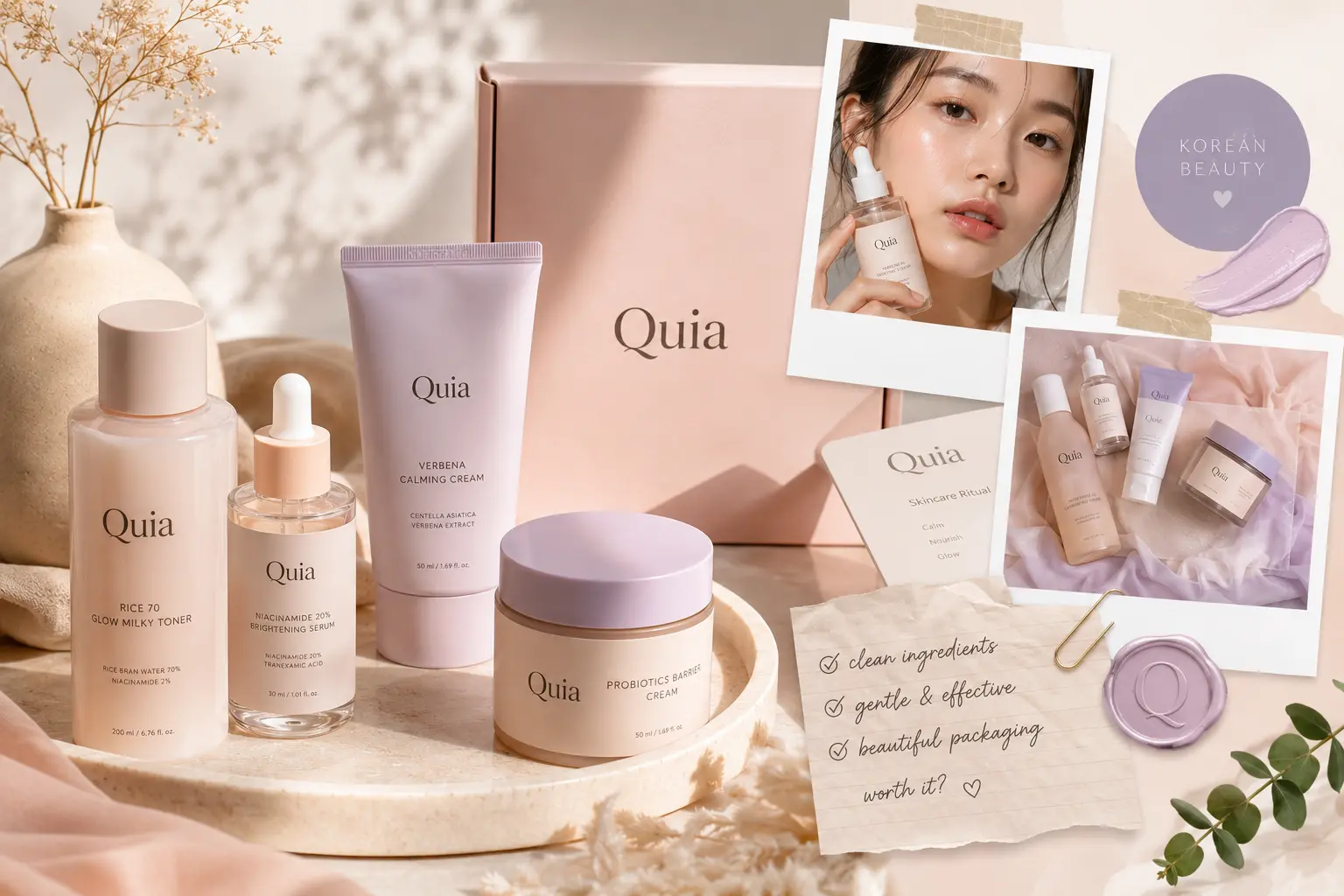
Korean skincare trends move fast, but every so often a brand starts showing up everywhere almost overnight. That’s what’s been happening with Quia Korean Beauty. From TikTok skincare routines to beauty forums, people keep talking about Quia’s products, especially its overnight masks, kojic acid line, and brightening treatments. The Quia Korean Beauty mask lineup in particular tends to come up constantly in these conversations.
With so many skincare brands leaning on phrases like “glass skin,” “K-beauty inspired,” and “Korean glow,” it’s fair to ask some direct questions before spending money:
- Is Quia Korean Beauty actually made in Korea or just Korean-inspired?
- Are the ingredients it uses well-supported for the claims it makes?
- Do the brightening and kojic acid products hold up in real reviews?
- Is Quia Korean Beauty legit or mostly a viral moment?
A note on how this guide was put together: this is a research-based roundup, not a first-person product test. It draws on the brand’s own product and ingredient claims, publicly available customer reviews on platforms like Amazon and Reddit, and general skincare ingredient knowledge, rather than a single writer’s personal experience with every product. Where something can’t be independently verified, that’s said plainly rather than glossed over.
What Is Quia Beauty, and Why Is Everyone Talking About It?
Quia Beauty markets itself as a Korean-inspired skincare line built around a small, focused product lineup rather than a sprawling catalog. Instead of dozens of SKUs, it leans on a handful of hero products, each built around ingredients that are already familiar to skincare shoppers: kojic acid, niacinamide, collagen, and hyaluronic acid.
Much of the brand’s visibility comes from TikTok skincare content and Instagram beauty accounts, where its overnight masks in particular get featured heavily. The marketing angle leans hard into “glass skin” and an overall glow-focused positioning, tapping into a look that’s remained popular in skincare content for several years running now.
Why Quia Is Getting So Popular Right Now
A few forces are working in the brand’s favor at once:
Korean skincare hasn’t slowed down. Plenty of trend forecasters predicted K-beauty interest would plateau, but demand for Korean-style routines, brightening products, hydrating masks, and gentle multi-step skincare has stayed strong. Quia’s positioning taps directly into that ongoing interest.
It’s priced below most established K-beauty labels. Building a full Korean-style routine with well-known brands can get expensive fast. Quia sits at a more accessible price point while still using ingredients that already have buzz, which makes it an easy entry point for students, skincare beginners, or anyone testing out a new routine without committing to premium pricing right away.
The ingredient list reads as low-risk to shoppers. Kojic acid, niacinamide, collagen, hyaluronic acid, and vitamin C are ingredients most skincare-literate shoppers already recognize, which lowers the hesitation to try something new. The Quia Korean Beauty kojic acid line specifically tends to be the entry point for a lot of first-time buyers, since kojic acid already has a strong reputation for brightening.
Quia’s Product Lineup: What the Brand Claims
The section below reflects the brand’s own marketing claims for its most-discussed products, not independently verified test results. Formulations and ingredient lists can change between production batches, so it’s worth checking current packaging or the official product page for the most accurate, up-to-date ingredient list before buying.
Collagen Night Wrapping Mask is marketed as an overnight treatment applied in a thin layer before bed. The brand lists hyaluronic acid, niacinamide, glycerin, collagen extract, and butylene glycol among its key ingredients and positions it around anti-aging support, a collagen boost, and firmer-looking skin by morning.
Kojic Acid Turmeric Night Wrapping Mask This is the centerpiece of the Quia Korean Beauty kojic acid line. Built around kojic acid and turmeric, marketed for brightening and evening out skin tone. Turmeric is commonly associated with anti-inflammatory properties in skincare formulations generally; the brand pairs it here with kojic acid and collagen and claims benefits for pigmentation, texture, and hydration.
Collagen Jelly Cream with Niacinamide is a gel-cream moisturizer the brand markets around niacinamide, collagen, and squalane, with claims focused on texture, elasticity, and surface-level hydration.
No More Pore Pads An exfoliating pad product built around salicylic acid, lactic acid, sodium hyaluronate, and allantoin, marketed for minimizing the appearance of pores, gentle exfoliation, and oil control.
Quia Korean Beauty Mask: Why It Gets So Much Attention
Sheet masks are one of the most recognizable parts of Korean skincare culture generally, so it’s not surprising that the Quia Korean Beauty mask lineup drives a large share of the brand’s social media attention. Depending on the specific product, Quia’s masks are marketed around hydration, brightening, soothing irritated skin, and moisture barrier support.
These are generally positioned by the brand as a quick self-care step rather than an aggressive treatment, which matches how most sheet masks are used and marketed across the category more broadly. A meaningful part of their popularity likely comes from the experience itself: many people use sheet masks as much for the relaxing ritual and the immediate, temporary plumped look as for any longer-term skin change, and hydrated skin is often reported to help makeup apply more smoothly afterward.
Quia Korean Beauty Reviews: What Real Users Actually Say
Quia has accumulated a fair number of Quia Korean Beauty reviews across platforms like Amazon and Reddit. Pulling together the recurring themes across these reviews gives a more useful picture than any single one would on its own.
It’s worth noting upfront: a lot of the brand’s visibility comes from creator and influencer content, and in a landscape full of paid partnerships and sponsored posts, it’s genuinely difficult to know how much of that content reflects independent opinion versus a paid promotion. That’s not necessarily disqualifying, but it’s a reasonable thing to keep in mind when weighing how much any single glowing post should influence a purchase decision.
Common praise mentioned in reviews:
- Sheet masks and overnight masks are frequently described as soothing and comfortable to use
- Dry skin, in particular, is often reported to feel noticeably more hydrated
- The price point is repeatedly flagged as a strong value relative to more established Korean skincare brands
- Product textures (the jelly cream in particular) are often described as pleasant to use, which matters for whether people actually stick with a routine
Common complaints mentioned in reviews:
- Visible results are frequently described as slow, requiring consistent use over time rather than delivering a dramatic overnight change
- Some users with sensitive skin have reported mild redness or stinging, particularly with the exfoliating and brightening products
- A recurring theme is that some buyers expect “glass skin” results faster than skincare products, from any brand, typically deliver
None of this is unusual for a skincare line at this price point and ingredient profile. It largely tracks with how these same ingredient categories tend to perform across other brands as well.
Is Quia Korean Beauty Actually Made in Korea?
This is worth answering directly rather than dodging, since it’s one of the most common questions people have before buying.
Quia markets itself with Korean-beauty branding and ingredient trends associated with K-beauty, but publicly available sourcing and manufacturing information for the brand is limited. That’s not automatically a red flag; plenty of skincare brands manufacture in different locations than their branding implies, and this alone doesn’t tell you anything about product safety or quality. But it does mean the honest answer here is it’s not fully verifiable from public information alone.
If country of origin specifically matters to you, the most reliable path is checking the product packaging directly (manufacturing origin is often listed in small print) or contacting the brand directly through its official channels before purchasing.
Is Quia Korean Beauty Worth Buying?
Based on its pricing, ingredient list, and the pattern of feedback across reviews, Quia Korean Beauty reads as a reasonably solid entry point into Korean-style skincare rather than either a scam or a guaranteed miracle line. A few honest takeaways:
- It’s a sensible starting point for skincare beginners who want to try trend-driven ingredients like kojic acid and niacinamide without paying premium prices while they figure out what works for their skin.
- Results appear consistent with what similar ingredient concentrations typically deliver elsewhere, gradual improvement in tone, hydration, and texture with regular use, not overnight transformation.
- Sensitive skin should patch test first, as with any new brightening or exfoliating product, given the recurring mentions of mild irritation in reviews.
- Manufacturing and sourcing transparency is limited, so if that specifically matters to your buying decision, verify it directly with the brand before assuming anything based on branding alone.
If you’re already comparing Korean-style routines more broadly, our breakdown of Korean skincare vs. Japanese skincare is a useful next read, and if kojic acid specifically is what drew you to this brand, our deeper guide on kojic acid for skin covers how it works and what to expect independent of any one brand.
Frequently Asked Questions
Q. How do you use Quia Korean Beauty products?
A. Each product comes with its own usage instructions on the packaging. The overnight wrapping masks are designed to be applied in a thin layer before bed and removed in the morning, while the pore pads and jelly cream are generally intended for regular daytime or nighttime use as part of a normal routine. Always default to the instructions on your specific product, since usage can vary between items in the lineup.
Q. Where is Quia Korean Beauty actually made?
A. This isn’t clearly disclosed in public brand information at the time of writing. If manufacturing origin matters to your decision, check the fine print on the product packaging directly or reach out to the brand’s official customer service, rather than relying on the “Korean beauty” branding alone as confirmation.
Q. Is Quia Korean Beauty safe to use?
A. The ingredients used across the lineup, kojic acid, niacinamide, salicylic acid, and hyaluronic acid, are common in mainstream skincare and generally well-tolerated by most skin types. The Cosmetic Ingredient Review’s safety assessment of kojic acid found it to be safe at use concentrations up to 1%, though it noted dermal sensitization as a potential concern at higher concentrations, which lines up with the redness and stinging some reviewers have reported. Patch testing on a small area before full use is a reasonable precaution, especially if you have known sensitivities or active skin conditions.
Q. How long does it take to see results with Quia products?
A. Based on the pattern in customer reviews, most people report gradual improvement over several weeks of consistent use rather than immediate, dramatic change. This is consistent with how kojic acid, niacinamide, and similar ingredients typically perform across brands generally, so it’s a reasonable expectation to set going in.
Q. Is Quia Korean Beauty a legitimate brand or just a viral trend?
A. Based on available information, it appears to be a real, purchasable skincare line with a consistent ingredient strategy, not a fly-by-night product. Whether it’s “worth it” depends more on your expectations and skin type than on any legitimacy concern; the ingredient choices and pricing put it in a reasonable, if unremarkable, spot within the broader K-beauty-inspired market.