Medical Disclaimer:
This content is for informational purposes only and is not a substitute for professional medical advice, diagnosis, or treatment. Always consult a qualified dermatologist or healthcare provider before trying any new skincare ingredient or routine.
There’s a moment in front of a bathroom mirror that most people experience: a patch of skin that’s just a bit darker than the rest. Maybe it’s from a breakout, a sunburn that lingered longer than it should have, or just the natural unevenness of age. You scroll through, you look up, and there is one name that comes up: kojic acid.
If you came to this place to discover what kojic acid for skin actually is, if it works or doesn’t, and if it’s safe for your skin, you’re in the right place. We’re going to take this the way a knowledgeable friend would, no fluff, no overhyping, just the real story on what this ingredient can and cannot do.
What Is Kojic Acid for Skin?
Kojic acid for skin is a naturally derived skin-brightening ingredient that comes from a fermentation process, particularly for certain fungi that are used to produce rice wine, soy sauce, and sake. It was actually discovered decades ago in Japan, and skincare brands recognized its ability to fade discoloration.
Kojic acid does that by halting the production of melanin, the pigment that gives your skin color. And slowly those darker patches of skin gradually fade over time, and your overall skin tone starts to look even.
Hence, kojic acid for skin has become such a popular choice for people with sun spots, melasma, post-acne marks, and general dullness. For many people, it is by no means an overnight miracle, but for many people, the results say it all.
How Kojic Acid Works on a Deeper Level
Melanin is produced by an enzyme called tyrosinase. Kojic acid for skin binds to copper, which is required for tyrosinase to work properly. Without that copper, the enzyme does not do its job as efficiently, and melanin production slows down. Less melanin in a specific area means less visible pigmentation over time.
This mechanism is similar to other celebrated brightening ingredients like arbutin and vitamin C, but kojic acid is widely considered one of the more powerful ones in this category, and as such, it requires a lot more cautious use.
Real Kojic Acid Benefits People Are Talking About
Let’s get into what kojic acid benefits for skin actually do for skin since this is usually the part people care about most.
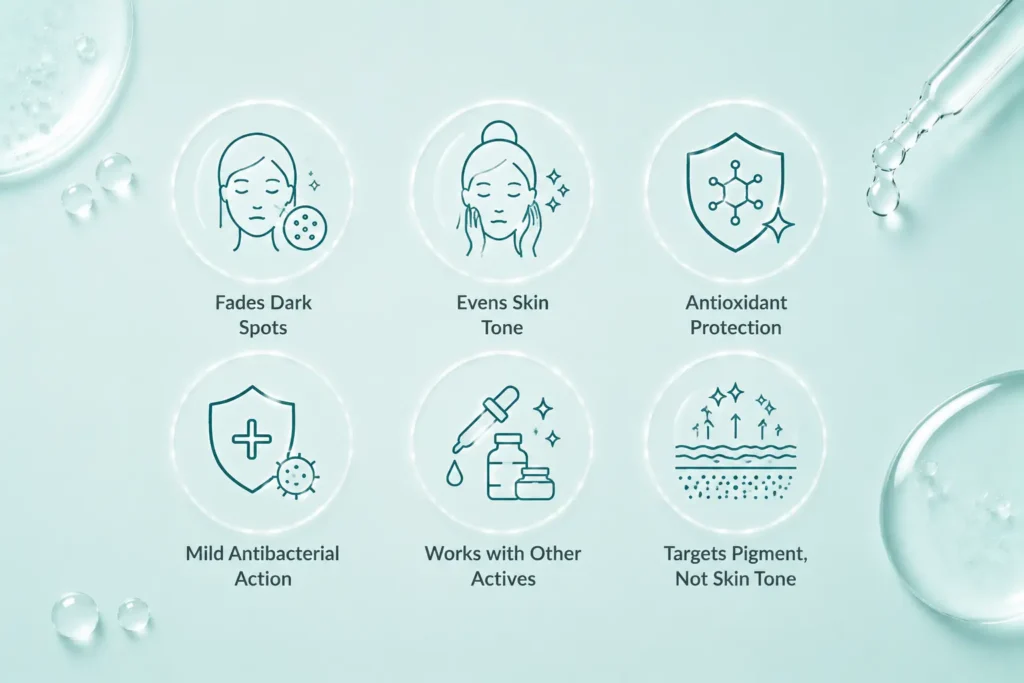
- It is aimed at hyperpigmentation. This is the headline benefit. Dark spots caused by acne scars, sun exposure, and old injuries tend to respond well to consistent use.
- It helps even out the color range of the skin. Not only is spot-treating the best way to get uniform and glowing skin.
- It has antioxidant properties. Kojic acid can help protect skin from some environmental stressors, which adds a second layer of benefit beyond brightening alone.
- It has mild antibacterial properties. It is believed to address some skin concerns associated with bacteria, so it is included in some soaps and cleansers that are marketed for blemish-prone skin.
- It works well in conjunction with other actives. Many brightening routines use it with niacinamide, vitamin C, or glycolic acid for a layered approach to tone correction.
- If you’ve been searching for kojic acid for skin whitening, it’s worth pausing here on terminology. The word “whitening” in the beauty world is often a bit loose, but what’s happening is targeted pigment correction, not a change in your natural skin tone. The ideal is even but healthy skin and not a complete change in your complexion.
Common Ways to Use Kojic Acid for Skin
You will generally find this in a few different product formats, and each is slightly different.
1. Kojic Acid Serum
Serums have a higher concentration of active ingredients and are intended to penetrate deeper into the skin. A kojic acid serum is usually applied after cleansing and before moisturizing, and it is often the preferred format for people specifically targeting stubborn dark spots.
2. Kojic Acid Cream
Kojic acid cream tends to be gentler and hydrating, so it’s good for dry skin and more sensitive skin. Creams are also light enough to be layered at night because they’re a light moisturizer.
3. Kojic Acid Soap
It’s one of the most common formats, particularly in areas where brightening soaps are part of daily routines. Because soap only stays on skin for a few seconds before rinsing, the effect is milder and slower compared to leave-on products.
How to Actually Build It Into Your Routine
And that is where a lot of people go wrong; they imagine more product means faster results, and that’s just not how this ingredient works.
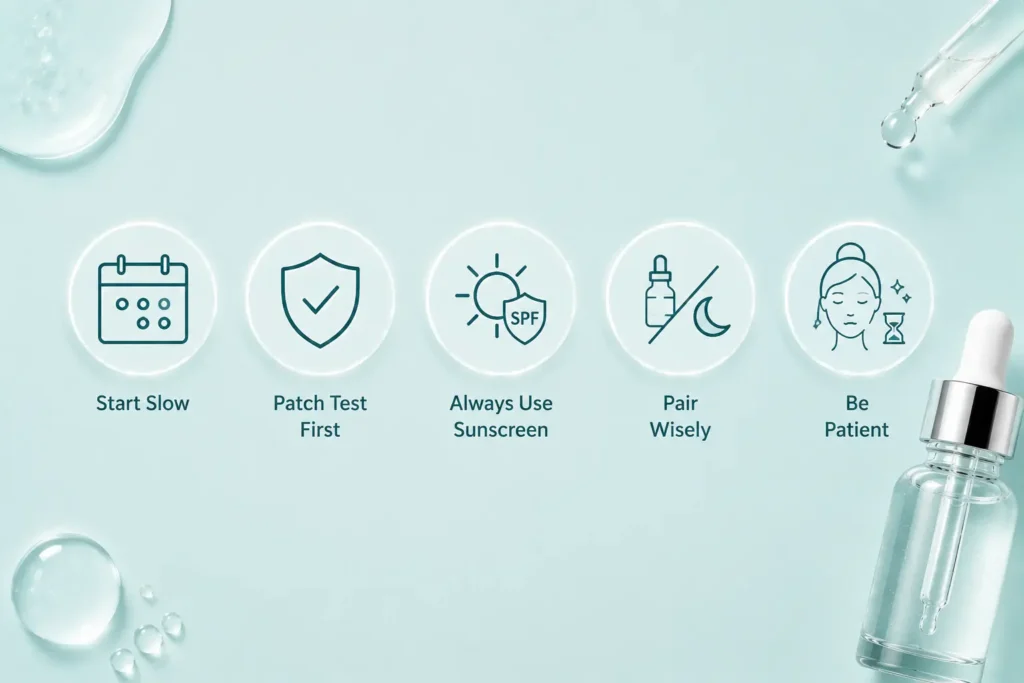
- Start slow. Two to three times a week would be a reasonable starting point for first-time users.
- Patch test first. Apply a small amount to your inner arm and wait 24 hours before applying it on your face.
- Always use sunscreen. This step is a must. Kojic acid for skin can make you more sensitive to the sun, and skipping SPF can ruin it entirely.
- Pair wisely. It’s not a good idea to mix it with the more powerful exfoliants, such as retinol, on the same night, at least for a while until your skin has developed tolerance.
- Be patient. Visible changes in pigmentation can occur anywhere from four to eight weeks of continuous use.
Kojic Acid for Skin Before and After: What People Notice
One of the most searched phrases around this ingredient is “kojic acid before and after,” and for good reason; people want proof before committing to a routine. Based on dermatology research and commonly shared user experiences, the most common timeline looks something like this:
| Timeframe | What People Typically Notice |
|---|---|
| Week 1-2 | Slight improvement in skin texture, with minimal change in pigmentation. |
| Week 3-4 | Subtle fading of lighter dark spots and post-acne marks may begin. |
| Week 6-8 | More noticeable improvement in overall skin tone and reduction in discoloration. |
| Week 10-12 | Deeper or more stubborn pigmentation typically shows visible improvement. |
Results vary with skin type, the extent to which the discoloration is present, and how consistently the product is used.
Possible Side Effects to Watch For
No active substance is entirely safe, and kojic acid for skin is no exception. Some people sometimes experience mild irritation, redness, or a stinging sensation when they start out with it. In less common cases, long or improper use has been linked to contact dermatitis.
The reason dermatologists generally do not recommend daily use unless your skin is already conditioned to tolerate the levels is that concentration is moderate and the skin can show tolerance. If there is persistent irritation, it is better to cut back or seek a dermatologist’s advice.
Who Should Be Cautious
- Pregnant or breastfeeding people are sometimes advised to consult a doctor before using kojic acid for skin products, but not just out of curiosity but out of caution.
- Very sensitive or reactive skin, eczema, or rosacea sufferers should also ease in slowly and monitor how their skin responds.
Choosing the Right Concentration
You can walk into any skincare aisle and browse an online store, and you’ll find kojic acid for skin products in concentrations ranging from 1% to 4% and sometimes higher in professional or clinical formulations. This is more than most people realize.
A 1% to 2% concentration is generally considered beginner-friendly. It’s gentle enough to keep up with daily or near-daily use once your skin adjusts and is a good starting point if you’ve never used a brightening acid before. Anything in the 3%-4% range tends to be reserved for people who have some tolerance built up and for those who are looking for deeper, more stubborn pigmentation that hasn’t responded to milder formulas.
Higher concentrations aren’t always better. In fact, jumping straight into a strong formula is one of the most common mistakes people make, and it’s usually what leads to redness, peeling, or that uncomfortable tightness some users report after their first few applications. Slow and steady really does win this particular race.
Where Kojic Acid Fits in a Full Skincare Routine
Many people treat kojic acid for skin as a single fix and then put it on top of the rest of their daily lives as if it were the only thing that would work. In fact, it is better to work with a team and do a lot more.
Morning routine: Cleanser, a lightweight antioxidant serum if you use one, moisturizer, and, without exception, sunscreen with at least SPF 30. Since kojic acid for skin increases photosensitivity, your morning sunscreen step is arguably more important than the treatment itself.
Evening routine: Cleanser, kojic acid skin product (serum, cream, or treatment), followed by a hydrating moisturizer to offset any dryness. If you’re also using exfoliating acids or retinol, it is best to alternate nights rather than stack everything at once. Following a structured routine like the one in our beginner’s guide to layering actives can make this much easier to stick with.
This kind of structure prevents your skin barrier from becoming compromised, which is often what can happen if people layer too many actives together without spacing them out properly.
Lifestyle Factors That Influence Results

Something that seldom even gets mentioned in skincare marketing is how much your daily practices impact how well an ingredient like kojic acid for skin works. Skincare doesn’t exist in a vacuum, and a few lifestyle factors can speed up your results or sabotage them quietly.
Sun exposure is the biggest one. Even with good sunscreen use, extended time outdoors without reapplication can trigger new pigmentation faster than your kojic acid product can fade the old spots. If you want things to be successful, reapplying sunscreen every two hours during extended outdoor time isn’t optional.
Hydration levels also play a quiet but important role as well. Dehydrated skin is more susceptible to irritation, which can make brightening actives feel harsher than they actually are. Drinking enough water and using a proper moisturizer alongside your treatment can make the entire experience more comfortable.
Diet and inflammation matter too. Diets high in processed sugar and inflammatory foods are associated with more breakouts and slower skin healing, which is related to the rate at which pigmentation fades. That’s not to say you need a perfect diet to get results, but that’s something you need to remember if it feels slower than expected.
Sleep and stress are also on the list. Cortisol spikes from chronic stress can lead to breakouts, and breakouts leave behind dark marks, essentially working against the very thing you’re trying to fix. It’s not the most glamorous skincare advice, but it’s also in the best sense the most honest.
Common Mistakes People Make With Kojic Acid for Skin
Even with good intentions, there are lots of people who don’t get what they want, and that’s because of a handful of avoidable mistakes.
- Skipping the patch test. It sounds tedious, but it is the most effective way to detect a reaction before it shows up on your whole face.
- Using it too often, too soon. When you use it daily right out of the gate, it is one of the quickest ways to trigger irritation.
- Forgetting sunscreen. This one oversight can completely undo weeks of progress. Expecting overnight results.
- Pigmentation took time to form. and it takes time to fade. Patience is part of the process, not a failure of the product. Mixing too many actives at once.
- Combining kojic acid with strong exfoliants, retinol, and other brightening acids in the same routine often does more harm than good.
- Giving up too early. Many people stop right at the four-week mark, which is often just before visible changes start to show up.
What Dermatologists Generally Say
Although individual recommendations vary, dermatologists tend to agree on a few core points when it comes to kojic acid. It is considered a reasonably effective option for mild to moderate hyperpigmentation, particularly when used consistently and combined with strict sun protection. It is also frequently recommended as a gentler alternative for people who haven’t tolerated stronger prescription options well.
But most professionals are quick to say that no single ingredient works for everyone. Skin tone, skin type, the depth of pigmentation, and overall skin health all influence how someone responds. If you’ve been using a kojic acid skin product consistently for three months without any noticeable change, that’s generally a reasonable point to consult a dermatologist rather than guess.
Kojic Acid vs Other Brightening Ingredients
It’s natural to wonder how this stacks up against other popular options.
Kojic acid vs vitamin C: Vitamin C is generally gentler and is also an antioxidant powerhouse for the skin, whereas kojic acid for skin tends to be more targeted at stubborn pigmentation.
Kojic acid vs niacinamide: Niacinamide is better tolerated by sensitive skin and offers broader benefits, while kojic acid is often considered more effective specifically for dark spot correction.
Kojic acid vs hydroquinone: Hydroquinone is stronger and typically prescription-only in many regions, whereas kojic acid for skin offers a milder, more accessible alternative for everyday use.
Final Thoughts
Skin journeys are rarely linear, and pigmentation in particular tends to test people’s patience more than almost any other skin concern. But understanding how an ingredient actually works, rather than just following a trend, puts you in a much better position to get real results.
This ingredient has stuck around in skincare for a reason. It’s not flashy, it’s not new, and it doesn’t promise overnight transformations, but for the people who use it correctly and consistently, the payoff tends to be genuinely worth it. If you decide to give it a try, start slow, protect your skin from the sun without exception, and give your routine the time it actually needs to work.
Frequently Asked Questions (FAQs)
What does kojic acid actually do for skin?
It slows down melanin production, which helps fade dark spots, sun damage, and uneven pigmentation over time, leaving the complexion looking brighter and more balanced.
Is kojic acid safe to use every day?
For most people, starting with two to three uses per week is safer than daily application. Once your skin builds tolerance, some formulations can be used more frequently, but it’s best to monitor for irritation along the way.
How long does it take to see results from kojic acid?
Most people start noticing subtle changes around the four-week mark, with more significant improvement typically appearing between eight and twelve weeks of consistent use.
Can kojic acid be used with other active ingredients?
Yes, but with care. It pairs well with niacinamide and hydrating ingredients, though it’s best to avoid layering it with strong exfoliants like retinol until your skin has adjusted.
Does kojic acid make skin lighter than its natural tone?
No. It targets areas of excess pigmentation rather than altering your overall skin color. The goal is correcting uneven patches, not changing your natural complexion.