Thrift shopping is everywhere, and social media gets a lot of the credit. It used to be a purely budget-friendly alternative to retail; now it’s a genuine trend in its own right. Some people are drawn to the virality of it; others care more about the sustainability angle. Whatever your reason, if you’ve ever spotted someone in a gorgeous outfit and felt a small betrayal on learning it was thrifted for a fraction of retail, you’ve probably wondered how to thrift like that yourself.
There are more stores, online and offline, than ever before, which means more options but also more room to waste an afternoon. This guide covers how to thrift shop the smart way, so you don’t spend hours in a store and walk out either empty-handed or holding something you didn’t actually need.
What Is Thrift Shopping?
Thrift shopping means buying secondhand goods, often called pre-loved. You’ll find previously owned pieces alongside the occasional brand-new one, and it isn’t limited to clothes: bags, shoes, home decor, furniture, jewelry, and plenty of things you didn’t know you needed all show up in the same aisles.
Thrifting has a built-in element of chance. You might walk out with a designer bag or a luxury wedding gown for next to nothing, or you might not. That unpredictability is a large part of the appeal; it’s closer to a treasure hunt than a shopping trip. Today, thrifting isn’t just about finding cheap clothes; it’s increasingly about building a personal wardrobe out of vintage pieces and items with some history behind them. Knowing how to thrift well comes down to patience and an eye for fabric, construction, and labels.
Thrift Shopping vs. Vintage Shopping
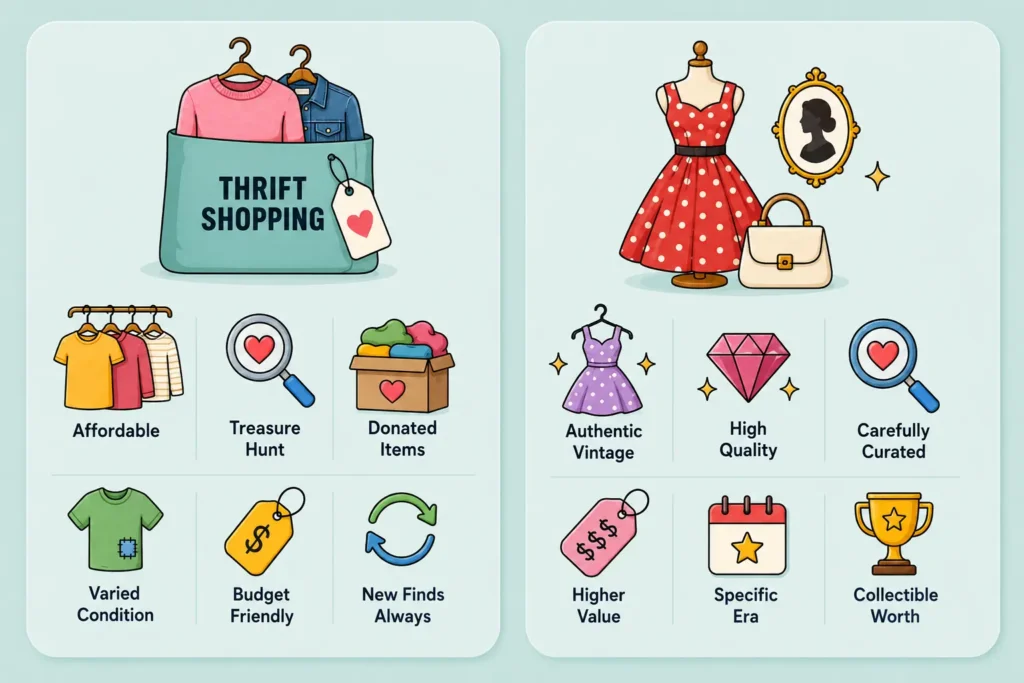
| Thrift Shopping | Vintage Shopping | |
| What it sells | Secondhand clothing, shoes, accessories, and home items | Authentic vintage pieces, usually 20+ years old |
| Curation | Mixed in with vintage, but not everything is vintage | Every piece selected for age, style, or historical value |
| Age of items | Anywhere from a year old to decades old | Typically from a specific past decade |
| Condition | Varies, since items are mostly donated or pre-owned | Usually well-maintained or restored |
| Price | Generally very affordable | Often pricier, reflecting rarity and collectibility |
| Experience | Feels like a treasure hunt | More curated, easier to find a specific style or era |
| Resale value | Often minimal | Frequently carries designer history or cultural value |
| Best for | Building an everyday wardrobe on a budget | Collectors and anyone after one-of-a-kind pieces |
| Inventory | Changes constantly as donations arrive | Changes more slowly, since sourcing takes longer |
| Inspection needed | Check for stains, wear, missing pieces | Usually already inspected, cleaned, and priced accordingly |
Why Should You Start Thrifting?
Beyond being fun, there are real practical reasons to make thrifting part of how you shop. You can find genuinely valuable vintage pieces with real resale potential. Secondhand shopping is affordable by nature. What you find tends to be unique, which gives a wardrobe personality instead of matching whatever’s trending this month. And once you get the hang of it, finding basics becomes easy enough that building a timeless capsule wardrobe stops feeling like a project, so you’re not shopping constantly or paying full price for a single t-shirt.
Save money on fashion. Once you know how to thrift shop properly, a handful of basic rules dramatically improve your odds of finding something genuinely good, and the savings add up fast.
Find unique clothing and accessories. What turns up while thrifting tends to sit outside current fast-fashion trends entirely. Expect better fabric quality overall: real cotton, linen, leather, the kind of materials that hold up.
Make more sustainable fashion choices. Reusing and re-wearing older pieces is itself a form of sustainable fashion. Thrifting doesn’t mean wearing something dated; it means reworking older pieces into your current style rather than letting them go to waste.
How to Prepare Before Thrift Shopping
You can’t just wander in and hope for the best, or you can, but a little planning changes your odds. With so much inventory to sort through, it’s easy to miss something worth having, or walk out with something you won’t actually wear. A few thrift shopping tips to prepare with:
Create a shopping list, and make it visual. Pull inspiration from Instagram and Pinterest and save it to your phone. Cover the basics you’re actually likely to find: blazers, a classic pair of jeans, a white shirt, sweaters, trench coats, leather boots. A clear list keeps the trip organized and cuts down on impulse buys.
Pro tip: don’t buy something just because it’s cheap.
Research brands and quality. One of the real advantages of thrift shopping for beginners is that you can build a high-quality wardrobe from day one, but only if you know what you’re looking for. That means understanding materials and textures, reading labels, and recognizing signs of solid stitching.
Pro tip: a few videos on how to judge garment or bag quality go a long way before your first trip.
Choose the right time to shop. Timing genuinely matters. Weekends tend to be crowded; weekday mornings are usually your best bet for browsing at your own pace. It’s also worth learning when your local store restocks.
Pro tip: seasonal transitions bring a wave of higher-quality donations, since that’s when people clean out closets.
Dress properly for thrifting. Fitting rooms aren’t always available or fast-moving, so wear leggings you can try jeans and pants over, plus a simple top. Comfortable clothing means you can actually move through racks without feeling stuck.
Pro tip: wear shoes you can slip on and off quickly.
How to Find the Best Items While Thrifting
The goal is the same whether you’re shopping for your existing style or experimenting with something new, without paying retail to test it out. Patience is the one non-negotiable. Take your time in the sections already on your list, but also do a general lap of the store first so you know what’s where.
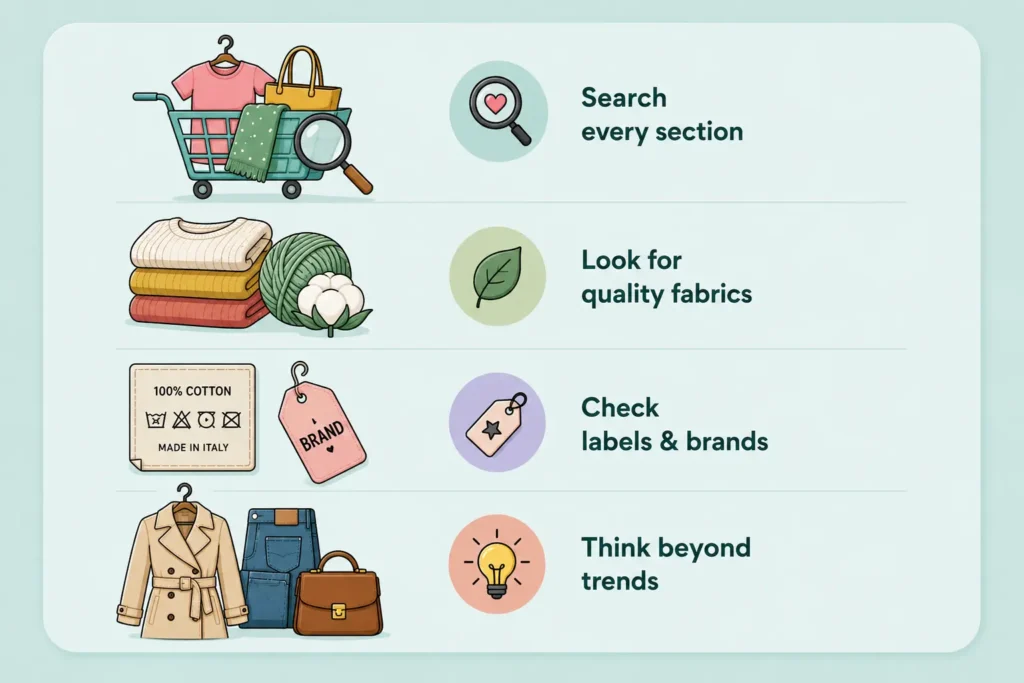
Search through every section. Take a look around before heading straight to your usual aisle. Don’t skip sections outside clothing; accessories often hide belts, scarves, and jewelry worth checking, and don’t overlook the men’s section either, which is frequently where the best leather jackets, coats, and blazers end up regardless of who’s shopping.
Look for quality fabrics. This is one of the skills that takes the most practice in thrift shopping for beginners. Start by reading the label. Natural fibers like cotton, linen, leather, wool, cashmere, and silk tend to hold up; more recent pieces are more likely to have synthetic blends like nylon, polyester, or acrylic mixed in. Better fabrics are more breathable, last longer, feel more comfortable, and generally make a wardrobe look more expensive.
Check labels and brand names. Always check the label. It tells you the fabric composition, care instructions, country of origin, brand, and sizing, and if it’s a recognizable name, that’s a shortcut to understanding the craftsmanship behind it. You won’t always find a high-end label, but checking is still worth the ten seconds it takes.
Think beyond current trends. Broaden what you’re looking for. You’re less likely to find this month’s viral silhouette and more likely to find staple pieces that hold up over time: ruffle blouses, well-cut trousers, denim in every wash, cashmere sweaters, trench coats, handbags. Thrifting is also a low-risk way to test a style you’re unsure about, without spending full price to find out you don’t actually like it.
How to Check Quality Before Buying
Spotting a great piece is only half the job; checking it before you buy is what keeps you from a wasted trip. Thrift shopping tips only get you so far without a genuine eye for detail, and that eye takes a few visits to develop. Don’t expect to find something incredible on your first trip, and don’t be discouraged if you walk out with less than you hoped.
Finding a piece you love is exciting, but skipping the quality check is how you end up washing something at home only to discover a stain that won’t lift or a tear you missed in the store. A few minutes of inspection up front saves that disappointment later.
Inspect fabric condition. Once you’ve confirmed the fabric, check closely for stains, fading, pilling, discoloration (especially around cuffs, collars, underarms, and hems), tiny holes, ripped seams, and thinning from repeated washing. Minor issues are often fixable, but skip anything that looks too worn to survive being worn again, no matter how good it looks on the hanger.
Check stitching and construction. Turn the garment inside out and look at the seams. You want clean, even stitching with thread that won’t come apart after a few washes. Watch for loose threads, fraying, missed stitches, weak seams, and check that buttons and zippers actually work. Well-stitched clothing tends to fit better too, since it was made to a real standard in the first place, so you’re less likely to need alterations.
Check for damage. Look the item over from top to bottom: missing buttons, broken zippers, stretched elastic, ripped seams, loose lining, cracked leather. Small repairs are usually worth it. Bigger ones can cost more than the item itself.
Try items on before buying. Sizing shifts across brands and decades, so don’t trust the tag alone. Try things on where you can, paying attention to fit across the shoulders, waist, and hips. No fitting room? Hold the piece up against yourself or wear fitted clothing underneath so you can try things on over your outfit. The real test isn’t the price, it’s whether you’ll actually wear it.
Best Things to Buy at Thrift Stores
Thrift stores go well beyond clothing. If you like decor with some history to it, this is where sentimental, whimsical, and one-of-a-kind pieces tend to surface, everything from old photographs to a wedding gown someone once wore. Reframe it as a place that holds stories rather than just inventory, and thrifting starts to feel like more than shopping.
| What to Thrift | Why Buying It Secondhand Makes Sense |
| Home décor | Unique pieces in solid wood, ceramic, glass, or brass that are harder to find new |
| Clothing | Far more affordable than retail, and it builds a personal style instead of a viral one |
| Shoes | Heels, sneakers, boots, and flats, including discontinued styles and rare sizes |
| Handbags | Timeless vintage designs, just verify authenticity before buying |
| Jewelry | Designs from past decades you won’t find in current fast-fashion collections |
| Men’s clothing | Blazers, leather jackets, wool coats, denim jackets, suits, and even authentic sports jerseys |
| Books | Classics, coffee table books, cookbooks, and out-of-print editions for a fraction of retail |
| Leather jackets | Genuine leather at a fraction of new prices, often already broken in |
| Winter coats | Wool coats, trench coats, and puffers, often in great condition for far less |
| Kitchenware & glassware | Ceramic dishes, crystal glasses, and cookware often better made than modern equivalents |
| Furniture | Solid wood pieces built to outlast most flat-pack alternatives |
| Picture frames & mirrors | Character for a room at a fraction of retail decor prices |
| Scarves & belts | An easy, affordable way to elevate an outfit, often in genuine leather |
| Artwork & wall décor | Personality for a space without the retail markup |
| Vintage kitchen appliances | Stand mixers, cast iron, and bakeware built to last, if they’re in good working order |
| Holiday decorations | Used only a few weeks a year, making secondhand a smart default |
| Vinyl records & CDs | A solid way to build a collection, especially for older or collectible pressings |
If you’re refreshing a space rather than a wardrobe, this is also where a budget bedroom refresh or a cozy reading nook tends to come together cheaply and with more character than buying everything new.
Online Thrift Shopping Guide
Vintage and secondhand shopping have moved online just as much as anywhere else, and there’s a real ecosystem of sites worth knowing:
- ThredUp
- Poshmark
- Depop
- The RealReal
- eBay
- Facebook Marketplace
- GoodwillFinds
Each one tends to specialize; some lean fashion, others home decor or furniture, so it’s worth browsing a few before settling on one.
Tips for buying secondhand clothes online:
- Read the full product description
- Check the sizing chart the seller is using, not just the tag
- Look up the brand; it might be a genuine vintage find
- Zoom in on photos to judge quality before buying
- Compare prices across a couple of listings
- Use reverse image search if something seems too good to be true
- Factor in shipping cost before you check out
- Be patient. The good listings are worth waiting for
Common Thrift Shopping Mistakes to Avoid
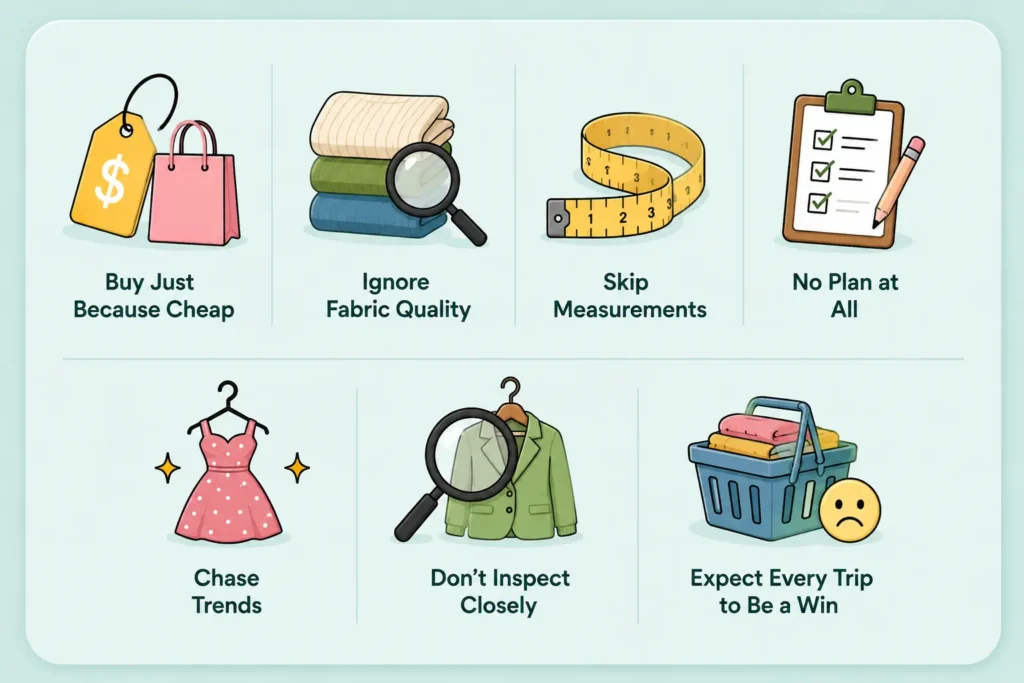
- Buying something just because it’s cheap
- Ignoring fabric quality
- Skipping measurements
- Shopping with no plan at all
- Chasing trends instead of your own style
- Not inspecting items closely enough
- Expecting every trip to be a big win
Pros and Cons of Thrifting
| Pros | Cons |
| Affordable across clothing, accessories, books, and decor | Items are pre-owned, so always wash or clean before wearing |
| Builds a genuinely unique personal style | Condition varies piece to piece |
| Feels like a treasure hunt every visit | Sizing is inconsistent and often limited to one of each item |
| Occasional access to designer pieces at a fraction of retail | Stains, holes, or wear sometimes can’t be fixed |
| Rare and discontinued finds, from vinyl to vintage appliances | Inventory depends on donations, so trend-chasing doesn’t really work here |
| Often better-made than newer, cheaper alternatives | Counterfeits exist, especially with designer bags and shoes |
| Purchases often support local stores and charities | Finding the right piece takes real time and patience |
Conclusion
Thrift store finds are genuinely fun, part exploration, part shopping, part small gamble. Whether you walk out with everything on your list or something you never expected, thrifting rewards patience more than luck, and that’s a skill that improves with practice. Done well, it builds a wardrobe full of good fabric, the occasional vintage bag, and pieces nobody else has, all at a fraction of retail. It’s also one of the more painless ways to lean into sustainable fashion without changing how you shop all that much.
Every trip will look different, since every new donation batch does too. Some days you’ll walk out with nothing, and that’s part of the process, not a sign you’re doing it wrong. Between the wardrobe you build and the local stores and charities you support along the way, thrifting tends to pay off in more ways than the receipt shows.
Frequently Asked Questions
How do you start thrifting as a beginner?
Start with a visual shopping list, learn to recognize fabric quality, and stay open to styles you wouldn’t normally reach for.
What should I look for when thrift shopping?
Strong basics and timeless pieces travel well: coats, blazers, trench coats, cashmere sweaters, dresses, bags, and jeans.
Is thrift shopping cheaper than buying new clothes?
Yes. Thrift shopping is one of the most affordable ways to build or refresh a wardrobe.
How often should you visit thrift stores?
Roughly once a week, or timed to when your local store restocks, works well for most people.
What are the best things to buy secondhand?
Furniture, home decor, wardrobe staples, and handbags tend to offer the best value relative to buying new.
Is thrift shopping sustainable?
Yes. Buying pre-loved items keeps them in use instead of in a landfill, which makes thrifting one of the more sustainable habits in fashion.