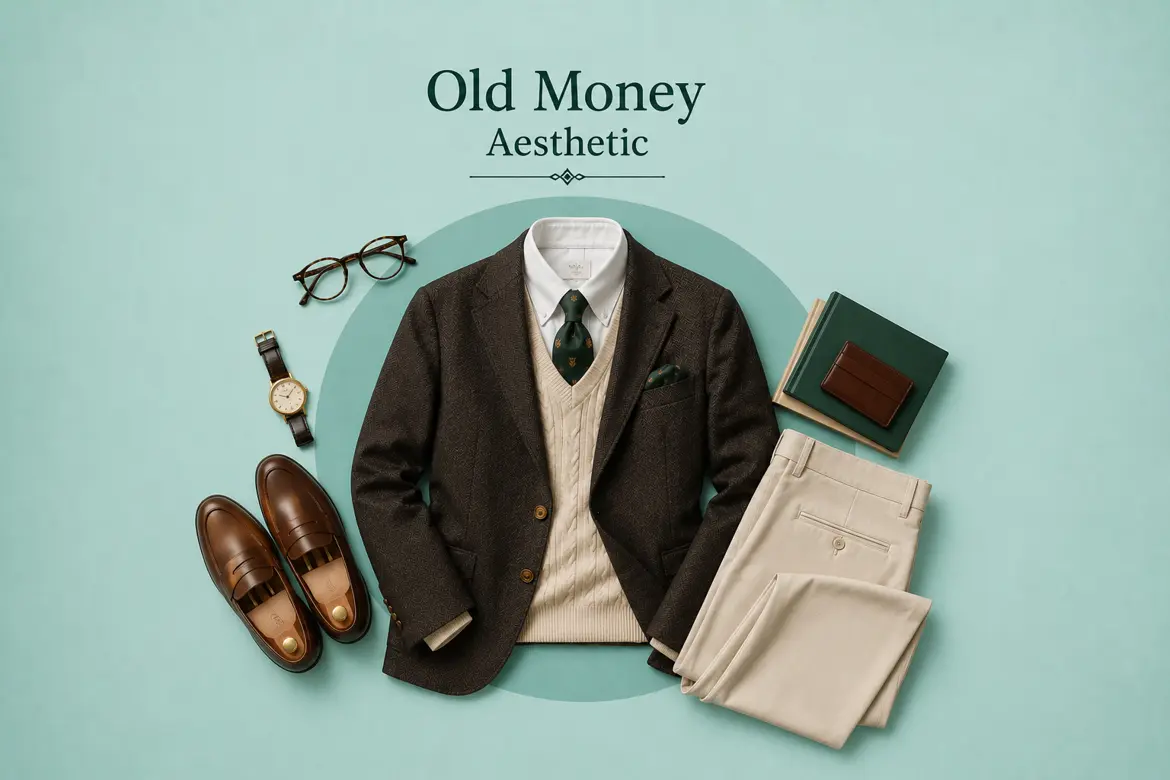
Trends come and go at lightning speed, but there’s one look that doesn’t wash away. You’ve probably seen it all over your feed: tailored linen shirts, perfectly draped trousers, and an overall vibe that whispers wealth rather than screams it. This is the Old Money Aesthetic.
Old money style isn’t flashy streetwear or logomania; you don’t have to show off how much you spent on an outfit. It’s about heritage, quality, and a calm confidence that makes it look like you were born into comfort. If you’re trying to add a little more sophistication to your daily wear, this guide will show you how to do it without a trust fund and give you a real feel for the look along the way.
What Is Old Money Aesthetic?
To truly understand the look, we have to look past the social media trends and understand the lifestyle behind it. So, what is the old money aesthetic, exactly?
At its core, this style is inspired by the traditional, generational wealth of the global elite, think New England prep schools, Ivy League campuses, European yacht clubs, and weekends spent at country estates. It’s the antithesis of “new money” fashion, which often relies on massive logos, neon colors, and hyper-trendy luxury items.
Instead, old money-style men favor quiet luxury. It focuses on:
- High-quality natural fabrics like linen, cashmere, wool, and silk
- A muted, neutral color palette featuring navy blue, olive green, beige, cream, white, and burgundy
- Impeccable tailoring, so that everything fits perfectly, not too tight, not too baggy
- Longevity, choosing classic pieces that looked as good in 1960 as they do now, and will still look great in 2030
Historical Origins of Quiet Luxury
To fully appreciate the style, it helps to understand where it came from. The roots of this aesthetic go back to the early 20th century, heavily influenced by British aristocracy and the American Gilded Age elite.
The Ivy League Influence
In the 1950s and 60s, elite universities like Harvard, Yale, and Princeton created a campus uniform that blended formality with athletic comfort. This subgenre, called prep or Ivy style, worked casual knitwear, unstructured blazers, and relaxed chinos into the mainstream luxury lexicon. According to Wikipedia’s documented history of the Ivy League style, this exact look experienced a direct revival in the early to mid-2020s under the name we now know as the Old Money Aesthetic, which says a lot about how little the core formula has actually changed in seventy years.
European Riviera Style
Simultaneously, wealthy families holidaying on the French Riviera and the Amalfi Coast adapted this look for warmer climates. Heavy wools were swapped for airy Italian linens, silk scarves, and unstructured tailoring designed for yacht decks and seaside bistros.
The Core Pillars of Old-Money Style Men
Building this wardrobe doesn’t require clearing out your bank account. It requires changing your shopping philosophy: buy fewer things, but buy better things. Here’s exactly what to focus on to master the Old Money style men’s look.
1. The Right Fabrics
The easiest way to make an outfit look expensive is through texture. Synthetic fabrics like polyester often look shiny and cheap under the sun. Stick to breathable, natural fibers:
- Spring/Summer: Linen, lightweight Supima cotton, and seersucker
- Autumn/Winter: Merino wool, cashmere, heavy tweed, and corduroy
2. The Color Palette
Keep your wardrobe cohesive by sticking to colors that naturally complement each other. When your clothes are all in the same color family, getting dressed in the morning becomes effortless. Focus on earth tones, rich neutrals, and classic maritime blues.
3. The Fit Is Everything
You could buy a $2,000 designer suit, but if it doesn’t fit right, it will look cheap. Conversely, a modest blazer tailored perfectly to your body will look like a million bucks. Avoid skin-tight skinny jeans or overly dropped-crotch sweatpants. The old money aesthetic relies on classic, straight-line silhouettes.
Essential Old Money Pants and Trousers
You cannot pull off this look with distressed skinny jeans or oversized cargo pants. Your choice of old-money pants sets the foundation for the entire outfit.
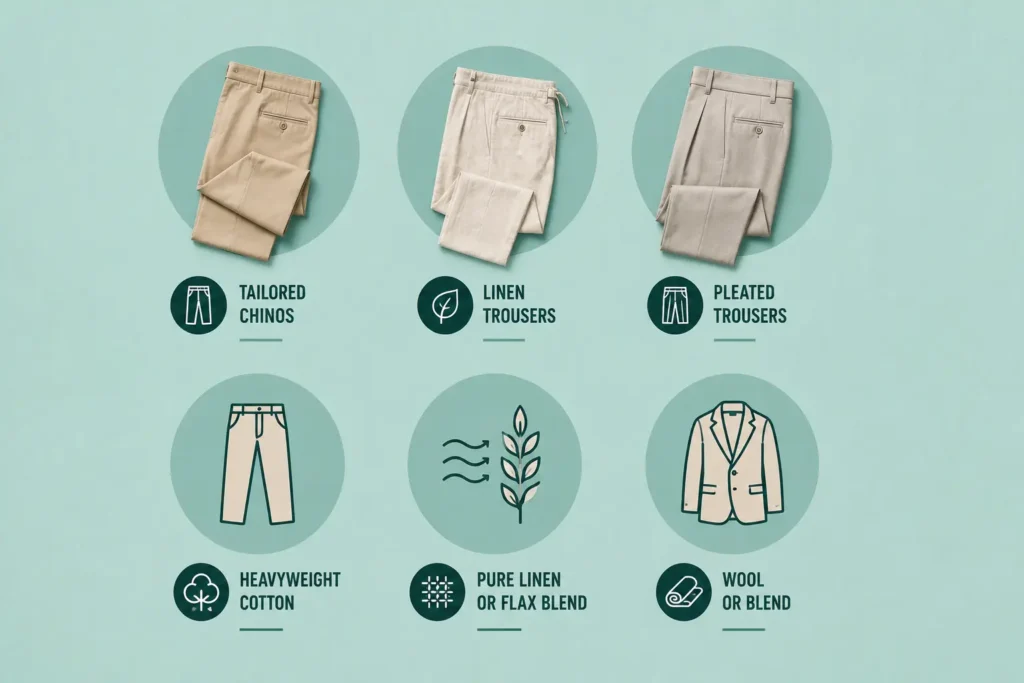
| Pant Type | Best Material | How to Style It |
|---|---|---|
| Tailored Chinos | Heavyweight Cotton | Pair with a polo and loafers |
| Linen Trousers | Pure Linen or Flax Blend | Wear with a relaxed linen button-up |
| Pleated Trousers | Wool or Blend | Tuck in an Oxford shirt and a blazer. |
Chinos and Khakis
A pair of slim-straight or straight-leg chinos in beige, stone, or navy is non-negotiable. Look for pairs without excessive external branding or contrast stitching.
Pleated Trousers
If you want to lean heavily into the traditional old money aesthetic, opt for mid-to-high-rise pleated trousers. They add instant vintage elegance and create a beautiful silhouette when you walk.
Linen Trousers
For warmer weather, high-quality linen old-money pants are your best friend. They keep you incredibly cool while looking like you just stepped off a boat in Amalfi. Don’t worry about the wrinkles; in this style, natural linen creases are seen as a sign of relaxed luxury.
Essential Wardrobe Staples: Tops and Knitwear
To achieve the full Old Money style look, your upper half needs to match the sophistication of your trousers. This means trading graphic tees for structured collars and classic knitwear layers.
The Oxford Cloth Button-Down (OCBD)
The absolute workhorse of the aesthetic. A well-fitted Oxford shirt in crisp white, light blue, or a subtle pink adds instant structure to your frame. It looks fantastic tucked into old money pants or worn open over a quality white undershirt.
Cable-Knit and Tennis Sweaters
Nothing says generational wealth quite like a chunky, cream-colored cable-knit sweater. Whether it’s a crewneck, a V-neck with heritage contrasting stripes, or a cardigan, knitwear is a non-negotiable layer for cooler weather.
The Knit Polo
While a standard cotton polo is great, a vintage-style knit polo completely transforms your look. It has a beautiful drape and texture and a retro collar that feels deeply authentic to the old money aesthetic.
Classic Footwear: Old Money Men’s Shoes
Your shoes can make or break your outfit. If you pair a beautiful linen shirt and tailored trousers with chunky, neon running shoes, the illusion is ruined. Investing in classic, high-quality old money men’s shoes is essential.
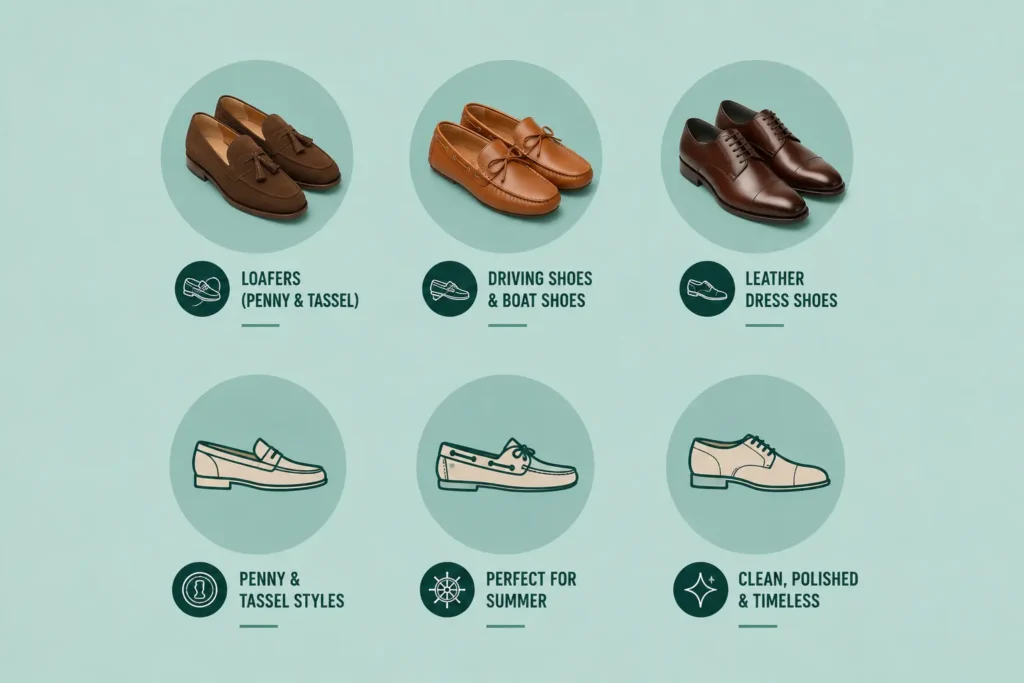
Loafers (Penny and Tassel)
Loafers are the ultimate footwear for the Old Money style. Suede loafers in brown, tan, or taupe offer a fantastic, relaxed look for daytime wear. Smooth leather loafers in oxblood or black work beautifully for the evening.
Driving Shoes and Boat Shoes
Perfect for summer, these are the definition of casual old money style. Wear them without socks (or with invisible no-show socks) alongside a pair of tailored shorts or rolled-up chinos.
Leather Dress Shoes
For formal occasions, stick to classic Oxford or Derby shoes in deep brown or black leather. Keep them clean, polished, and well-maintained.
Casual Old Money Style: Everyday Outfits
You don’t need to wear a three-piece suit to embody this aesthetic. In fact, some of the best looks are incredibly relaxed. Nailing the casual old money style is all about looking put-together without looking like you tried too hard.
The Summer Resort Look
- Top: A breathable, white or light blue linen button-down shirt with the sleeves loosely rolled up to the forearms
- Bottom: Tailored beige linen shorts or stone-colored chinos
- Shoes: Brown suede driving shoes or premium leather boat shoes
- Accessory: Classic tortoiseshell sunglasses
The Ivy League Autumn Look
- Top: A crisp cotton OCBD shirt underneath a cable-knit cream sweater, loosely draped over your shoulders and tied across your chest for that country-club vibe
- Bottom: Dark navy blue or forest green old money pants
- Shoes: Classic brown leather penny loafers
Outerwear Choices That Stand the Test of Time
When the temperature drops, your outerwear shouldn’t compromise your style. The right jacket or coat should feel heavy, structured, and entirely purposeful.
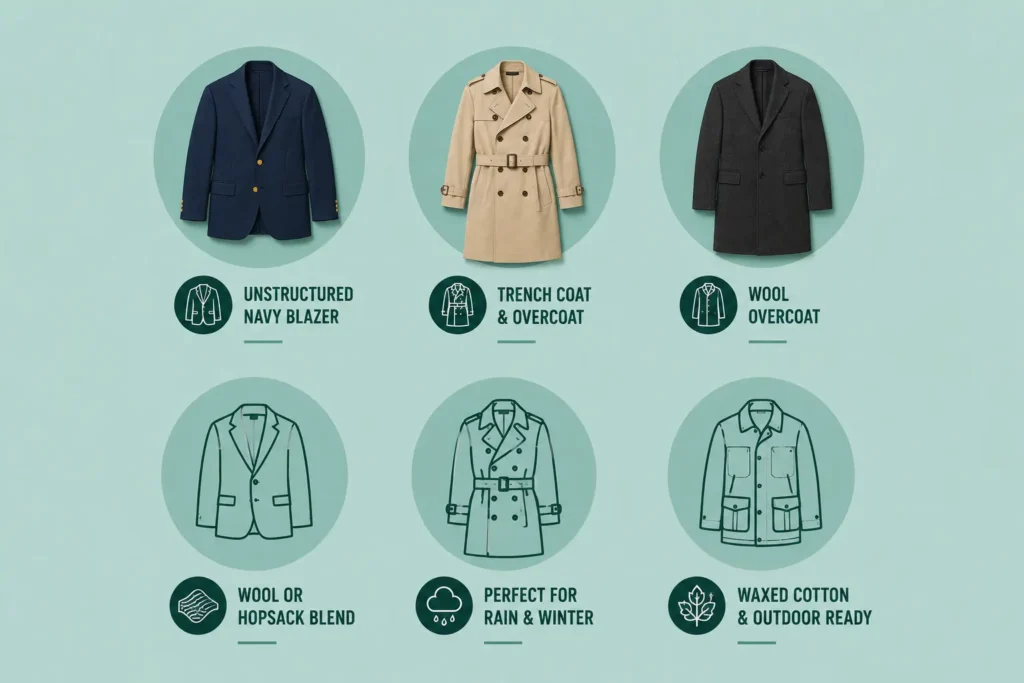
The Unstructured Navy Blazer
This is the ultimate transitional piece. Unlike a rigid suit jacket, an unstructured blazer lacks heavy shoulder padding, making it perfect for casual old-money style. Look for wool or hopsack blends with brass buttons for a truly maritime, heritage look.
The Trench Coat and Overcoat
For rainy or winter days, a classic double-breasted trench coat in beige or a heavy wool overcoat in camel or charcoal is essential. It instantly elevates whatever you’re wearing underneath.
The Waxed Country Jacket
Originating from British country life, a waxed cotton jacket in olive green or country brown signals a lifestyle spent outdoors on country estates. It’s rugged, practical, and highly favored within the Old Money style men’s community.
Formal Settings: Black Tie and Evening Wear
While casual dressing is comfortable, the ultimate test of the aesthetic is how you handle formal occasions. The goal here is simple elegance over flashy tailoring.
The Classic Tuxedo
When the invitation calls for black tie, avoid trendy colorful tuxedos or velvet jackets with loud patterns. Stick to a midnight blue or pure black single-breasted tuxedo with satin peak lapels. Pair it with a hidden-button white dress shirt and a real, self-tied silk bow tie.
Dinner Jackets for Summer Galas
For warm-weather formal events, an off-white or ivory dinner jacket paired with black tuxedo trousers is the golden standard. It evokes a timeless, Old Hollywood romance that looks incredibly refined under the stars.
How to Put Together Old Money Aesthetic Outfits
Ready to build your own looks? Here are three foolproof old money aesthetic outfits you can put together for different occasions.
Outfit 1: The Weekend Brunch (Warm Weather) Start with a knit polo shirt in olive green or soft cream, mid-rise pleated cream trousers, and tan suede loafers. Finish with a brown leather belt that matches your old money men’s shoes. This look is comfortable, incredibly breathable, and effortlessly sophisticated.
Outfit 2: The Smart-Casual Business Meeting Take a light blue dress shirt and add a structured or unstructured navy blazer. Combine this with khaki or stone-colored chinos. Add a leather pocket square to the blazer for a subtle pop of personality, and wear dark brown leather loafers.
Outfit 3: The Evening Dinner Date Choose a dark monochromatic palette. A black or charcoal merino wool turtleneck sweater with grey wool trousers gives you a sleek, high-end look. Finish with black leather Chelsea boots or dress shoes and a minimalist silver-toned watch. If you want to see how this same restrained, elevated approach plays out beyond menswear specifically, our guide on dressing classy in your 30s covers a lot of the same underlying principles.
The Details: Accessories and Grooming
The old money aesthetic is all about the details. The clothes themselves are simple and unbranded, so your grooming and accessories are doing the heavy lifting to signal refinement.
Watch Selection and Jewelry
No big diamond-encrusted smartwatches. Instead, opt for classic, modest-sized timepieces with a leather strap or simple steel bracelet. Classic tank watches and field watches are the best choices here. Keep other jewelry minimal; a simple wedding band or a subtle signet ring is plenty.
Leather Goods and Luggage
Ditch the nylon backpacks. When traveling or heading to work, opt for a traditional leather duffel, a structured canvas weekend bag, or a leather briefcase. Your belt should always be high-quality, authentic leather with simple brass or silver buckles.
Grooming Habits and Scents
A clean, classic haircut, a well-maintained beard (or a clean shave), and a subtle, high-quality signature fragrance (think woody, citrus, or tobacco notes) round out the look. In this aesthetic, looking effortlessly put-together is the actual luxury, more so than any single item in your closet.
Smart Shopping: Sourcing and Curation
You don’t need a big budget to do this, but you do need patience. Building a wardrobe like this follows a curated approach, not fast-fashion hauls, which is the same philosophy behind looking expensive and elegant on a budget more broadly.
The Power of Vintage and Thrifting
Because this aesthetic is built on old-school pieces that haven’t changed in decades, thrift stores and vintage apps are goldmines. Look for vintage wool blazers, trench coats, and older leather goods from legacy brands. These are often heavier and better made than their modern equivalents. Buying secondhand also lines up naturally with the broader push toward sustainable fashion, getting more life out of well-made pieces instead of buying new every season.
Prioritizing Cost-Per-Wear
When buying new, think of clothes as investments. A $150 heavy cotton Oxford shirt that lasts seven years is cheaper over time than a $30 synthetic shirt that loses its shape after three washes. Since footwear, trousers, and outerwear tend to wear out the fastest, it’s worth putting the bulk of your budget toward those categories rather than spreading it evenly across everything you own.
Conclusion
At the end of the day, the old money aesthetic isn’t about buying a brand-new outfit; it’s about building toward timeless refinement. The right fabrics, a neutral color palette, and a solid pair of old money men’s shoes will do more for how put-together you look than any single expensive piece ever could.
Look at your closet, build a timeless collection one piece at a time, and remember that real style doesn’t have to shout for attention.
Frequently Asked Questions (FAQs)
Q. What is the old money aesthetic?
A. The old money aesthetic is a timeless fashion style built around quality clothing, classic tailoring, neutral colors, and understated elegance, as opposed to flashy branding.
Q. How can men dress in Old Money style?
A. Start with polo shirts, Oxford shirts, chinos, tailored trousers, loafers, and neutral-colored layers. Focus on fit and quality over logos or trends.
Q. What are the best old money men’s shoes?
A. Loafers, penny loafers, Oxfords, suede loafers, and boat shoes are among the most popular old-money men’s shoes.
Q. Can I achieve the old money aesthetic on a budget?
A. Yes. Instead of premium designer brands, focus on timeless basics, a good fit, and neutral colors. Thrifted and vintage pieces work especially well for this style, since the look has barely changed in decades.
Q. What colors are prevalent in Old Money style?
A. Navy, beige, cream, white, gray, olive, brown, and forest green are the most commonly used colors.
Q. What is the 3-3-3 rule for men?
A. The 3-3-3 rule suggests building outfits from three tops, three bottoms, and three pairs of shoes that can all be mixed and matched. It’s a useful minimalist framework, and it maps naturally onto an Old Money capsule wardrobe, since the whole point of this aesthetic is a small number of versatile, well-made pieces rather than a closet full of one-off outfits.
Q. What do Gen Z men wear, and how does it compare to Old Money style?
A. Gen Z menswear typically leans toward oversized fits, relaxed denim, sneakers, and streetwear-inspired pieces, which sit almost opposite to Old Money’s fitted, structured, loafer-and-blazer approach. That said, the two aren’t mutually exclusive; plenty of current Gen Z fashion trends borrow directly from prep and Ivy style, just remixed with looser proportions and modern footwear.