Let’s be honest — nobody talks about how exhausting it is. The alarm goes off at 7 a.m.; you have a lecture at 9, a shift starting at 2, and an assignment due by midnight. You’re supposed to eat, sleep, and maybe, just maybe, not lose your mind somewhere in between. Learning how to balance work and study is the survival skill no one really teaches you.
If you’re trying to balance work and study right now, you’re not alone. A 2024 NCES report found that nearly 43% of undergraduate students in the U.S. work part-time while enrolled. It’s practically the new normal. But “normal” doesn’t mean easy, and “everyone does it” doesn’t mean everyone does it well.
This guide is different. It’s not a list of vague advice like “stay organized” (thanks, really helpful). These are 15 real, actionable strategies, tested by students who did the juggle and lived to graduate. Whether you’re just starting a part-time job while studying or you’ve been burning the candle at both ends for months, something here will change the game for you.
Why Balancing Work and Study Feels So Hard in 2026
Before we dive into the tips, let’s acknowledge what’s actually making this hard. The world has changed. Since the pandemic, many students are doing remote jobs, freelancing, or working hybrid shifts — which sounds flexible but in reality can be so seamless that the line between work time and study time gets broken. Add in rising tuition, the pressure to build a portfolio while in school, and the very human need for a social life, and it all adds up to a recipe for burnout.
Student work-life balance in 2026 isn’t just about time management. It’s about energy management, boundary-setting, and creating a life that doesn’t require you to sacrifice your health to pay for your degree. Let’s talk about how to actually do that.
15 Proven Strategies to Balance Work and Study
1. Audit Your Week Before You Schedule Anything
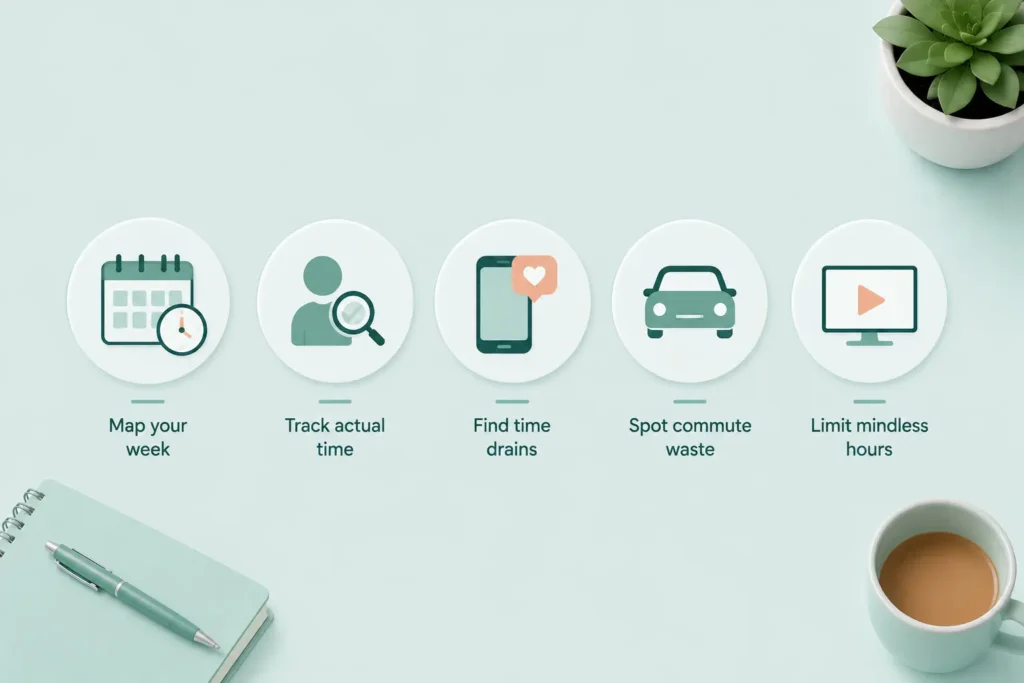
Pull out your phone (or a notebook if you’re that person) and map every hour of your week — not how you wish you spent your time, but how you actually spend it. Most students are shocked to discover 6–10 hours going to mindless scrolling, inefficient commutes, or back-to-back Netflix episodes. This is the foundation of how to balance work and study effectively: you can’t optimise what you haven’t measured. If scrolling is your weak spot, our guide on how to stop doomscrolling will reclaim hours.
2. Use the Time-Blocking Method, For Real This Time
Time-blocking isn’t just for CEOs. It’s the single most effective scheduling system for students managing multiple commitments. Assign specific blocks to studying, work prep, classes, meals, and rest — and guard those blocks like they’re paid appointments. The difference between students who master balancing work and studies and those who struggle is usually this: the successful ones treat study time as a non-negotiable appointment, not a “when I get around to it” activity.
3. Talk to Your Employer Early and Often
This one gets skipped constantly, and it shouldn’t. If your employer doesn’t know your exam schedule, they can’t accommodate it. Most part-time employers — especially student-friendly ones — will work with you during finals week if you tell them in advance. Think of it as a professional skill you’re building: transparent communication. It’s one of the underrated part-time job while studying tips that pays dividends beyond just getting time off.
4. Choose the Right Job, Not Just Any Job
Not all part-time jobs are created equal for students. Jobs with variable downtime (library assistants, front-desk roles, overnight positions) can let you study during slow hours, and jobs that align with your field build your resume while you earn. When asking yourself how to manage work and university, start with the job itself. A job that constantly bleeds into your mental bandwidth at 10 p.m. isn’t worth the paycheck if it tanks your GPA.
5. Master the “Study Sprint” Technique
Gone are the days of 4-hour study marathons. Research consistently shows that shorter, focused sessions beat long, distracted ones. The Pomodoro Technique — 25 minutes on, 5 minutes off — is a classic for a reason. But in 2026, students are adapting it: 45-minute deep-work sprints with 10-minute intentional breaks. This approach is essential for student work-life balance because it accommodates your job schedule rather than working against it. Fit a sprint in before your shift, one during lunch, and one after — and suddenly you’ve studied for 2+ focused hours without carving out a full evening.
6. Protect Your Sleep Like It’s Your GPA
Here’s an uncomfortable truth: sleep deprivation tanks cognitive performance faster than skipping a study session. Students pulling 5-hour nights to squeeze in more work hours are running a long-game deficit — memory consolidation, problem-solving, and emotional regulation all depend on sleep. If you’re serious about how to balance work and study, 7–8 hours isn’t a luxury. It’s a performance strategy.
7. Build a Weekly Reset Ritual
Every Sunday (or whatever your “reset” day is), spend 30 minutes reviewing the week ahead. What assignments are due? When are your shifts? Where are the gaps? This single habit dramatically reduces the “I completely forgot about that” emergencies that derail students. It’s one of the most underrated study-work balance tips for 2026: build systems, not willpower. Willpower is finite — a weekly planning ritual runs on habit. Steal our Sunday reset routine to make it stick.
8. Use Technology Intentionally
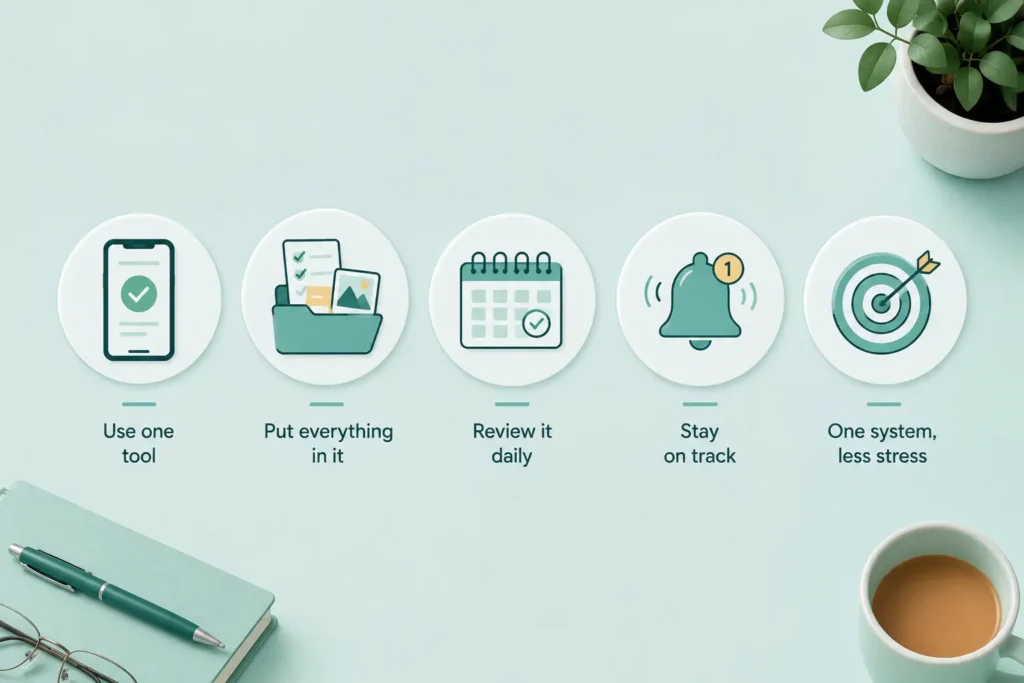
Apps like Notion, Todoist, or Google Calendar aren’t magic, but used properly they’re close. The key is one central system. Students who keep their schedule across three apps, a whiteboard, and mental notes are constantly forgetting things. Pick one tool, put everything in it, and review it daily — that’s the whole system. A periodic digital detox also keeps your tech helping you rather than distracting you.
9. Say No to the Extras (At Least This Semester)
One of the most powerful part-time job while studying tips is also the most socially uncomfortable: saying no. Not to everything, but to the things that don’t align with your current season. Extra committee membership, optional events, favours that steal two hours — these add up. When you’re working and studying simultaneously, your time has a premium value. Spend it accordingly.
10. Batch Your Errands and Admin Tasks
Grocery runs, laundry, emails, bill payments — these small tasks eat time in a fragmented, energy-draining way when done randomly. Batching them (all errands in one trip, all emails at one set time) preserves your deeper work blocks for actual studying. This is one of the most practical balancing work and studies hacks, and it immediately frees up 3–5 hours per week for most students.
11. Build a Study Group That Actually Works
The keyword is “actually.” Study groups fail when they become social sessions. They work when members come prepared, share a clear agenda, and use the group for accountability and explaining concepts (teaching others is one of the best learning methods known to science). A good study group multiplies your effort — one focused hour with two or three serious peers can replace two hours of solo studying.
12. Fuel Your Body Like You Mean It
You wouldn’t run a car on empty and expect top performance. Students often treat nutrition as an afterthought — skipping meals between shifts, leaning on caffeine, and crashing by evening. The result? Poor concentration, irritability, and a metabolism in chaos. Learning how to manage work and university sustainably means treating your physical health as a professional requirement. Meal prep on Sundays, keep snacks in your bag, and drink water — these aren’t soft wellness tips, they’re cognitive performance upgrades.
13. Learn to Identify Your Peak Hours
Are you a morning person who hits flow state between 8–11 a.m.? Or do you come alive after 9 p.m.? Knowing your chronotype — your natural rhythm of alertness — lets you schedule your hardest academic tasks during peak hours and your mechanical tasks (data entry, easy readings) during low-energy windows. This is a game-changer for student work-life balance and one of the most personalised productivity upgrades you can make.
14. Build a Buffer Into Every Week
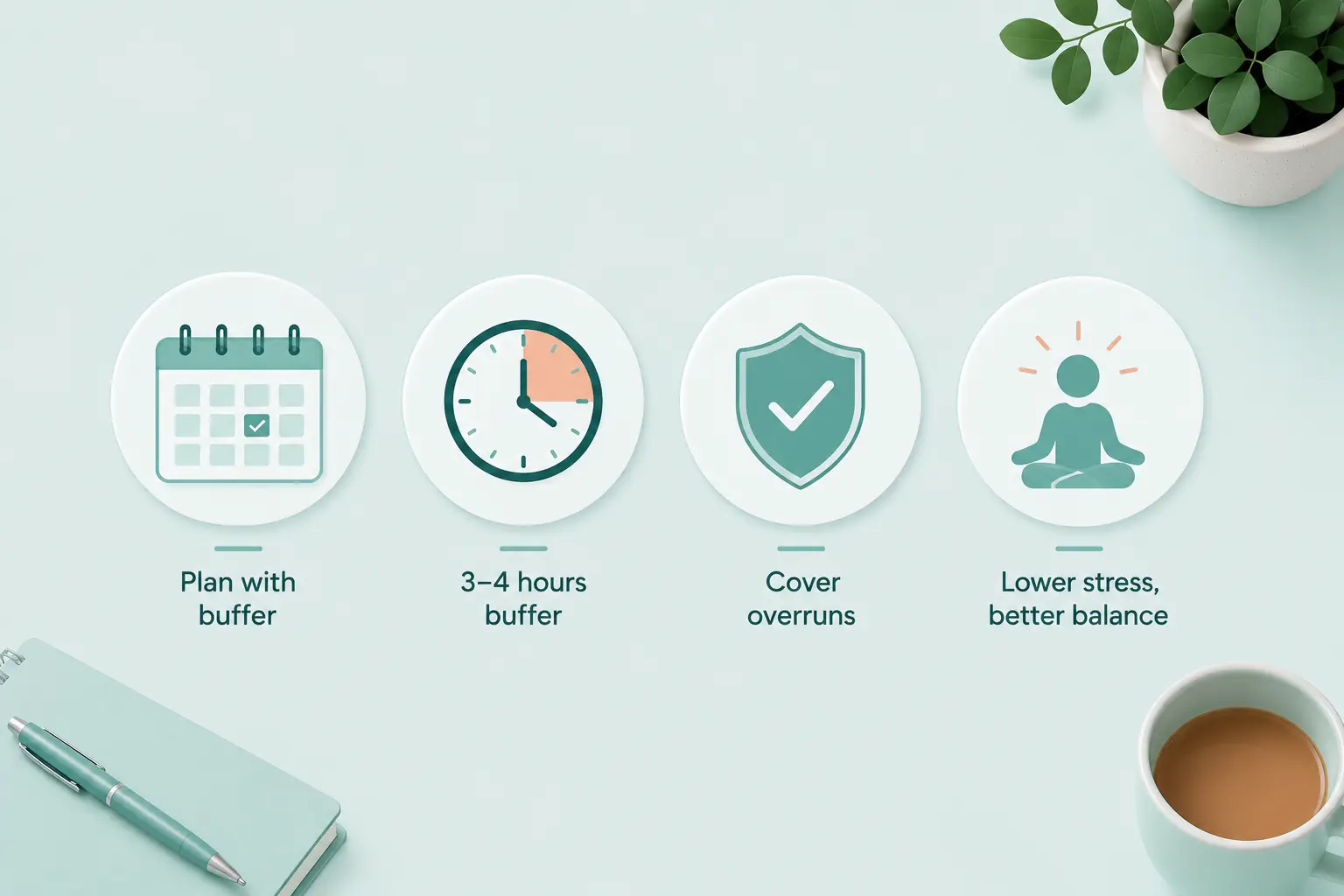
Things go wrong. Shifts get extended. Essays take longer than expected. Life is unpredictable, and students who schedule at 100% capacity always get derailed. The solution: build a 3–4 hour buffer into each week — untouched time to cover overruns, catch-up, and the inevitable mishap. Students who do this have far lower stress levels than those who don’t.
15. Revisit Your ‘Why’ Regularly
When the grind gets heavy — and it will — you need a clear reason to keep going. Why are you working? What’s the degree for? What does life look like in three years if you keep showing up? This isn’t just motivational fluff; resilience research shows that purpose-driven students outperform those just “going through the motions.” Write it down somewhere you’ll see it. For a mindset boost, read about main character energy. It’s the last of the 15 strategies — but it might be the most important one for how to balance work and study over the long haul.
A Quick Comparison: Common Student Schedules and What Actually Works
| Schedule Type | Study Hours/Week | Work Hours/Week | Burnout Risk | Sustainable? |
|---|---|---|---|---|
| Full-Time Student (No Work) | 30–40 hrs | 0 hrs | Low | Yes |
| Part-Time Work (15–20 hrs/week) | 25–30 hrs | 15–20 hrs | Moderate | Yes, with good time-management systems |
| Heavy Workload (25+ hrs/week) | 15–20 hrs | 25+ hrs | High | Only sustainable short-term |
| Fully Remote/Freelance | Variable | Variable | Varies | Yes, with strong boundaries and scheduling discipline |
Final Thoughts
Here’s the truth nobody frames it as: learning how to balance work and study isn’t just a survival skill for university. It’s a master class in the exact competencies — time management, boundary-setting, energy regulation, and self-awareness — that define high-performing professionals. The students who struggle through this aren’t just surviving their degree; they’re building the operating system they’ll run on for the rest of their careers.
So if you’re in the thick of it right now — half-asleep before a morning shift, finishing an essay at midnight, wondering if it’s all worth it — build the systems. Take care of your sleep. Ask for help. Say no to the things that don’t fit the season you’re in. You’re not just earning a paycheck and a degree; you’re earning something harder and rarer: the ability to do hard things without falling apart. And that is worth more than either one.
Common Mistakes to Avoid When You Balance Work and Study
Even with the best intentions, a few predictable mistakes derail students who are figuring out how to balance work and study. The first is over-scheduling — filling every hour and leaving no margin for the unexpected. When a shift runs late or an essay takes longer than planned, a 100%-packed calendar collapses, so always protect that weekly buffer.
The second mistake is treating sleep and meals as negotiable. Skipping rest to bank extra study or work hours feels productive, but it quietly erodes the focus that makes those hours count. Anyone serious about how to balance work and study has to defend sleep and nutrition as non-negotiables, not luxuries.
A third common trap is saying yes to everything. Extra shifts, optional clubs, and last-minute favours pile up until there’s no room left for what actually matters this season. Learning how to balance work and study is partly about learning to say no with intention.
Finally, many students try to run on willpower alone instead of building repeatable systems. Motivation fluctuates; systems don’t. When you turn the strategies above into weekly habits, how to balance work and study stops being a daily battle and becomes a routine you barely have to think about — which is exactly when sustainable student work-life balance finally clicks into place.
Your Simple Roadmap to Balance Work and Study
If all 15 strategies feel like a lot at once, start small. The fastest way to learn how to balance work and study is to pick just three changes this week — audit your hours, block your study time, and protect your sleep. Those three alone resolve most of the chaos students feel.
Once those become automatic, layer in the next set: a weekly reset ritual, one central planning app, and a realistic buffer. This staged approach to how to balance work and study keeps you from overhauling your whole life overnight, which is exactly the kind of all-or-nothing move that leads to burnout by week three.
Review your system every few weeks and adjust. Your class schedule shifts, your shifts change, and exam season demands a different rhythm than a quiet mid-semester week. The students who genuinely master how to balance work and study aren’t the ones with a perfect plan — they’re the ones who keep tweaking a good-enough plan until it fits the season they’re in.
Frequently Asked Questions About How to Balance Work and Study
What is the 8-8-8 rule for students?
The 8-8-8 rule divides the day into 8 hours for sleep, 8 hours for study or classes, and 8 hours for work, leisure, and personal activities. It keeps students from over-investing in one area at the expense of the rest.
Is there a way to balance gym, work, and studies?
Yes, but only with a consistent schedule. Aim for short, targeted workouts 3–4 times a week and treat exercise as a regular appointment, not something you do only when you happen to have free time.
How hard is it to balance work and college?
Working and studying at the same time is genuinely demanding, and time management gets tough during a busy academic year. But most students can successfully juggle work and college with good time management, sensible work hours, and a structured routine in place.
Can balancing a part-time job actually benefit your studies?
Yes. Part-time work can strengthen your time management, responsibility, and organisation. With a moderate number of hours, it teaches you to learn and live in a more professional environment.
What should I do if I’m already burnt out?
Prioritise rest, sleep, and reducing unnecessary commitments. Reflect on your schedule, seek advice from your advisor and employer, and gradually re-establish a healthy routine rather than pushing through.